
An electric vehicle charger Orlando homeowners can rely on comes down to three things: capacity, placement, and a permit. The hardware is the easy part. What sits behind the wall decides how fast and how safely you charge.
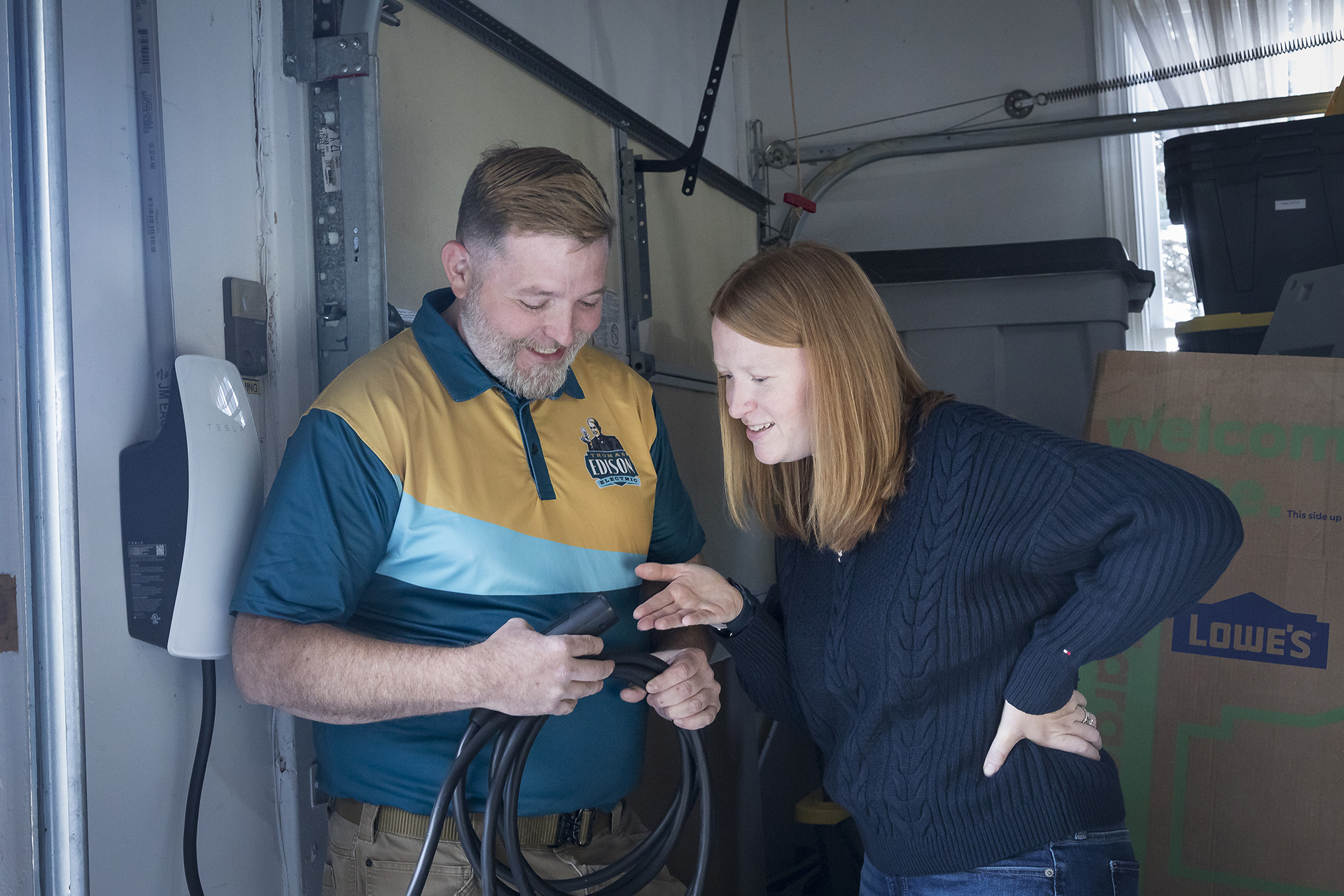
Central Florida adds its own wrinkles. Air conditioning already dominates the electrical load in most homes here, and afternoon storms test anything mounted outdoors.
Start With a Load Calculation, Not a Product Page
Your panel has a fixed budget. A Level 2 unit usually wants a 40- or 50-amp circuit, which is a large addition to any house.
Homes built around Orlando in the 1970s and early 1980s often still have 100-amp service. Add a pool pump, a heat pump, and an electric range, and the math gets tight quickly. An electrician runs a standard load calculation to find what is genuinely left.
If the answer is not enough, you have options short of a full service upgrade. Our overview of panel upgrades for Orlando homes explains when replacement makes sense.
Sizing the Circuit for an Electric Vehicle Charger Orlando Homes Can Support
Circuit design is where a good installer earns the fee. A few choices shape the whole job.
- Hardwired units allow higher amperage and hold up better outdoors.
- Plug-in units on a 14-50 receptacle are easier to swap, though the receptacle becomes a wear point.
- Most chargers let you dial the output down, so a smaller circuit is often perfectly workable.
- Load-management devices pause charging when the house draws heavily, which can avoid a service upgrade.
Almost every home unit belongs on its own circuit. Our guide to how many dedicated circuits a home needs explains why shared circuits cause nuisance trips.
Where to Mount It in Florida Heat
Placement is about daily convenience and long equipment life. Park where you actually park, then look at the sun.
A west-facing wall bakes from two o’clock until sunset. Enclosures run hotter, plastics fade, and some units reduce output when internal temperatures climb. A garage wall or a shaded east side treats the equipment far better.
Keep the cable off hot pavement, and mount the unit high enough that the connector never rests in a puddle. Outdoor installs need an appropriate weather rating and a disconnect where the code calls for one.
- Measure the cable reach to your charge port before choosing a wall.
- Avoid blocking a walkway or a trash can path with the cable.
- Leave clearance around the unit so it can shed heat.
- Pick a spot a future owner would also use.
Plan Ahead During a Remodel or New Build
The cheapest time to prepare is while walls or slabs are already open. Running conduit to the garage during a remodel costs very little compared with adding it later.
New construction across Winter Garden, Lake Mary, and Kissimmee often includes a stubbed conduit or a labeled breaker space. Ask the builder what was actually installed, because a marked space is not the same as a finished circuit.
If a second driver may go electric later, plan for two circuits now. Even leaving room in the panel schedule saves real money down the road.
Permits and Inspections in Central Florida
This is permitted work, full stop. Orange, Seminole, and Osceola counties, along with city jurisdictions like Orlando and Winter Park, require a permit and inspection for a new 240-volt circuit.
A licensed electrical contractor pulls that permit. The record protects your homeowners insurance position and turns up again at resale. See how one nearby project handled the panel side in this EV outlet install and panel upgrade.
Do Not Skip Surge Protection
Central Florida sees more lightning strikes than any other part of the country. Chargers are full of electronics, and a surge arriving on the service can end one in a second.
A whole-home surge protective device at the panel is the first layer of defense. It is a small line item during installation and much cheaper than replacing equipment after a July storm.
Ask whether your charger warranty expects that protection. Some manufacturers do, and a claim goes easier when the panel device is documented on the permit.
Rates, Rebates, and Charging Overnight
Charging at two in the morning is easier on the grid and often on your bill. Check current programs with your utility, whether that is OUC or Duke Energy Florida, because offers change from year to year.
Most units schedule themselves through an app, so you set it once and forget it. The Department of Energy keeps a plain guide to home charging basics if you want more detail.
What Installation Day Looks Like
A straightforward job takes a few hours. The electrician confirms the load, runs conduit or cable, lands a new breaker, mounts the unit, and tests the circuit.
Panel work or a long run from the garage adds time. Wiring methods and clearances follow the National Electrical Code, published by the NFPA, and your inspector will verify them.
Our EV charger installation service covers the full path, from the first load calculation through the final inspection.
Ready to Plan Your Install?
Every house is different, so the honest answer starts with a look at your panel and your parking. We will tell you plainly whether the service supports what you want.
Call Thomas Edison Electric at (407) 490-0004 to schedule an estimate for an electric vehicle charger Orlando drivers can count on for years. We hold Florida license EC13015487 and serve Orlando, Oviedo, Lake Mary, Winter Garden, and the surrounding area.