
You would not expect resistance heaters in a climate like ours. Buy an older condo near downtown, though, and you may inherit the electric baseboard heating Orlando builders installed before heat pumps took over. The same units turn up in enclosed Florida rooms, garage conversions and detached studios. They rarely run more than a few weeks a year, but when they do, they pull serious current and need the right thermostat.
Where These Heaters Still Show Up
Heat pumps do the real work in Central Florida now. That leaves one room at a time to the electric baseboard heating Orlando homeowners inherited.
- Florida rooms and enclosed lanais added after the original build.
- Garage conversions, in-law suites and backyard offices.
- Older condos and cottages near downtown Orlando and Winter Park.
- Bathrooms, where a small wall unit takes the chill off a January morning.
- Workshops and studios fed from their own subpanel.
In each case the heater is a backup, not the main system. That changes how you should control it and how much you should spend on the control.
Line Voltage Is Not Low Voltage
This is the single most important point on the page. A central system thermostat switches a 24-volt control circuit. A baseboard thermostat switches the full 120 or 240 volts feeding the heating element.
So the two are not interchangeable. Popular smart thermostats built for heat pumps will not work on a baseboard circuit. Line-voltage smart models do exist, but you have to buy one on purpose.
The thermostat also has to match the load. A control rated for 12.5 amps cannot safely run a bank of heaters that draws more than that.
Thermostats for Electric Baseboard Heating Orlando Homes Still Have
Two wiring styles cover most installs. A single-pole thermostat breaks one leg of the circuit, so the heater is never fully off. A double-pole thermostat breaks both legs and truly kills power to the unit.
Most homeowners here prefer double-pole. It makes sense in a room used only part of the year, because the heater then sits fully off for the other ten months.
Placement decides how well the system performs. Mount the control on an inside wall, away from direct sun, doorways and supply vents. Never mount it right above the heater, since rising heat causes short cycling.
Watch the Load, Especially With Backup Power
Resistance heat is one of the hungriest loads in any house. A single six-foot unit can draw about 1,500 watts, and a bank of them adds up fast. The Department of Energy explains why electric resistance heat costs more per unit of heat than a heat pump.
That matters most when you plan for an outage. One baseboard unit draws more than the refrigerator, the lights and the internet gear combined, so a battery empties fast behind it. When we design home battery backup, we leave those heaters off the protected panel and save the stored capacity for the air handler, refrigerator and well pump.
The same logic applies to service size. Adding an EV charger or a pool heater to a home with baseboard circuits calls for a load calculation first.
Safety Checks Before the First Cold Night
These heaters sit idle for most of the year in our climate. Dust, insects and damp air all take a toll during the quiet months.
- Vacuum the fins before the first use of the season.
- Keep furniture, drapes and bedding at least a foot away from the unit.
- Never plug a cord into an outlet mounted right above a heater.
- Look for scorching, rust or loose wires inside the end compartment.
- Test each thermostat in November instead of on the first cold evening.
If a breaker trips or the unit smells hot, stop using it and call an electrician. Portable units carry similar risks, which is why our space heater safety tips for Florida homes are worth a read.
Signs the Heater Itself Needs Work
The thermostat gets blamed for plenty of faults that live in the heater.
- A unit that clicks on but never warms up.
- Rust at the ends or along the back plate.
- A burning smell that lasts more than a minute after the first start.
- Popping that keeps going once the metal has warmed.
- A breaker that trips within a few minutes.
Any of those calls for a look inside the end compartment. In a humid garage, rusted terminals are the usual cause.
What a Thermostat Swap Involves
We shut off the breaker and prove the circuit is dead. Then we open the heater or the wall box and check the wire size.
Next we match the new control to the volts and amps of the unit. After the wiring, we run the heater through a full cycle and watch how it holds the set point.
Most single-room swaps take about an hour.
Upgrading Controls and Comfort
Old dial thermostats swing several degrees before they react. That wastes energy and leaves the room uneven. Modern line-voltage electronic controls hold a much tighter band.
Programmable and app-connected line-voltage models also let you schedule short heating windows. For most households here, that means a handful of chilly mornings between December and February. If your main system uses a low-voltage control instead, our article on smart thermostats and Orlando energy bills applies.
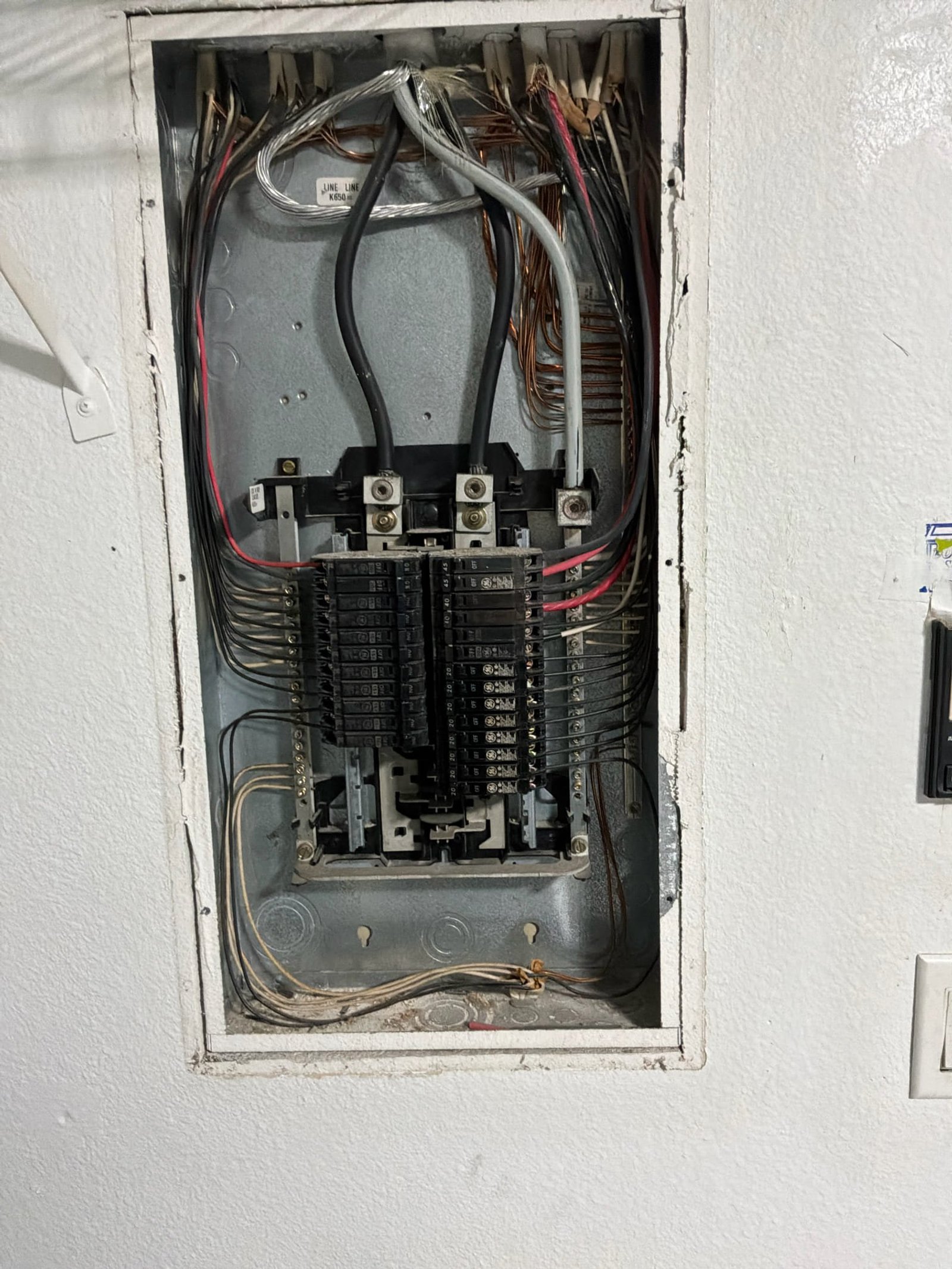
While we are in the panel, we look at the wider picture. You can see what a full panel modernization turned up at a Belle Isle home.
Talk to a Licensed Orlando Electrician
We install and replace line-voltage thermostats throughout Orlando, Maitland, Casselberry, Apopka and Kissimmee. We also repair the heaters, circuits and disconnects behind them. Every job gets checked against current code before we leave.
Call Thomas Edison Electric at (407) 490-0004 to book service. Our Florida license number is EC13015487.