
Ceiling fans work harder in Central Florida than in almost any other climate. The ceiling fan Orlando homeowners install today may spin nearly every day of the year. That constant duty wears on bearings, mounts and blade balance. So the real question is not style, it is whether your fan is still safe and still moving air.
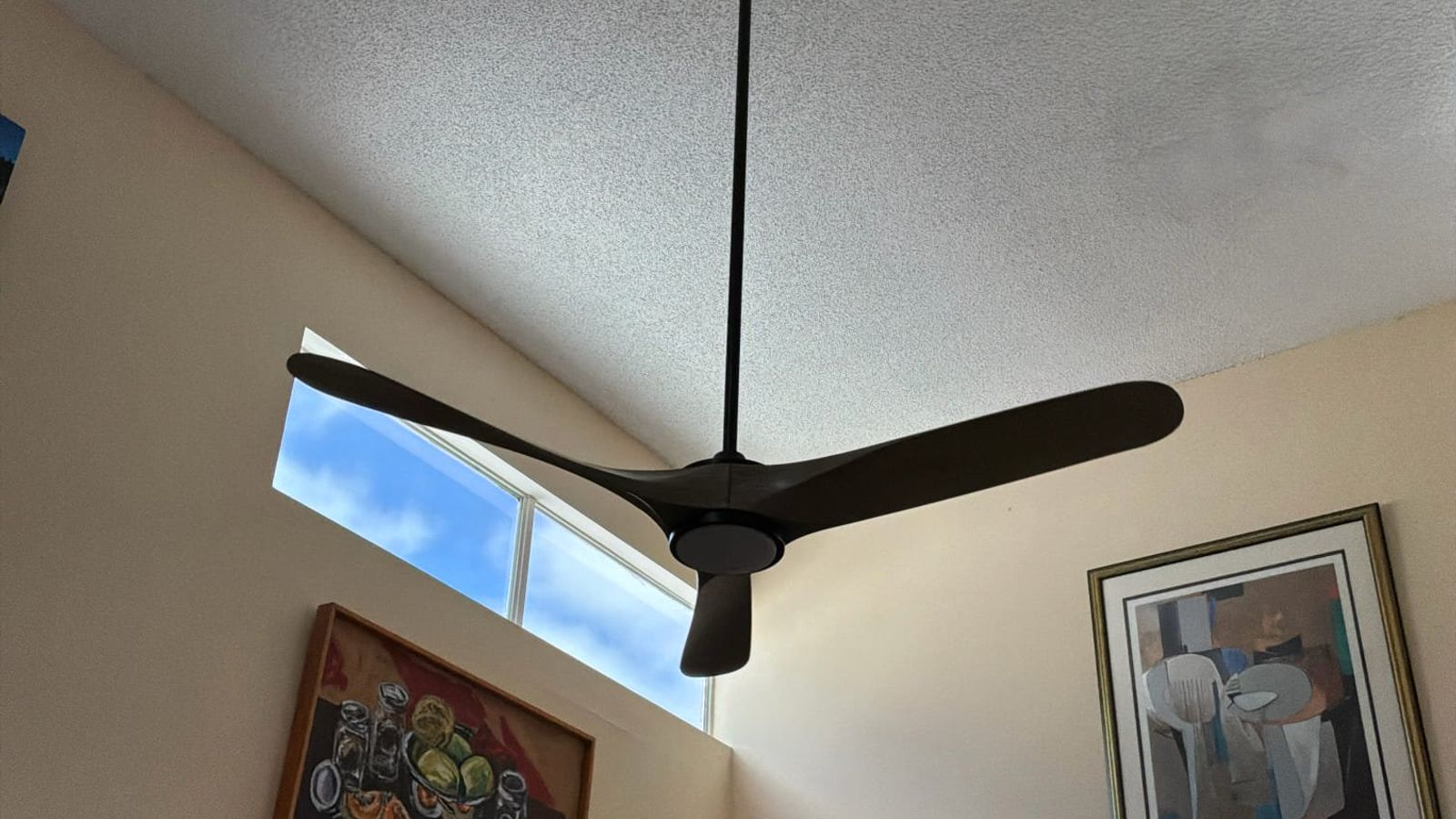
Signs Your Fan Is Wearing Out
Fans fail slowly, which makes the early warning signs easy to ignore. Watch for a few clear symptoms.
- A wobble that shows up at medium or high speed, usually from a loose mount or a bent blade.
- Humming, grinding or clicking sounds from the motor housing.
- Blades that sag or warp after years of humid air soaking into pressed board.
- A pull chain that skips speeds or quits working in one direction.
- Lights that flicker when the fan changes speed.
Take wobble seriously. However, a wobbling fan is more often a mounting problem than a dead motor. Because the ceiling box carries the full weight and shake, it has to be listed for fan support.
Choosing a Ceiling Fan Orlando Weather Will Not Ruin
Humidity is the quiet killer here. Indoor-rated fans hung on a screened lanai corrode at the motor housing and peel apart at the blades. That is why the location listing matters more than the blade count.
Damp-rated fans belong on covered porches and screened lanais around Winter Park and Oviedo. Wet-rated fans are built for spots that catch blowing rain, such as an open pool deck. The ceiling fan Orlando homeowners choose for those areas should have a sealed motor, composite blades and stainless hardware.
Near a pool, a wet-rated unit is the safer call. Wind-driven rain reaches farther under a lanai roof than most people expect.
Pick the Right Size for the Room
Blade span should match the room. A fan that is too small stirs the air in a tight circle and leaves the corners still. A fan that is too large in a small room just feels windy.
- Up to 75 square feet: a 29 to 36 inch fan.
- 76 to 144 square feet: a 36 to 44 inch fan.
- 145 to 225 square feet: a 44 to 54 inch fan.
- Great rooms and large primary suites: 54 inches or more, or two fans.
Airflow ratings help as well. Look at the cubic feet per minute number, not just the look of the fan.
How the Right Fan Cuts Your Cooling Bill
A fan does not lower room temperature. It moves air across your skin so you feel cooler. Because of that, running a fan in an empty room only adds heat and cost.
Used well, though, fans let you raise the thermostat a couple of degrees without losing comfort. In a summer where the air conditioner runs most of the day, that adds up. ENERGY STAR rates certified fans for airflow per watt, and the gap between an old fan and a new one is large.
Two-story homes in Lake Mary and Winter Garden usually need the most help upstairs. A well sized fan in the loft or main bedroom evens out the swing. For more ways to trim usage, see how an Orlando electrician helps lower your utility bills.
Mounting, Height and Blade Clearance
Every fan needs an outlet box that is listed and marked for fan support. Older Orlando bungalows often have a light-only box that was never meant to carry a spinning load. Swapping a fixture for a fan without changing that box is a common shortcut, and a risky one.
Ceiling height drives the rest of the choice.
- Eight-foot ceilings usually call for a low-profile or hugger mount.
- Great rooms and vaulted ceilings need a downrod so blades sit roughly eight to nine feet above the floor.
- Keep blade tips at least 18 inches from walls, cabinets and sloped surfaces.
- Sloped ceilings need a canopy rated for that angle.
Our overview of ceiling fan installation in Orlando walks through what a typical install day looks like.
Fans on a Lanai or Pool Deck
Outdoor fans face a harder life. Sun fades the finish, rain finds the seams and lizards nest in the housing.
Use a fan with sealed bearings and a powder-coated or stainless finish. Mount it so the blades clear the screen cage by at least two feet. Feed it from a circuit with GFCI protection if it sits near the pool.
Check the box above it as well. A fan for a damp or wet location needs a box listed for that use.
Keep It Clean and It Will Last
Dust builds fast here. Spring pollen and fine grit from dry spells coat the blades within weeks.
A coated blade is a heavier blade. That extra weight throws off the balance and makes the motor work harder. Wipe the tops of the blades once a month.
Check the mounting screws twice a year. A quick turn with a screwdriver stops most wobble before it starts.
Repair or Replace?
Most fans last around ten years when they run all year. After that, spare parts get scarce and the motor loses efficiency. If the capacitor, remote receiver and downrod all need work, a new fan usually costs less than the repairs.
Newer DC-motor fans draw far less power and stay quiet at low speed. Many add reversible direction, dimmable LED light kits and app control. The fan over your main living area is the right place to spend a little extra.
Talk to a Licensed Orlando Electrician
We handle ceiling fan installation across Orlando, Maitland, Apopka, Kissimmee and nearby towns. That work includes replacing light-only boxes, running a switched circuit and hanging outdoor-rated fans on a lanai. You can also see how we handled an indoor and outdoor fan upgrade for a nearby home.
If your fan wobbles, buzzes or trips a breaker, do not wait it out. Call Thomas Edison Electric at (407) 490-0004 to schedule a visit. We are licensed in Florida under EC13015487.