What follows is a real ceiling fan installation story from Windermere, FL: the symptoms, the diagnosis, and the finished work. A homeowner in Windermere, FL contacted Thomas Edison Electric to upgrade multiple lighting fixtures throughout their home and add an outdoor ceiling fan. Additionally, they needed a broken light socket repaired in their attic space. Our team successfully completed all seven fixture installations and repairs in a single visit.
The Problem
The homeowner had five indoor light fixtures they wanted to replace with updated models they had already purchased. Furthermore, they wanted to convert an existing outdoor light location to accommodate a ceiling fan. Finally, a broken light bulb socket in their attic needed attention.
“I would like to replace 5 indoor light fixtures, install an outdoor ceiling fan where I currently have a light, and fix/move a broken light bulb socket in my attic.”
In this case, the homeowner mentioned their attic access required reaching 8-9 foot ceilings. They didn’t have a ladder tall enough for safe access.
Investigation
Assessing Fixture Locations and Load Requirements
Marc arrived with proper equipment to safely access all fixture locations, including the elevated attic space. He evaluated each of the five indoor fixture locations to ensure the existing electrical boxes could support the new fixtures. For the outdoor fan installation, he assessed whether the current electrical box and wiring could handle the additional mechanical load. Ceiling fan installation in Orlando requires different electrical requirements than a simple light fixture.
Identifying the Attic Socket Damage
In the attic, Marc located the damaged light socket and determined it needed complete replacement rather than repair. The existing porcelain lampholder had cracked, creating an unreliable connection.
What We Fixed
Installing Five Indoor Light Fixtures
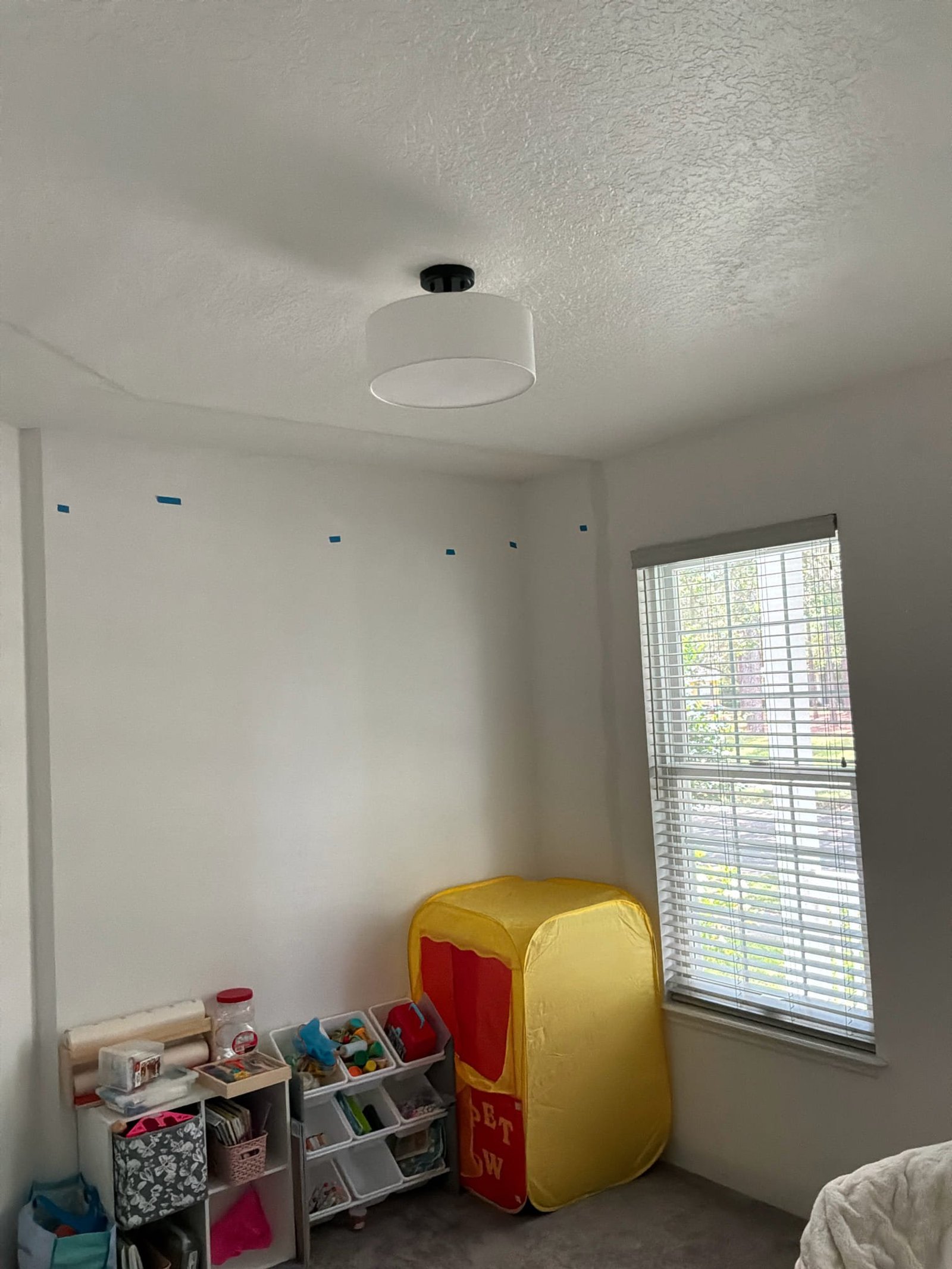
To start, we installed all five customer-provided indoor light fixtures. We ensured each was properly secured to the existing electrical boxes. Next, we installed the customer-provided outdoor ceiling fan at the location that previously held a light fixture. This required verifying the electrical box was rated for fan support and making any necessary wiring adjustments.
Replacing the Damaged Attic Socket
For the attic repair, we replaced the damaged socket with a new Pass & Seymour 276-WH phenolic lampholder rated for 250V and 660W. This heavy-duty porcelain fixture provides reliable service in the attic environment. We also installed a new LED A19 bulb rated at 11 watts with 3000K color temperature. As a result, the homeowner now has bright, efficient lighting for attic access.
All connections were made using proper wire nuts and electrical boxes. We paid careful attention to secure mounting and proper grounding throughout.
Why This Ceiling Fan Installation Matters for Windermere Homeowners
Ceiling Fans Require Special Support
Proper fixture installation ensures both safety and longevity. However, ceiling fans require special consideration because they create mechanical stress. Standard light fixture boxes aren’t designed to handle this stress. Using a fan-rated electrical box prevents loosening over time and potential fixture failure.
Reliable Attic Lighting Improves Safety
Attic lighting repairs are particularly important because these spaces often house critical systems. For example, HVAC equipment and electrical panels are typically located in attics. Additionally, reliable attic lighting improves safety when homeowners need to access these areas for maintenance or storage. Quality porcelain lampholders withstand temperature fluctuations better than plastic alternatives. This makes them ideal for unconditioned attic spaces.
Moreover, proper lighting in utility spaces helps homeowners identify potential issues early. If you’re concerned about other electrical safety issues in your home, consider scheduling an electrical safety inspection in Orlando to ensure everything meets current code requirements.
Code Compliance Cited in This Job
Every fix above maps to a specific section of the 2020 NEC, the edition Florida enforces under the 8th Edition Florida Building Code. Florida adopts the 2023 edition of the NEC when the 9th Edition takes effect on December 31, 2026. Each card links to NFPA’s public NEC index.
Outlet Box Support
This section requires electrical boxes supporting ceiling fans to be specifically listed and marked for fan support. Standard light fixture boxes cannot safely support the mechanical stress of a rotating fan. NFPA reference ›
Fixture Support
All lighting fixtures must be securely fastened to the outlet box or building structure. This applies to both the indoor fixture replacements and the attic lampholder installation in this project. NFPA reference ›
Electrical Connections
All electrical connections must be made in approved junction boxes with proper wire connectors. This standard governed the wiring connections for all seven fixtures installed in this Windermere home. NFPA reference ›
Common Questions
Questions homeowners ask after seeing this kind of work.
Can I install a ceiling fan where I currently have a light fixture?
It depends on the electrical box. Most standard light fixture boxes aren’t rated for the mechanical stress of a ceiling fan. The box needs to be specifically listed for fan support and properly braced. Our electricians can evaluate your existing setup and upgrade the box if needed. Schedule an evaluation to ensure safe fan installation.
How do I know if my attic light socket needs replacement?
Signs include flickering when you touch the fixture, visible cracks in the socket, or bulbs that don’t seat properly. In attic environments, porcelain sockets last longer than plastic ones because they handle temperature swings better. If you’re experiencing these issues, book an inspection to determine the best replacement option.
Should I provide my own light fixtures or have the electrician supply them?
Either approach works. Many homeowners prefer to choose their own fixtures for style and budget control. However, electrician-supplied fixtures often come with installation warranties. We’re happy to install customer-provided fixtures as long as they’re appropriate for the location and properly rated. Contact us to discuss the best approach for your project.
How often should I have my home’s lighting inspected?
A yearly inspection is recommended, especially for homes with older fixtures or those that have experienced electrical issues. Fixtures in harsh environments like attics, basements, or outdoor locations may need more frequent attention. During inspections, we check mounting security, wiring integrity, and proper operation. Schedule your annual inspection to catch potential issues early.
What’s the difference between indoor and outdoor fixture requirements?
Outdoor fixtures must be rated for wet or damp locations and use appropriate weatherproof connections. They also need proper grounding and may require GFCI protection depending on the location. Indoor fixtures have different requirements based on room type and moisture levels. Our team ensures each fixture meets the appropriate safety standards for its location. Get a quote for your specific installation needs.