This Oviedo post-storm pool wiring case study walks through the real diagnosis, the fix, and the code details from a recent service call. After a thunderstorm swept through Oviedo, FL, a homeowner woke up to roughly a dozen non-functioning light fixtures and pool equipment that had stopped responding. Our field team arrived the same day, worked through a focused diagnostic, and gave the homeowner a clear picture of exactly what the storm had left behind.
The Problem
The homeowner noticed the issues the morning after a heavy thunderstorm. Multiple interior light fixtures had gone dark, and the pool equipment was no longer operating normally. Importantly, there was no burn smell and no visible damage, so the root cause was not immediately obvious.
“Everything just stopped working after the storm. No smell, nothing burned that I could see. I just needed to know what was going on.”
That kind of calm, methodical concern is exactly the right response. Without visible damage to point to, a systematic inspection is the most reliable way to understand what changed.
Investigation
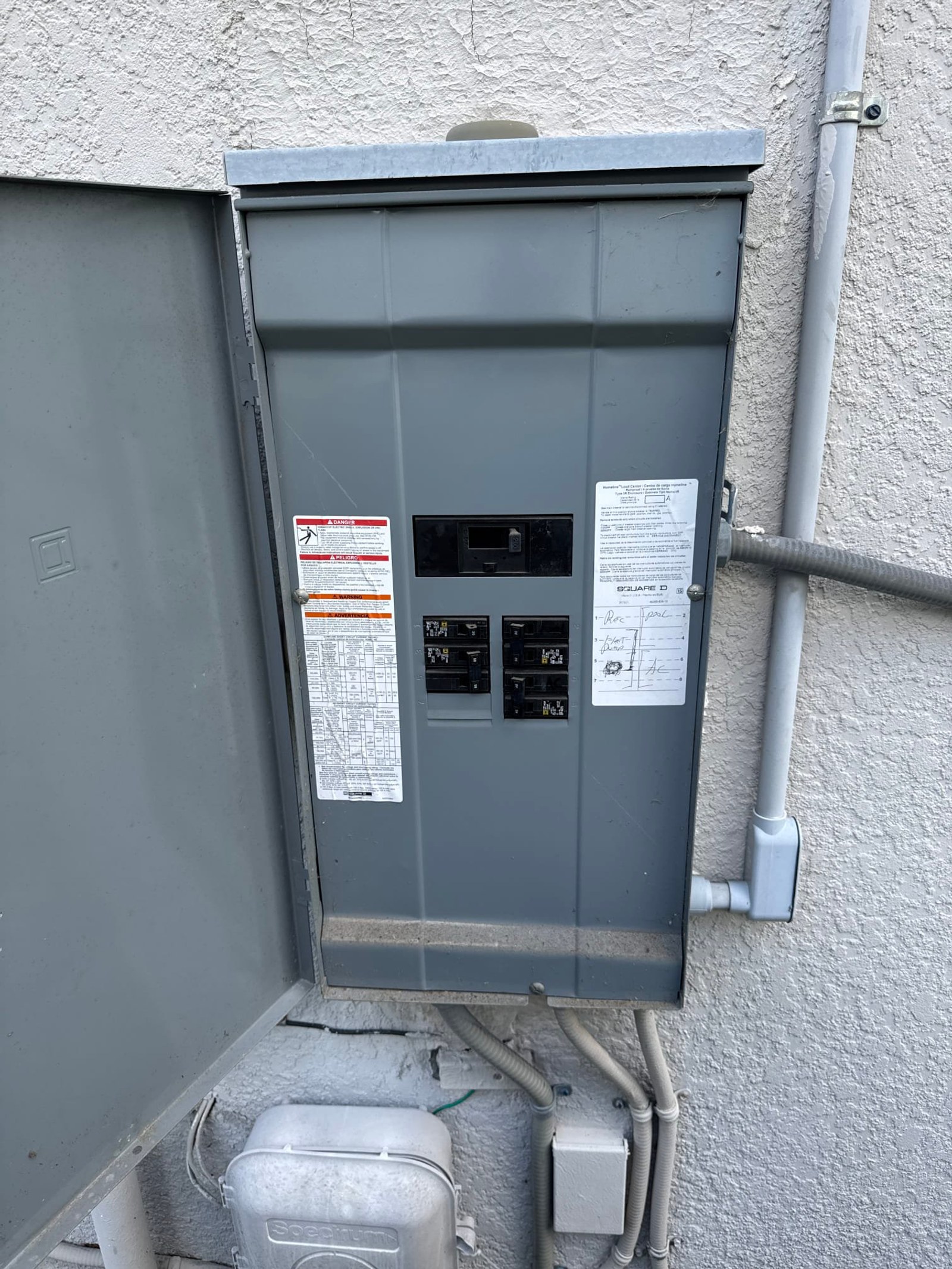
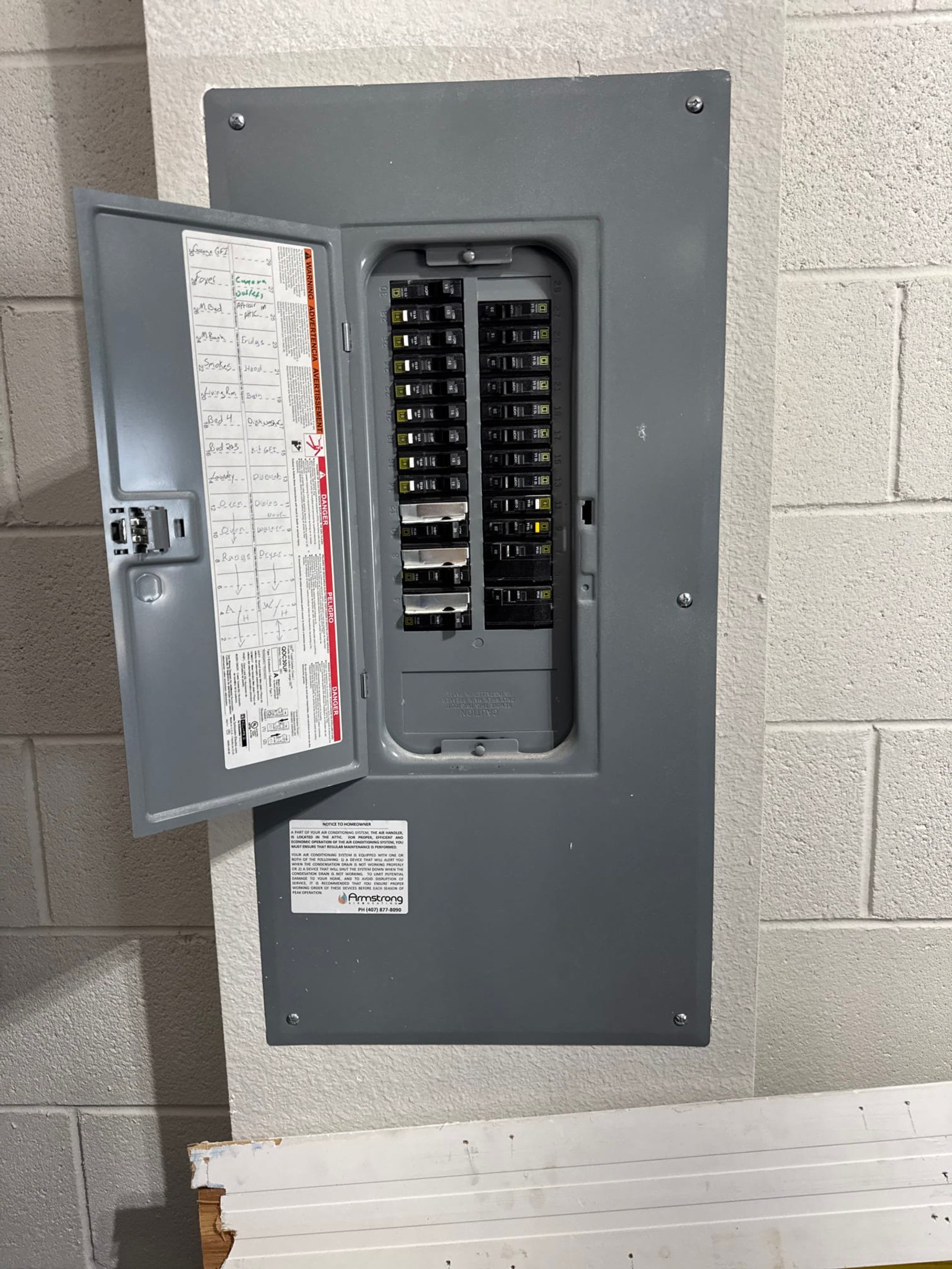
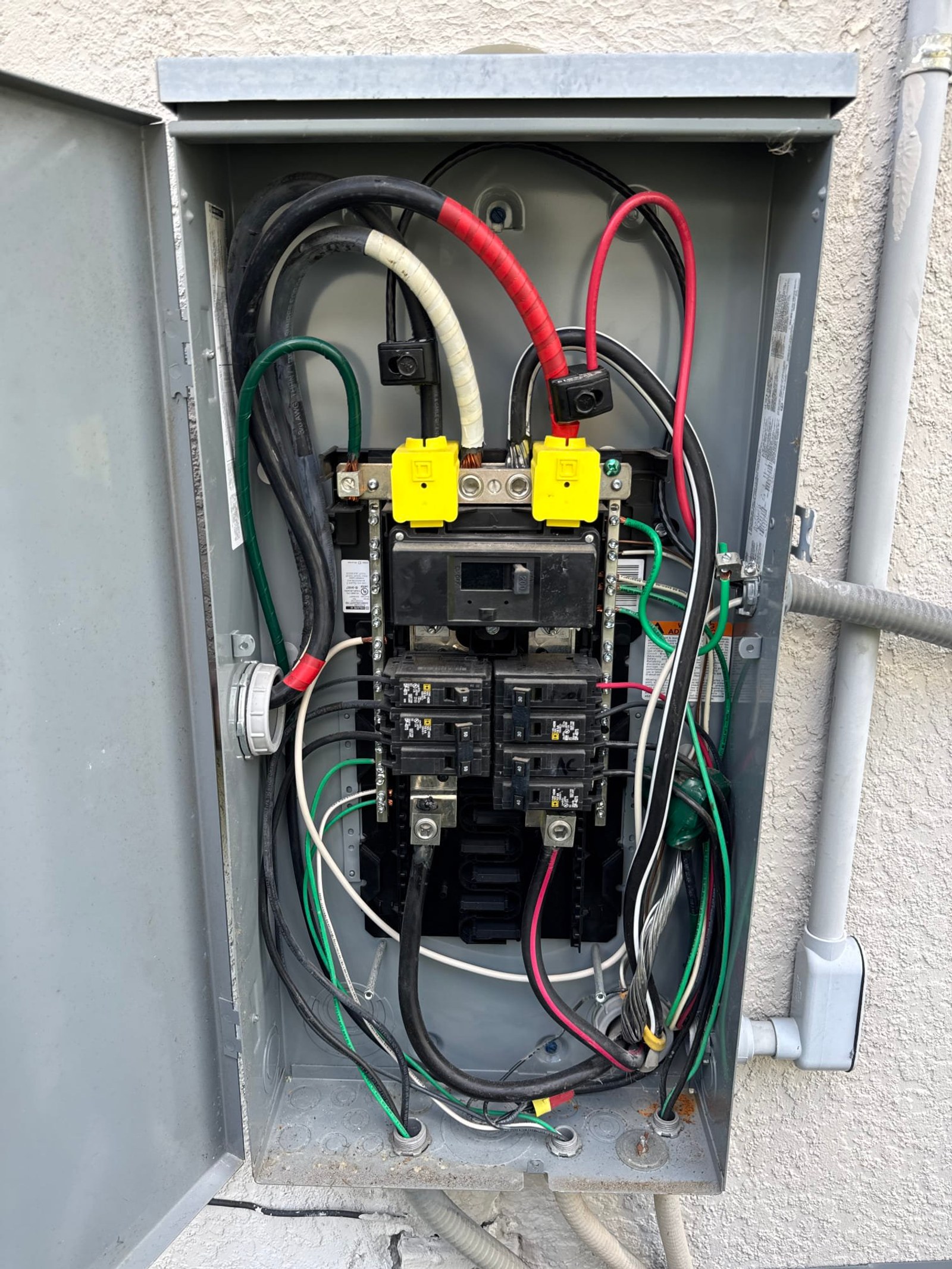
Our technician on-site started at the panel and worked outward. The exterior panel enclosure showed a gray metal cabinet mounted on the outside wall, with conduit running down to the service entry. The circuit directory on the deadfront was still legible, which helped the team cross-reference breaker toggles against the reported outages.
Conduit and Enclosure Observations
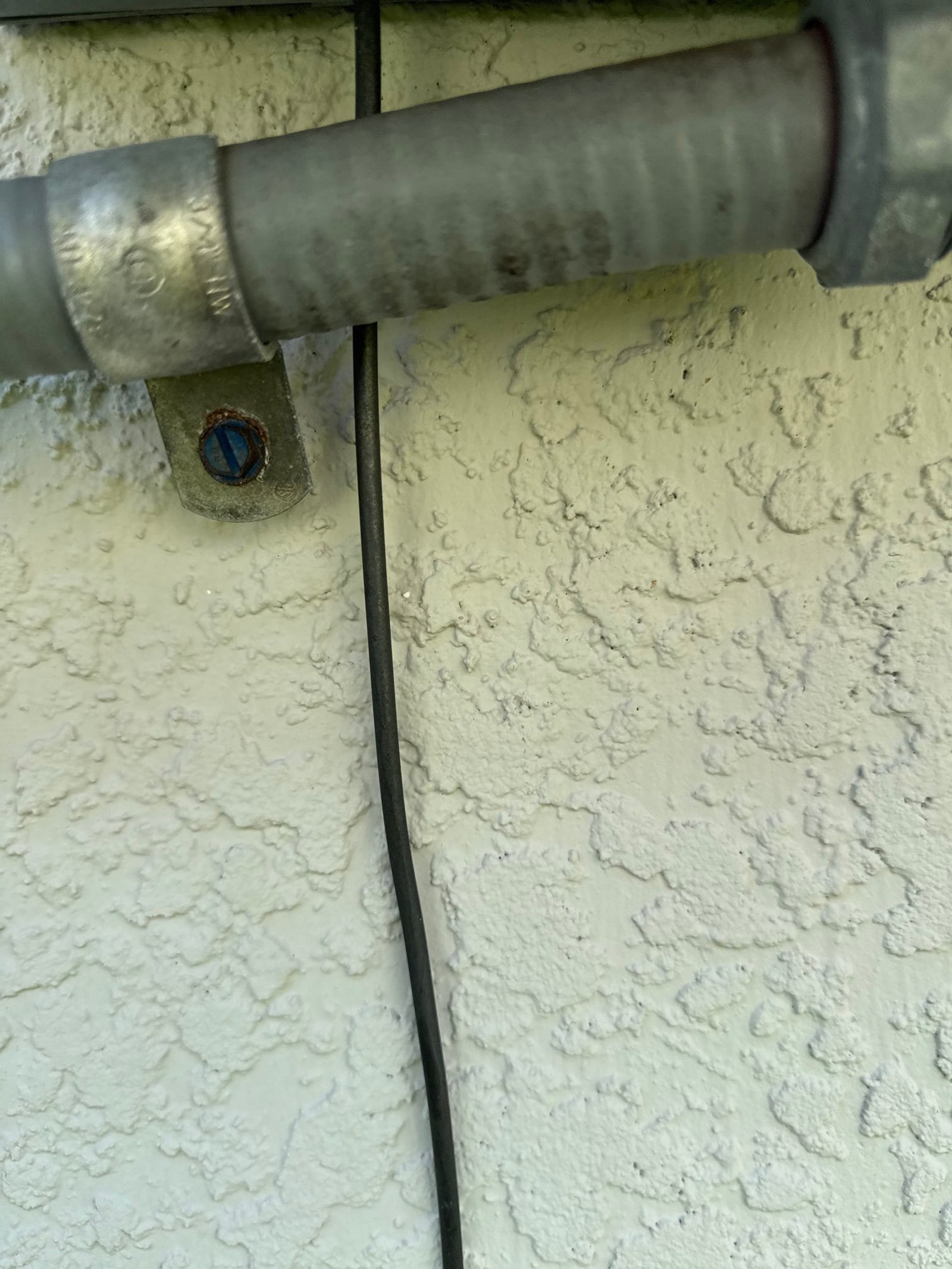
The most notable physical finding was on the exterior conduit and its fittings. The metal conduit on the exterior wall showed visible rust staining and corrosion at the terminations and on the enclosure itself. That kind of surface oxidation is common on exterior electrical equipment in Central Florida, where heat, humidity, and seasonal storms accelerate wear on metal surfaces over time.
Corrosion at conduit terminations is worth noting because it can gradually compromise the seal between conduit and enclosure. Over years of cycling through wet and dry seasons, that wear can allow moisture to track into the panel cabinet. This was standard construction for the era and the environment, but it is an opportunity to monitor and address as part of ongoing home maintenance.
Panel Interior Review
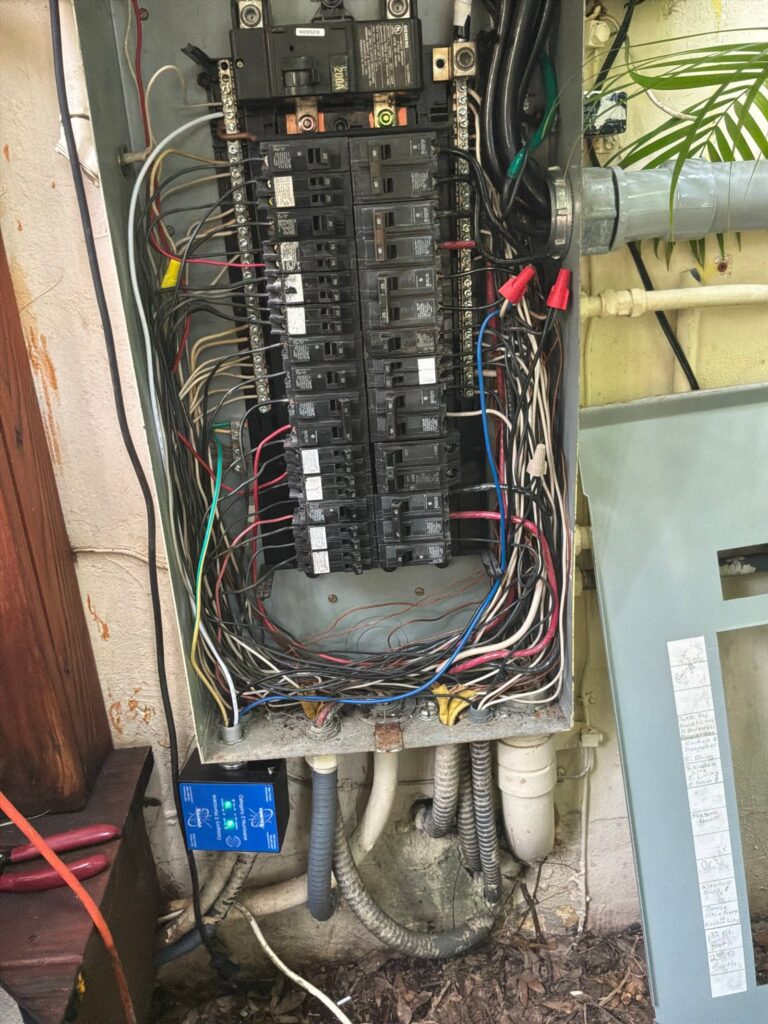
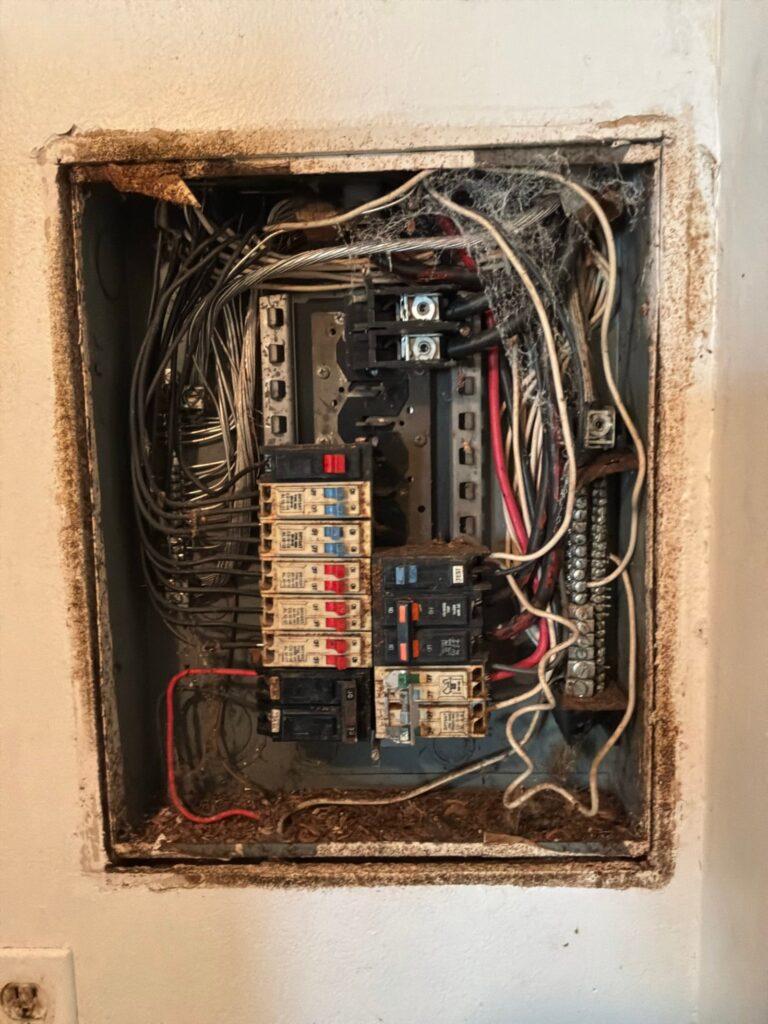
Inside the cabinet, the team observed branch conductors with yellow terminal connectors alongside red, black, green, and white wire leads. The circuit directory remained intact. The visual check confirmed which breakers corresponded to the affected circuits, giving the team a clear starting point for tracing the storm’s impact through the system.
What We Fixed
Based on the scope of the visit, our technician performed a focused minor troubleshooting service. This included a visual inspection of the panel interior, a check of the relevant breaker toggles, and a review of the exterior conduit and enclosure condition to identify the most likely cause of the outages. The inspection confirmed the reported symptoms and gave the homeowner a documented baseline of current conditions, including the corrosion observed at the exterior conduit terminations.
Because this visit was scoped as an initial diagnostic, any device removal, internal component testing, or repairs to the pool equipment circuits would require a follow-up appointment once the homeowner decides how to proceed with the findings.
Why This Post Lighting Installation Matters for Homeowners
For a family in Oviedo, a post-storm inspection like this one is about more than checking a box. It is about knowing the home is ready for the next storm season, and the one after that. When pool equipment and interior lighting go down at the same time, the cause could be as simple as a tripped breaker or as involved as storm-related wear on aging conduit connections. A quick, professional look answers that question clearly.
Florida’s humidity and lightning season create conditions that accelerate wear on exterior electrical equipment faster than in drier climates. Corrosion on conduit fittings and enclosures, like what was visible here, is normal for the environment, but it is worth tracking. Staying ahead of that wear means the household’s lighting, pool, and other circuits keep running the way the family expects them to, through every storm and every season.
Perhaps most importantly, the homeowner now has a documented snapshot of the system’s condition. That kind of peace of mind, knowing there is no hidden damage and having a clear record to share with any future inspector, is genuinely valuable. It also means the family is not left guessing every time the weather turns.
Code Compliance Cited in This Job
Every fix above maps to a specific section of NEC 2020. Each card links to NFPA’s public NEC index.
Surge Protective Devices at Services
NEC 230.67 requires a listed surge protective device (SPD) at the service for dwelling units. After a direct or nearby lightning event, this section is particularly relevant: if the panel does not yet have an SPD installed, a post-storm inspection is a natural time to evaluate adding one so the home’s circuits are better protected during future storms. NFPA reference ›
Grounding Electrode System
NEC 250.50 establishes requirements for a complete grounding electrode system at the service. During a post-storm panel inspection, verifying that the grounding electrode connections remain intact and free of corrosion-related degradation is a standard step, particularly where exterior conduit and enclosure surfaces show signs of moisture exposure. NFPA reference ›
Receptacles and Equipment Near Pools
NEC 680.22 covers GFCI protection requirements for receptacles and equipment within defined distances of pool edges. When pool equipment malfunctions after a storm, confirming that GFCI-protected circuits serving the pool area responded correctly, rather than experiencing wiring-level damage, is a key part of the diagnostic process. NFPA reference ›
Circuit Identification
NEC 408.4 requires that every circuit in a panel be legibly identified on the circuit directory. The intact, readable directory observed during this inspection allowed the field team to quickly match breaker toggles to the affected circuits and narrow the diagnostic focus, which is exactly the practical benefit this section is designed to deliver. NFPA reference ›
Common Questions
Questions homeowners ask after seeing this kind of work.
How soon after a thunderstorm should I have my home’s electrical system inspected?
If multiple circuits or appliances stop working after a storm, scheduling an inspection within a day or two is a good approach. Even when there is no visible damage or burn smell, a storm can trip breakers, stress conduit fittings, or affect pool equipment in ways that are only visible through a hands-on check. The sooner you have a clear picture, the sooner everything is running normally again. Schedule online to get a same-day or next-day appointment on the calendar.
Why would pool equipment and interior lights fail at the same time after a storm?
When two separate systems go down together after a storm, the most common explanations are a tripped main or sub-panel breaker, a GFCI trip on a shared circuit, or storm-related voltage fluctuation that affected multiple loads at once. A focused panel inspection can usually identify which of those scenarios applies. If your home has experienced something similar, our team can book a diagnostic visit to trace the cause and give you a clear answer.
Is exterior conduit corrosion something I need to address right away?
Surface rust and corrosion on exterior metal conduit is very common in Central Florida, especially on older installations, and it does not always require immediate action. However, corrosion at conduit terminations and enclosures is worth monitoring because it can eventually allow moisture to reach panel components over time. A licensed electrician can assess the extent and let you know whether it is a watch-and-wait situation or worth addressing sooner. Schedule an inspection and we can give you an honest assessment.
How often should I have my home’s electrical system inspected?
A yearly inspection is a solid baseline for most homes, and it is also a good way to stay ahead of the kind of wear that Central Florida’s humidity and storm seasons can accelerate. Homes built before 1990 and homes that have weathered recent storms may benefit from inspections more frequently than once a year, since older wiring and storm-stressed components can change between annual visits. Book a yearly check-up with our team and keep your home running exactly the way your household expects.
What does a minor electrical troubleshooting visit actually include?
A minor troubleshooting visit is designed for focused, contained issues: resetting a breaker or GFCI, checking a switch or outlet, inspecting a fixture, or performing a visual review to identify the likely source of a problem. It is the right first step when you need a professional to confirm what is going on before committing to repairs. If the inspection turns up conditions that need follow-up work, the technician will walk you through the options clearly. Schedule online to get the conversation started.
Want to see more real jobs like this one? Browse our completed case studies, explore our services, or read about our pool and hot tub wiring in Orlando. Ready to book a visit of your own? Contact our Lake Mary office.