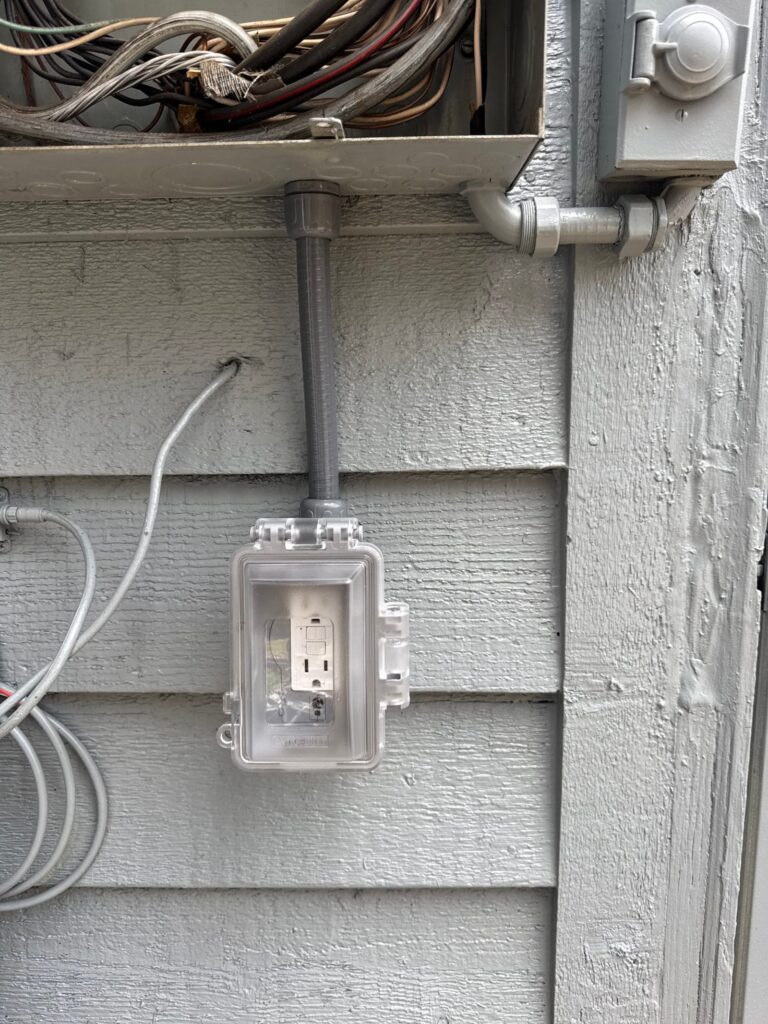
Before & After
 Before
 After
AfterThis Winter Garden pendant lights and outlets case study walks through the real diagnosis, the fix, and the code details from a recent service call. A homeowner in Winter Garden, FL called us after a light fixture fell from the ceiling and two pendant lights were shifting loose overhead. Our field team found the root cause quickly: the ceiling boxes were not rated or anchored for the weight they were carrying. We replaced the boxes, secured the pendants, tightened the outlets, and noted one item worth adding to the homeowner’s radar for the future.
The Problem
The homeowner described the situation plainly:
“I have loose outlets in the kitchen and bathroom, a light fixture that fell, and two pendant lights that are loose in the ceiling.”
With ceilings running 10 to 11 feet, a falling fixture is the kind of surprise no one wants. The goal was to get everything back in place, properly supported, and working smoothly.
Investigation
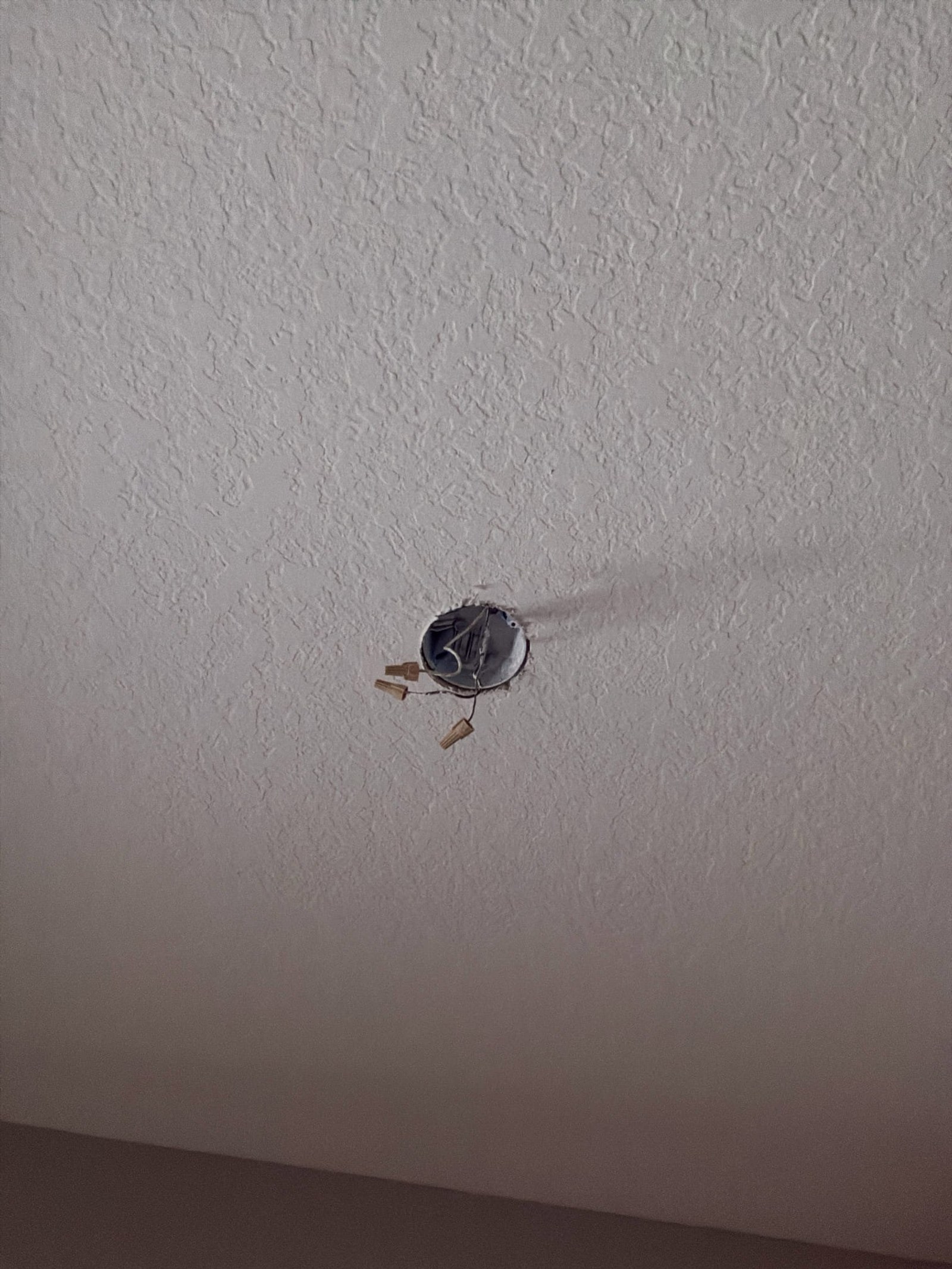
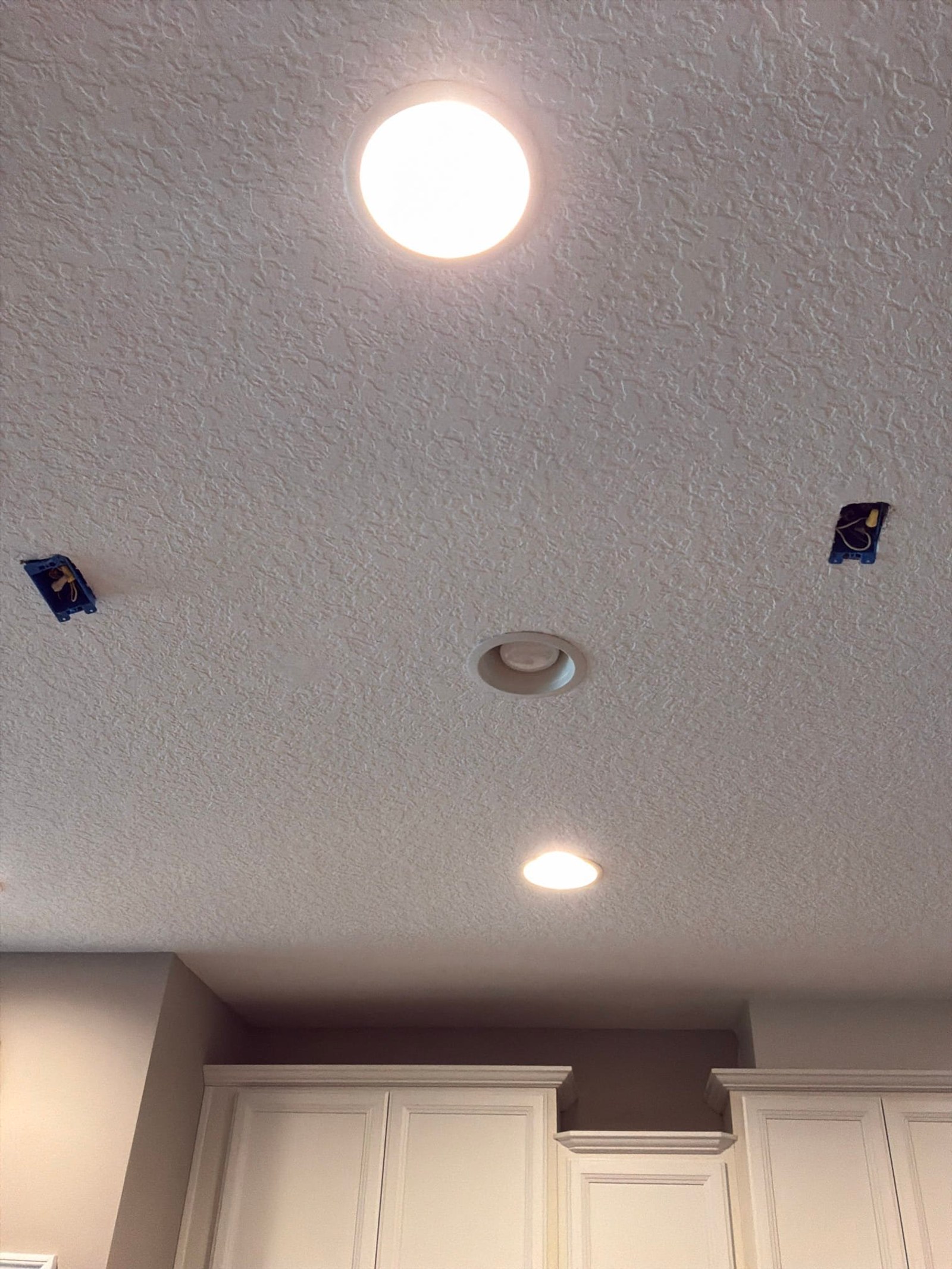
Our technician on-site started with a visual check of the ceiling where the fixtures had shifted. The junction box in that location was missing its cover plate, leaving interior wiring exposed. That condition tells a straightforward story: the original box was not designed to carry a hanging fixture, and over time the weight worked it loose.
The two pendant light locations showed the same pattern. The existing old-work boxes were not fan-rated or brace-supported, so they had no reliable anchor point for fixtures that swing and carry a small amount of dynamic load every time someone moves through the room.
Outlet Check
In the kitchen and bathroom, the loose outlets were checked one at a time. The inspection confirmed no voltage drop, no backstabbed wiring, and no grounding issues. In many cases like this, outlets loosen simply because the mounting screws back off gradually, especially in a busy kitchen where the outlet sees daily use.
Panel Observation
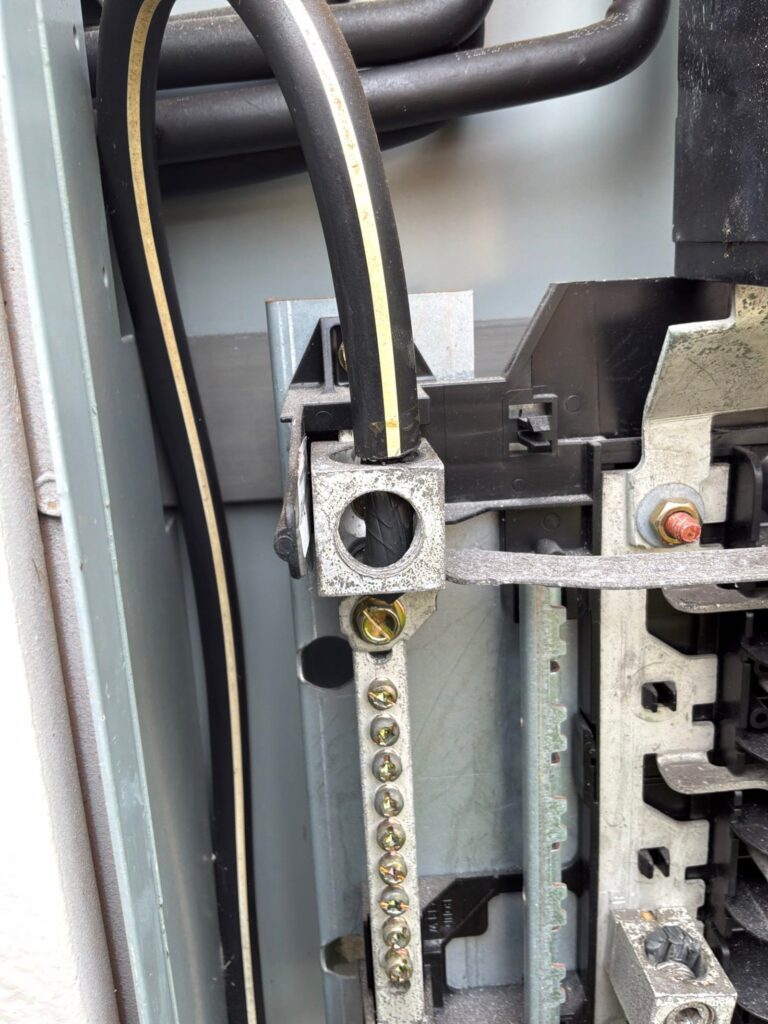
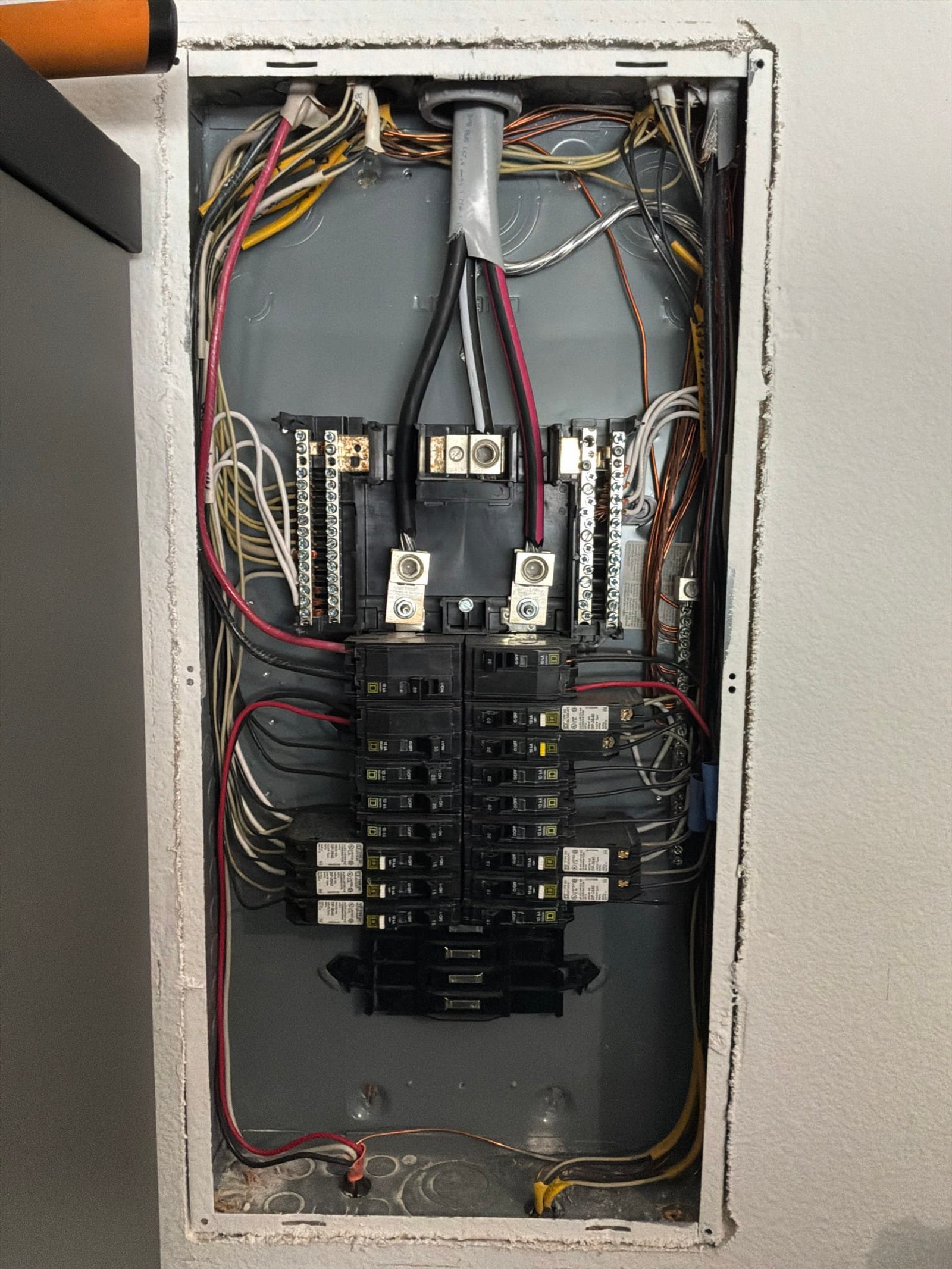
The home has a Square D QO 150-amp panel, a reliable and well-supported platform. The inspection cleared the panel on nearly every point: breakers properly sized, neutrals and grounds separated, no double-tapped breakers, no open knockouts, and the panel directory is labeled. One item to note: the photos of the panel interior showed corrosion on the terminations and enclosure, along with evidence of moisture finding its way inside at some point. That is worth monitoring. Our team also noted the panel currently has no whole-home surge protection, which we flagged as an opportunity for the homeowner to consider.
What We Fixed
Ceiling Box Replacements
For the location where the fixture had fallen, our crew installed a UL-listed fan-rated Safe-T-Brace expanding brace bar with a compatible ceiling box. This type of brace fits between joists without opening the ceiling and locks in place to support fixtures up to 70 pounds. It is the right solution for older construction where the original box was a simple round plastic cut-in with no structural backing.
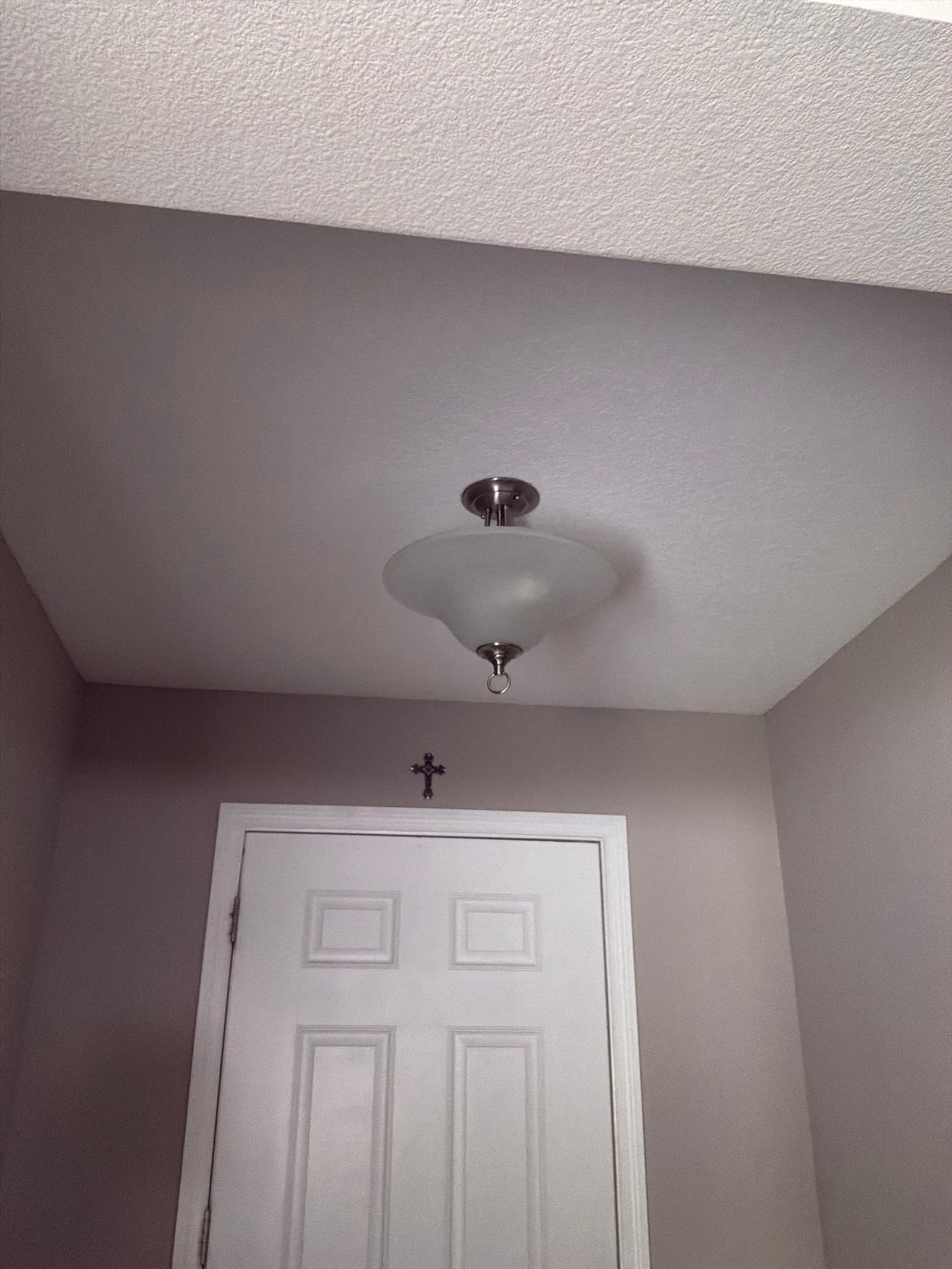
For the two pendant light locations, we installed a pair of Pass and Seymour C118WAC 3.75-inch round old-work boxes. These metal boxes fit into the existing ceiling cutouts and provide a solid, code-compliant mounting surface for the client-supplied pendants. After that, we hung the client’s pendant light at the prepared location.
Outlet Service
The loose outlets in the kitchen and bathroom were checked and tightened. The inspection confirmed that GFCI protection is already present in the required areas, the outlets are properly grounded, and there is no voltage drop on the circuits. Minor troubleshooting confirmed no deeper wiring issue was driving the looseness.
Why This Orlando Panel Upgrade Matters for Homeowners
Fixtures in high-traffic rooms do more work than they seem to. Kitchen pendants get bumped, bathroom lights get bumped by open cabinet doors, and outlets in those same rooms get plugged and unplugged dozens of times a week. When the boxes behind them are not rated for the load, the connection between fixture and ceiling gradually gives way.
For this family, the fix means the kitchen and bathroom work the way they should every morning: lights that stay put, outlets that hold a plug firmly, and no surprises overhead. That is exactly the kind of reliability a household depends on without having to think about it.
The one open item from this visit is whole-home surge protection. The Square D QO panel is a great candidate for a panel-mounted Type 2 surge protective device. NEC 230.67 now requires surge protection at the service for new dwelling units, and adding one to an existing home is a straightforward upgrade. It means TVs, computers, the refrigerator, and every other connected appliance in the home ride through lightning and grid fluctuations without interruption. Worth discussing on the next visit.
The moisture observation at the panel is a separate note worth keeping in mind. Panels in Florida see humidity year-round, and any path for water to reach the enclosure is worth closing off. Corrosion on terminations and the enclosure is consistent with long-term exposure and is an opportunity to have a licensed electrician evaluate the seal and ventilation around the service entry. For the ESFI’s guidance on electrical system care, homeowners can also review general best practices between professional visits.
Code Compliance Cited in This Job
Every fix above maps to a specific section of NEC 2020. Each card links to NFPA’s public NEC index.
Outlet Boxes for Luminaires and Ceiling Fans
NEC 314.27 requires that boxes used to support luminaires or ceiling fans be specifically listed and rated for that purpose. On this job, the original ceiling boxes were standard cut-in boxes without the load rating needed for pendant fixtures, which contributed to the fixtures working loose over time. The replacement fan-rated brace box and the new old-work metal boxes address this requirement directly. NFPA reference ›
Surge Protection for Dwelling Unit Services
NEC 230.67 requires a surge protective device at the service equipment for all new dwelling unit installations. The inspection flagged that this home’s Square D QO 150-amp panel does not currently have a whole-home SPD. Adding a panel-mounted Type 2 device is a straightforward next step that would protect all branch circuits from voltage transients, including those from Florida lightning activity. NFPA reference ›
Circuit Directory and Identification
NEC 408.4 requires that every circuit in a panelboard be legibly identified as to its purpose. The inspection confirmed the Square D QO panel on this job has a properly labeled directory, which makes future troubleshooting and service work straightforward for any licensed technician. NFPA reference ›
GFCI Protection for Personnel
NEC 210.8 requires GFCI protection at receptacles in kitchens, bathrooms, and other specified locations in dwelling units. The inspection confirmed GFCI protection is already in place in the required areas of this Winter Garden home, so no additional GFCI work was needed on this visit. NFPA reference ›
Common Questions
Questions homeowners ask after seeing this kind of work.
Why do ceiling light fixtures come loose over time?
The most common reason is that the original ceiling box was a standard cut-in box, not one rated to support a hanging fixture. Over time, even a modest amount of weight and movement causes the box to shift. Replacing it with a fan-rated brace box or a properly anchored old-work metal box solves the problem durably. If your fixtures are wobbling or pulling away from the ceiling, our team can assess the box and get everything secured. Schedule online to book a visit.
How often should I have my home’s electrical system inspected?
A yearly inspection is a good baseline for most homes, and it keeps the household running smoothly season after season. Homes built before 1990 or homes that have come through a recent storm may benefit from a more frequent check, since older wiring and moisture exposure can introduce conditions worth addressing before they affect daily reliability. Book a safety check to get on our calendar.
What is a whole-home surge protector and do I need one in Florida?
A whole-home surge protective device installs at the main panel and shields every circuit in the house from voltage spikes, including those caused by nearby lightning strikes and utility switching events. Florida’s active storm season makes this one of the more practical upgrades a homeowner can add. Your TVs, computers, AC units, and kitchen appliances all benefit from the added buffer. If your panel does not have one yet, our team can schedule an installation visit and walk you through the options.
Are loose kitchen and bathroom outlets something I should address right away?
Loose outlets are worth addressing promptly because a plug that does not seat firmly creates intermittent contact, which can affect the devices you rely on every day. In kitchens and bathrooms especially, outlets get heavy use and the mounting hardware can back off over time. Tightening the device and confirming the wiring connections are solid is usually a quick fix. If you are noticing outlets that move when you plug something in, schedule a repair visit and our team will take care of it.
What should I do if I notice corrosion or moisture near my electrical panel?
Moisture near a panel is an observation worth following up on. Corrosion on terminals and enclosure surfaces is common in Florida homes, particularly when the service entry or panel location has been exposed to humidity over many years. A licensed electrician can evaluate the source of moisture, the condition of the connections, and whether any remediation is needed. Early attention keeps the panel in good shape for the long term. Book an inspection so our team can take a look and give you a clear picture of what is there.
Want to see more real jobs like this one? Browse our completed case studies, explore our services. Ready to book a visit of your own? Contact our Lake Mary office.