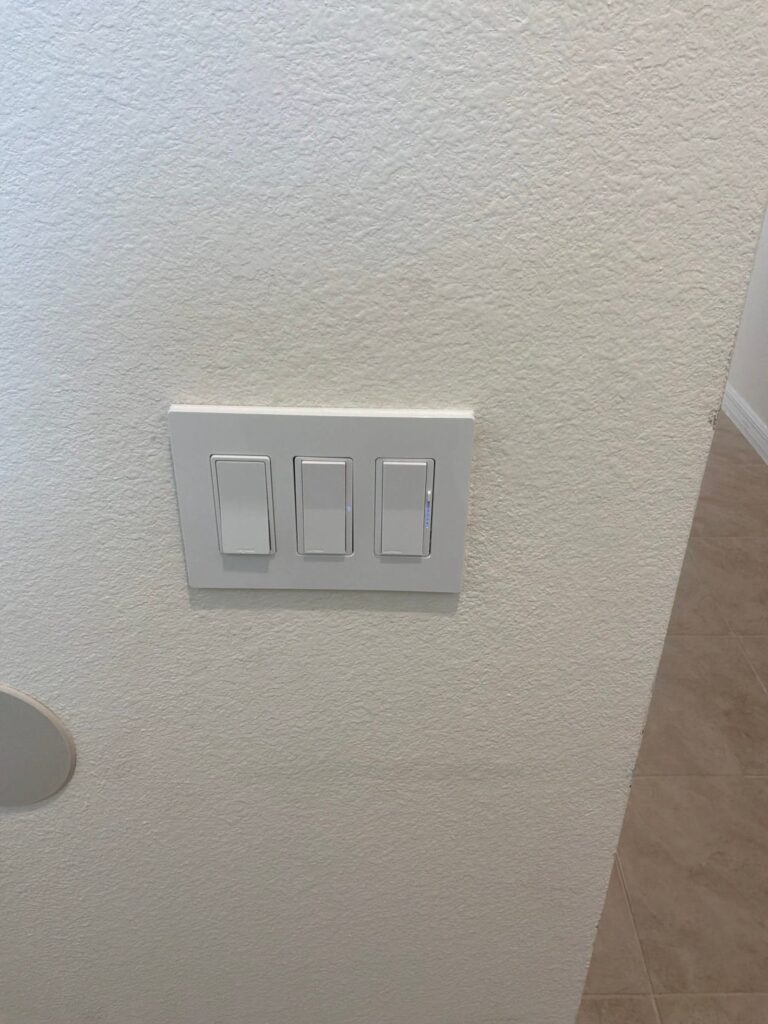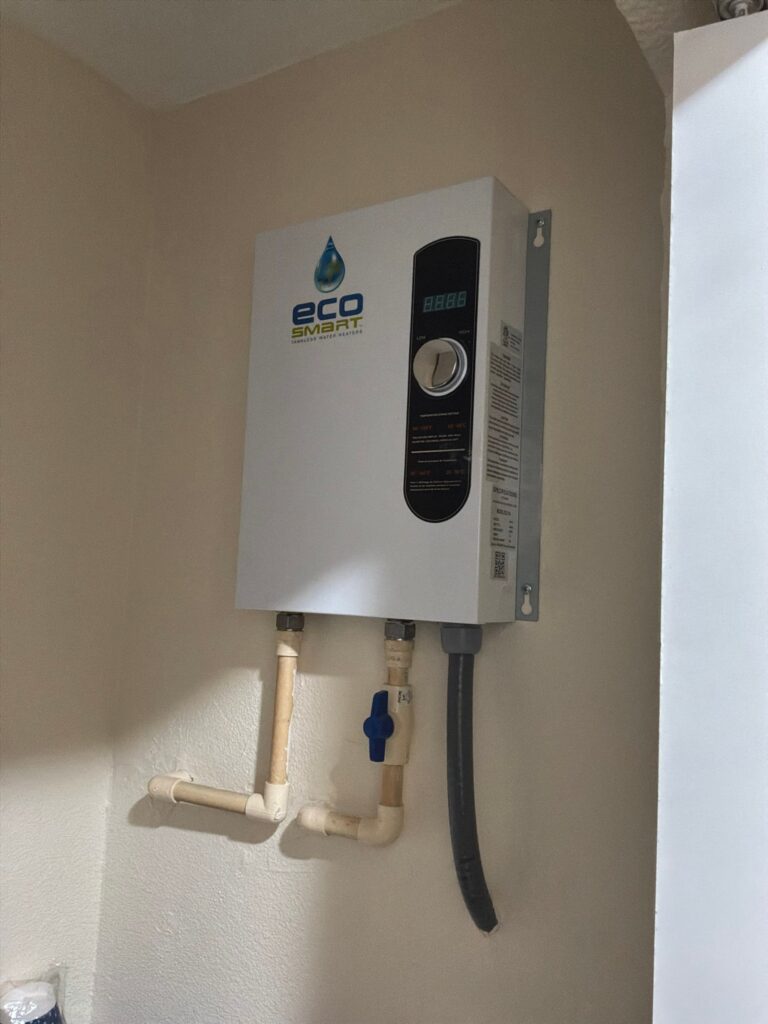
Before & After
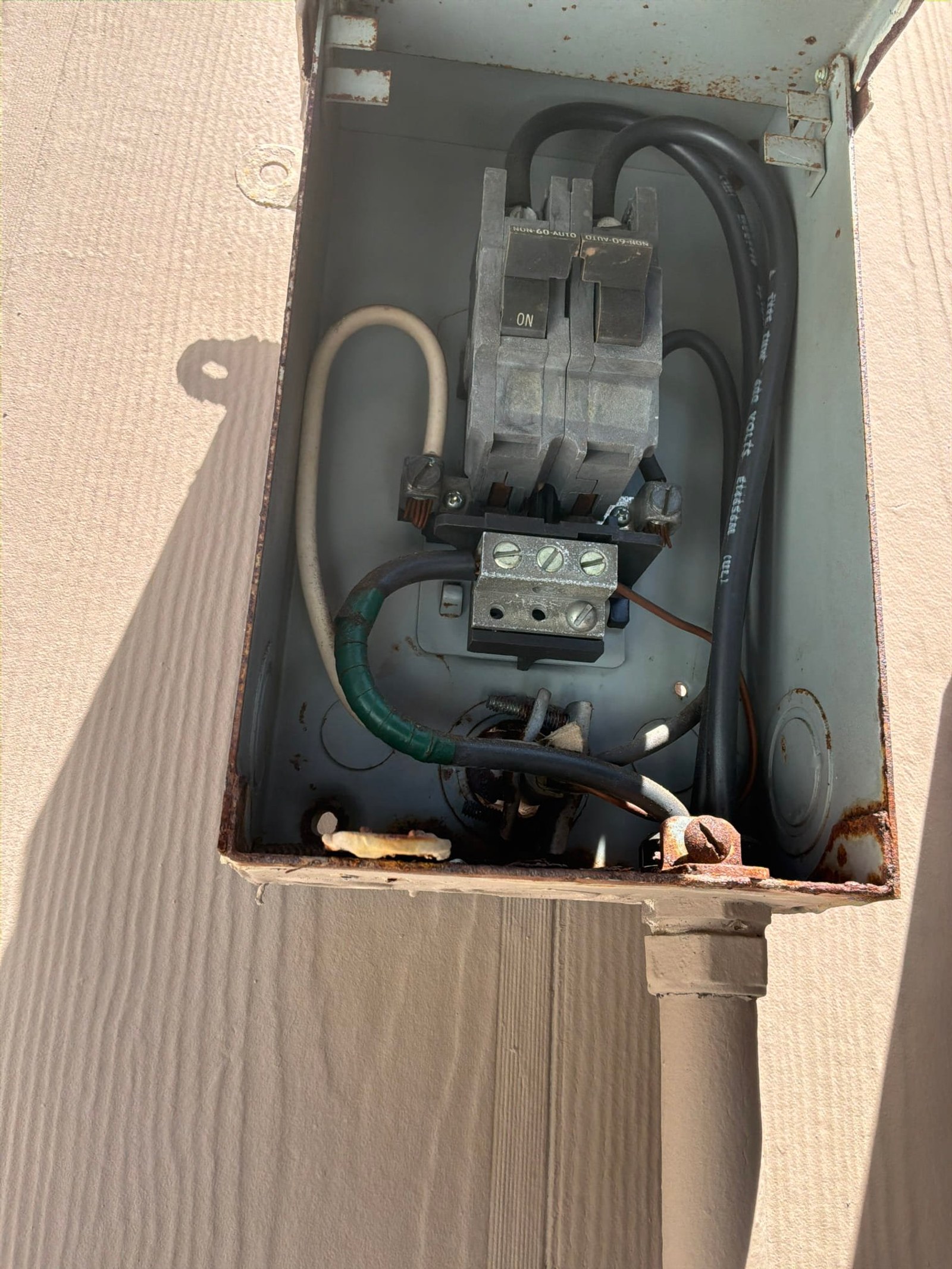 Before
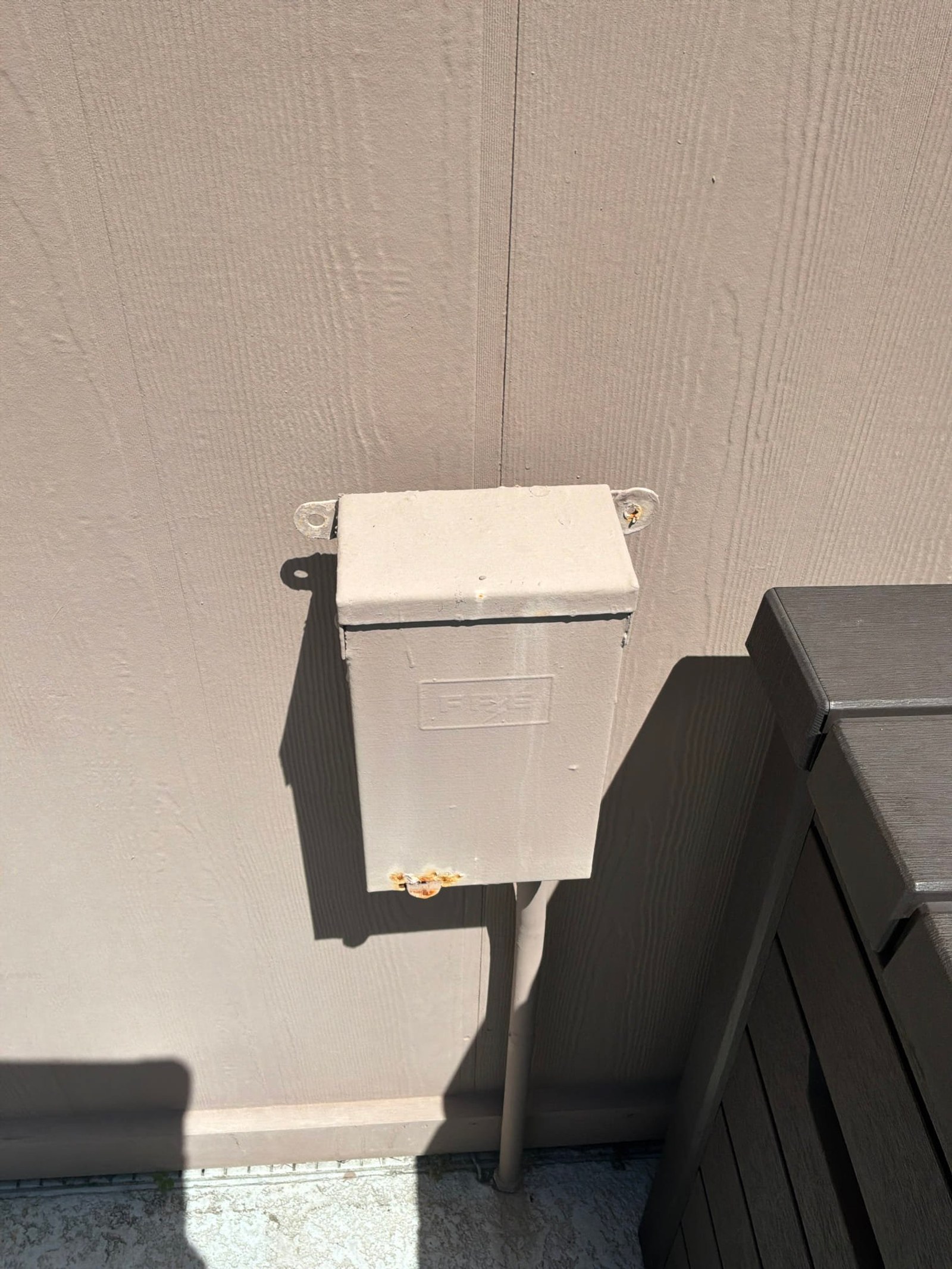 After
This Longwood panel upgrade case study walks through the real diagnosis, the fix, and the code details from a recent service call. A Longwood, FL homeowner scheduled a diagnostic visit after their HVAC company flagged a 40-amp breaker as the likely reason their AC had stopped running. When our field team arrived, the breaker was only the beginning of the story. The panel, the exterior disconnect, and several branch circuits all showed conditions worth a closer look.
Customer’s Problem
The homeowner reached out on a Saturday morning after their HVAC technician identified the AC unit’s 40-amp double-pole breaker as the likely source of the problem. The air conditioning had stopped running, and the HVAC company recommended calling a licensed electrician to evaluate and replace the breaker before restoring power to the system.
What Our Electrician Found
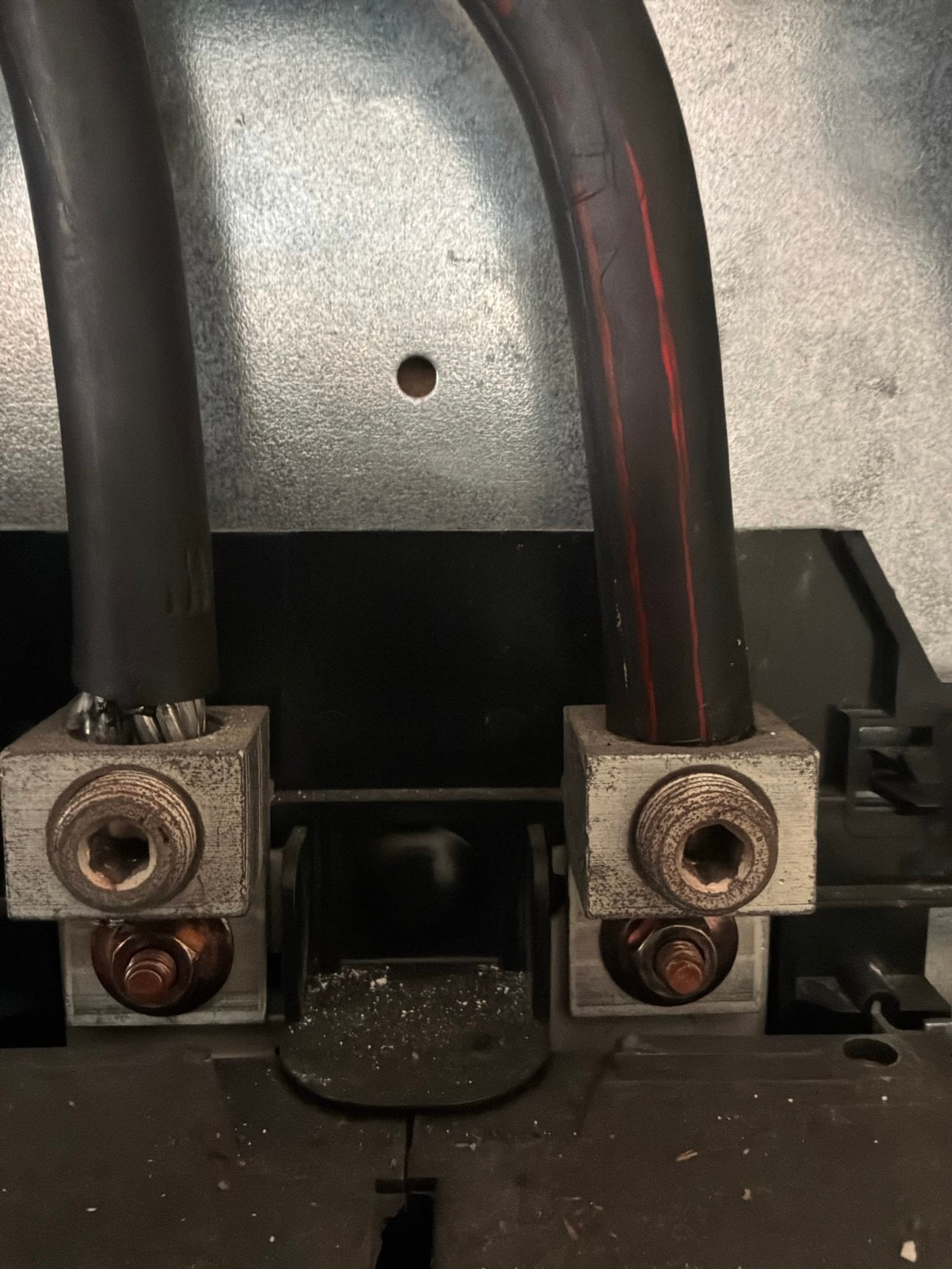
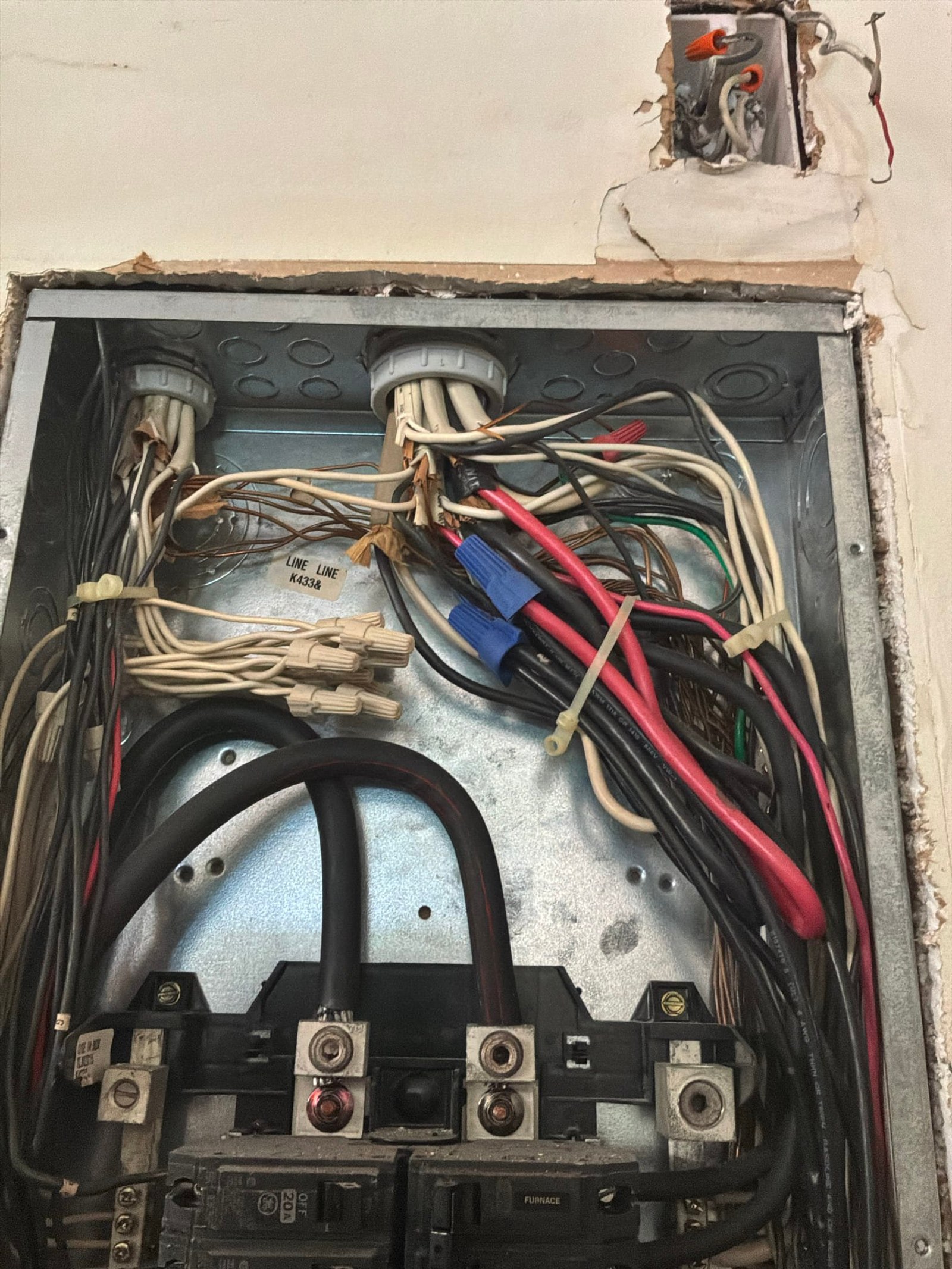
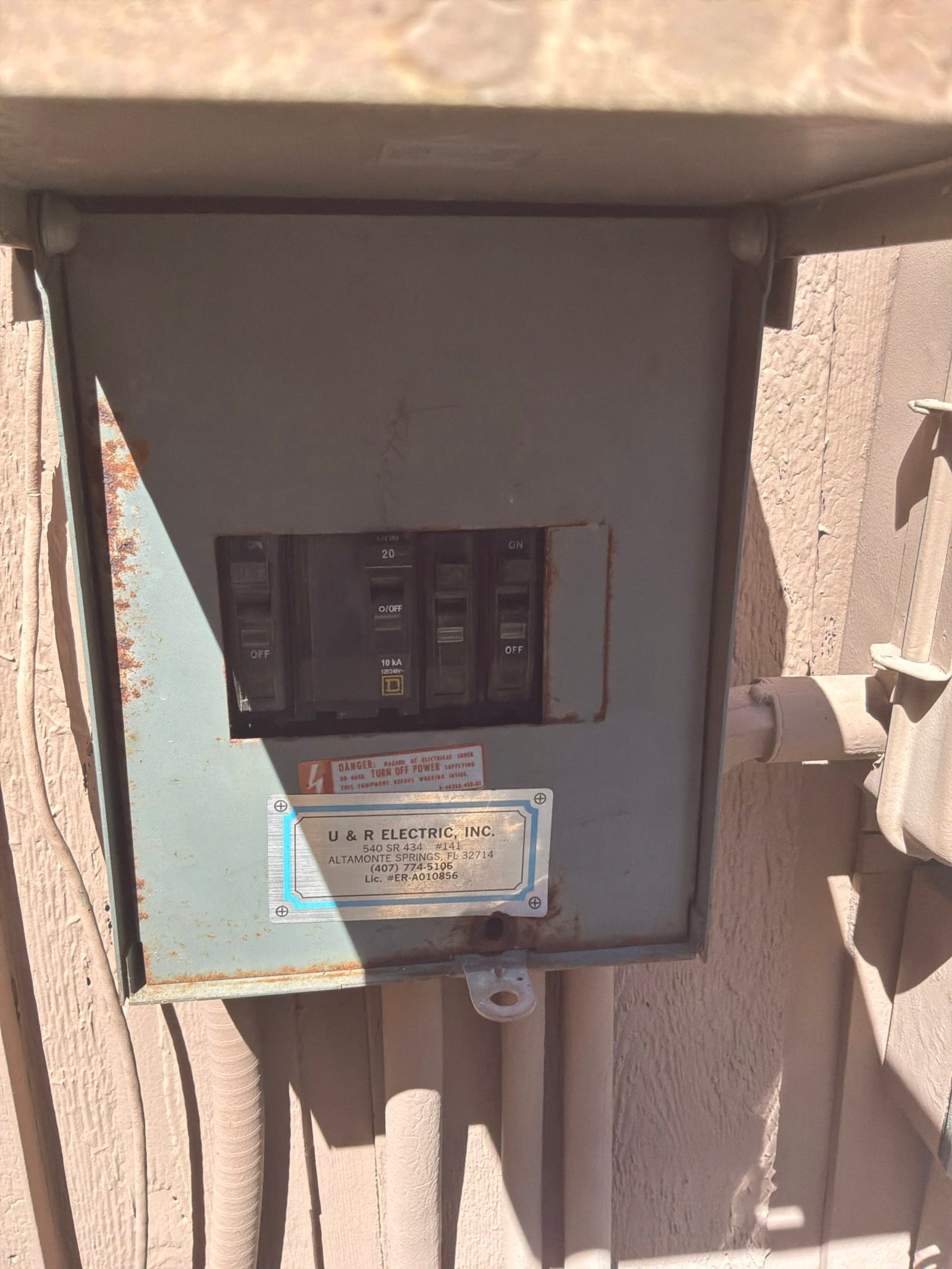
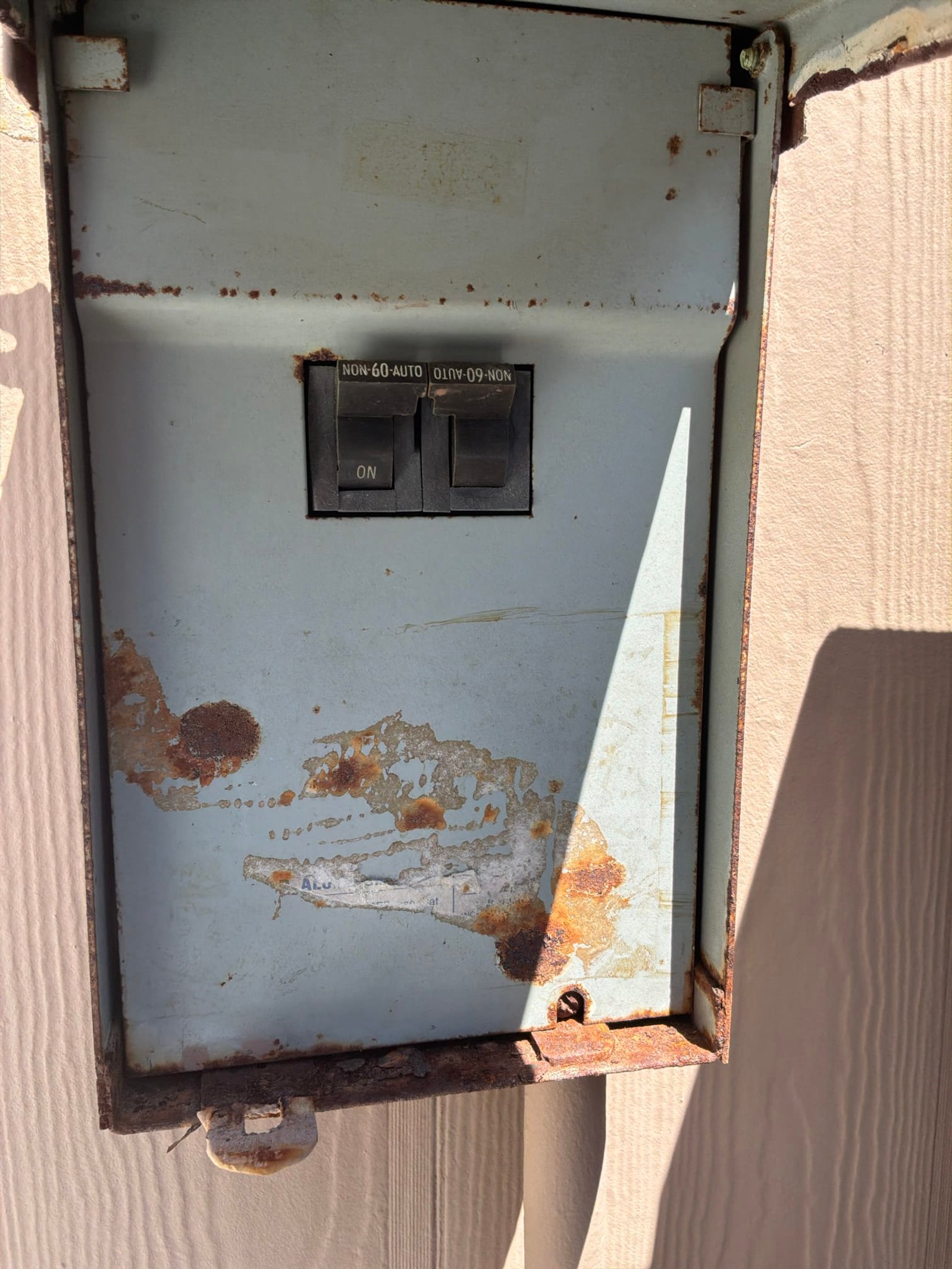
Our technician on-site started at the exterior disconnect and immediately noticed conditions that went beyond a simple breaker swap.
Exterior Disconnect Condition
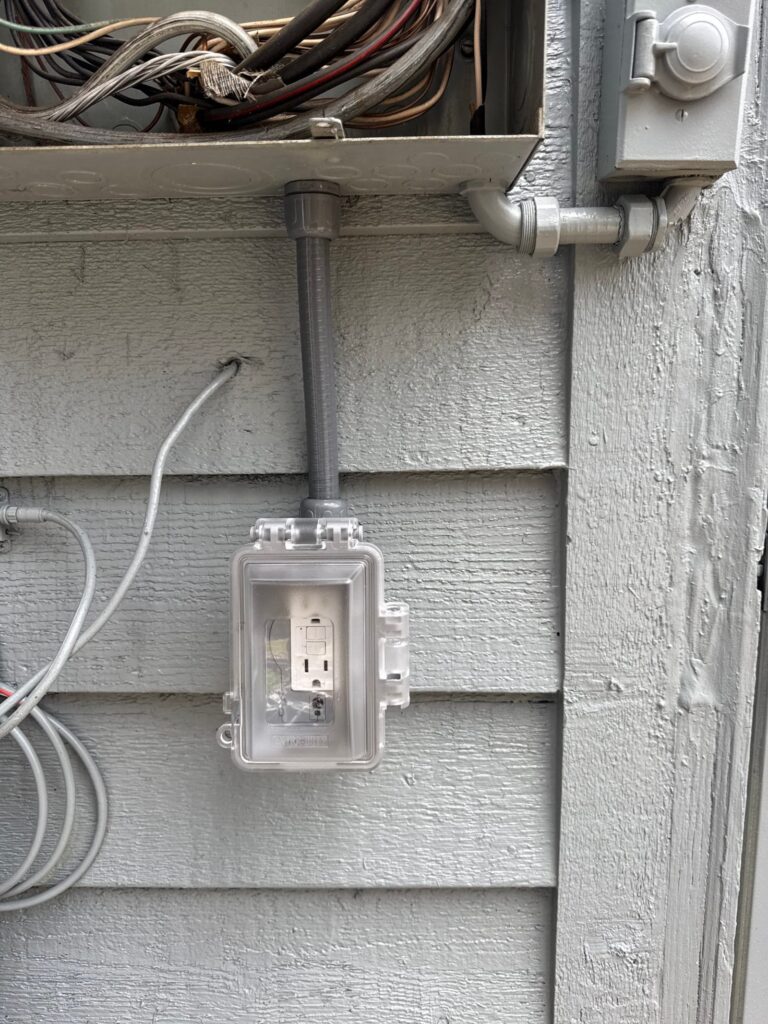
The weatherproof disconnect box serving the AC unit showed significant rust and corrosion on the metal enclosure, the terminations, and the internal components. The photos document water intrusion into the enclosure, which had been working at the connection points over time. Corrosion at terminations increases contact resistance gradually, which can contribute to the kind of intermittent or degraded performance the homeowner experienced. This is an observation about a condition worth addressing, not a sudden failure.
Panel Interior Observations
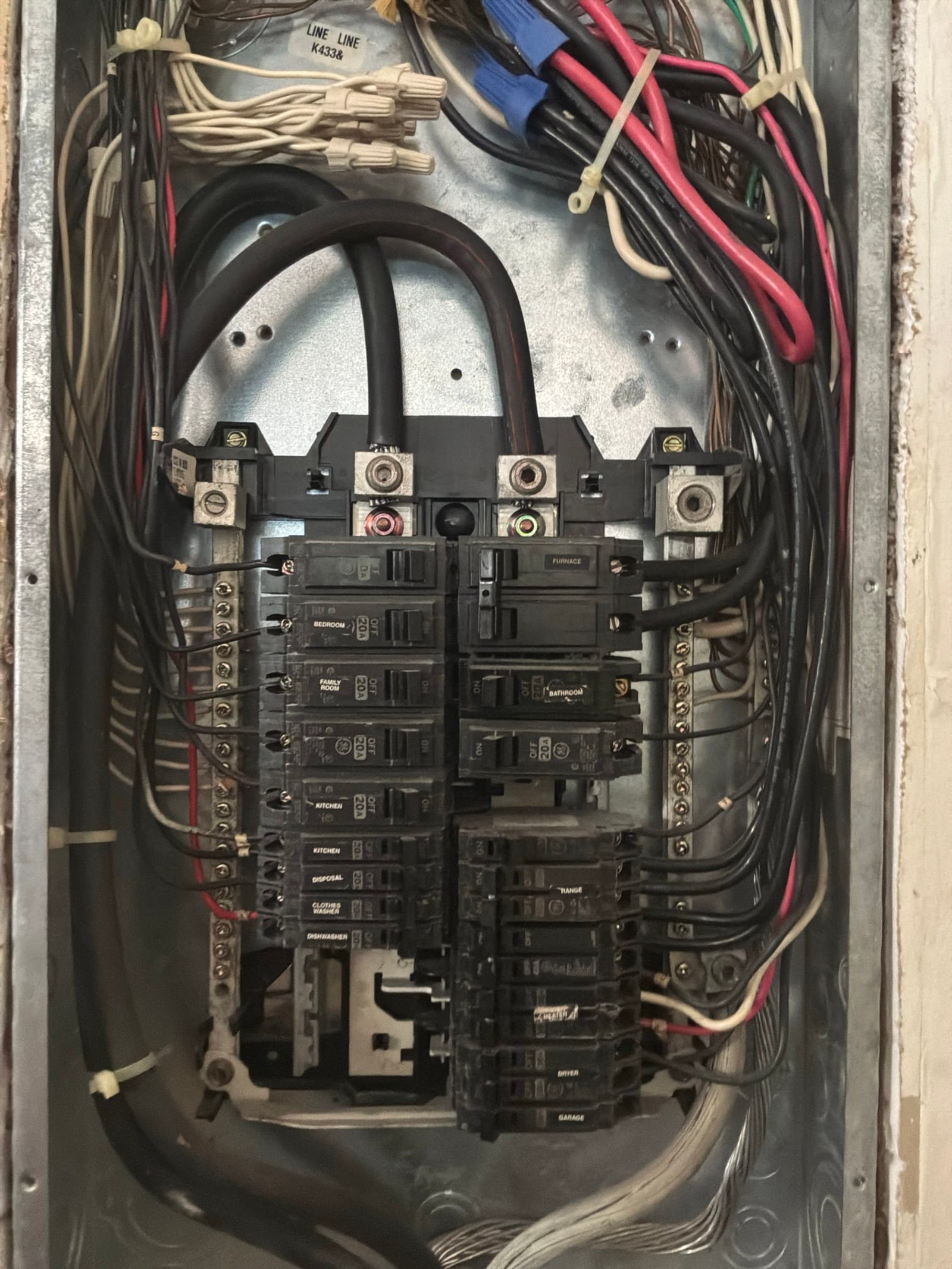
Inside the home, the licensed electrician on site opened the Federal Pacific 200-amp panel. The interior showed branch conductors from earlier work left in place rather than removed, along with tangled wiring involving red, black, and blue conductors running through the open panel. The neutral bar and ground bar were visible and accessible, but the overall workmanship reflected what appears to be DIY modifications added over time. Wiring left in place from prior work is common in homes that have had additions or appliance changes across several decades; it is an opportunity to clean up and document the panel properly.
Checklist Findings
Beyond what the photos showed, the inspection checklist identified several areas that do not meet current code or fall short of today’s recommended standards:
- AFCI protection is not present. Arc-fault circuit interrupter protection on branch circuits serving bedrooms and living areas is now required under NEC 210.12 for new or upgraded circuits, though it was not required when this home was originally wired.
- GFCI protection is missing in required areas. Kitchens, bathrooms, garages, and outdoor receptacles need GFCI protection under NEC 210.8. Homes wired before these requirements took effect were not built to this standard, but the protection can be added now.
- Surge protection is not present. With no whole-home surge protective device at the service, the panel and every connected appliance rely entirely on individual device protection. NEC 230.67 now requires SPDs on new service installations for dwelling units.
- Corrosion and burning on the service and on components were noted, consistent with what the photos show on the disconnect.
- Double-tapped breakers were identified in the panel. Two conductors sharing a single breaker terminal (when the breaker is not rated for two conductors) is a condition that predates current standards and is worth correcting.
- Breakers not properly listed for the panel were flagged. Federal Pacific Stab-Lok panels have a well-documented history of breaker-to-bus compatibility questions, and replacement breakers that are not listed for the enclosure do not meet current requirements.
- Outlets in the home were found to be neither tamper-resistant nor confirmed GFCI-protected in required areas. Backstabbed connections were also noted. Backstabbing was a common installation shortcut before roughly 2005; the spring-tension contact can ease over the years, raising contact resistance and contributing to intermittent outlet behavior.
- No generator prewire or standby generator is present. For a home in Central Florida, where summer storms can interrupt power for hours or days, this is worth considering as a future improvement.
- Paint or rust on the busbar was observed inside the panel, a condition consistent with a panel of this age and brand.
Options We Presented
Because the technician found conditions across multiple systems, the team prepared four estimate options for the homeowner to review. The options ranged in scope from addressing only the immediate AC breaker concern, to adding GFCI and AFCI circuit protection, to a more comprehensive path that included surge protection and panel-level corrections. Each option was presented with a clear description of what it would and would not address, so the homeowner could make an informed decision based on their priorities and timeline.
Why Pricing Can Vary
Two homes with the same job on the invoice can land at different totals. On projects like this one, the total is driven by:
- How intermittent the symptom is and how long it takes to reproduce
- Number of circuits or devices that have to be checked
- Access to junction boxes, attics and crawlspaces
- Whether the repair is completed in the same visit
- Parts needed once the cause is found
Why This Longwood Panel Upgrade Matters for Homeowners
For a family relying on central air conditioning through a Florida summer and fall, a single failed breaker is the visible symptom. However, a diagnostic visit is also the right moment to understand what else the electrical system is telling you. The conditions found here, including corrosion at the disconnect, abandoned wiring, and missing AFCI and GFCI protection, are all common in homes of this era. None of them appeared overnight, and none require panic. They do, however, represent a clear picture of where the system stands today versus what current code asks for.
Additionally, whole-home surge protection is one of the most straightforward upgrades a homeowner can make for everyday peace of mind. A surge protective device at the service means the refrigerator, HVAC system, computers, and televisions all ride through the voltage spikes that Florida’s lightning season brings, without skipping a beat. It is the kind of quiet upgrade the household never has to think about again.
Finally, a Federal Pacific panel is worth an honest conversation. These panels were installed in millions of homes from the 1950s through the 1980s and were standard for their era. Today, licensed electricians and home inspectors routinely flag them for evaluation because of documented concerns about breaker performance over time. Knowing where you stand, with options and no pressure, is exactly what a thorough diagnostic visit is for. Our team is licensed under Florida EC13015487, and you can verify our license any time.
“AC stopped working, AC Company said it was a breaker. I called TEE and they sent Will to change it out. But he soon informed me the breaker was good. He then set about finding out why the power was not reaching the condenser. after an extensive search he was to able to determine the problem and quickly resolve the issue. Thank goodness ac running again! Will was amazingly respectful, knowledgeable and professional!”
Code Compliance Cited in This Job
Every fix above maps to a specific section of NEC 2020. Each card links to NFPA’s public NEC index.
GFCI Protection for Personnel
NEC 210.8 requires GFCI protection on receptacles in kitchens, bathrooms, garages, outdoor areas, and other specified locations in dwelling units. The inspection found GFCI protection missing in required areas of this Longwood home. Adding GFCI protection now brings those circuits in line with current code, regardless of when the home was originally wired. NFPA reference ›
AFCI Protection
NEC 210.12 requires arc-fault circuit interrupter protection on branch circuits serving bedrooms, kitchens, living rooms, and other dwelling areas. This home currently lacks AFCI protection, which was not required under the code cycle in effect when the panel was installed. Upgrading circuits to include AFCI protection is one of the most meaningful improvements available for homes of this vintage. NFPA reference ›
Surge Protective Devices at Services
NEC 230.67 now requires a surge protective device at the service for new dwelling unit installations. This home has no whole-home SPD in place, leaving all connected equipment without service-level surge protection. Installing a listed SPD at the panel is the code-aligned path forward and a direct comfort improvement for the household’s electronics and appliances. NFPA reference ›
Electrical Connections and Terminal Integrity
NEC 110.14(B) addresses the integrity of electrical connections and splices, requiring that conductors be properly joined and that connection points maintain reliable contact. The corrosion observed at the exterior disconnect enclosure and terminations, along with double-tapped breaker terminals, are conditions that NEC 110.14 speaks to directly. Addressing them restores connection quality and system reliability. NFPA reference ›
Tamper-Resistant Receptacles
NEC 406.12 requires tamper-resistant receptacles throughout dwelling units. The inspection found that the home’s outlets are not tamper-resistant, which is standard for homes wired before this requirement took effect. Replacing outlets during any future circuit work would bring the home into alignment with this current requirement. NFPA reference ›
Common Questions
Questions homeowners ask after seeing this kind of work.
Can a corroded exterior disconnect box affect the performance of an AC unit?
Yes, it can. Corrosion on the terminations and inside the enclosure increases electrical resistance at the connection points over time. That added resistance can cause voltage drop or intermittent behavior at the equipment the disconnect serves. The photos from this Longwood job showed rust staining and water intrusion on the weatherproof disconnect box, which is a condition worth addressing when an AC system is not running as expected. If your outdoor disconnect looks similar, our team can take a look. Schedule online to get on the calendar.
What should a homeowner in Longwood know about a Federal Pacific Stab-Lok panel?
Federal Pacific Stab-Lok panels were installed in a large number of Florida homes from the 1950s through the 1980s and were perfectly standard for that era. Over the decades, documented concerns have emerged about the reliability of the breaker-to-bus connection and the ability of some breakers to trip under load. Today, licensed electricians and home inspectors routinely recommend a professional evaluation of these panels. Knowing what you have and what your options are is the right first step. Schedule online and our team can walk you through the findings without pressure.
How often should a homeowner have their electrical system inspected?
A yearly inspection is a good baseline for most homes. Older homes built before 1990, and homes that have been through recent storm seasons, can benefit from inspections more often since aging components and weather stress can change a system’s condition between visits. An annual check gives you a current picture of where everything stands and catches small concerns before they become larger ones. Schedule online to book your next inspection.
Why is whole-home surge protection worth considering in Central Florida?
Florida leads the country in lightning strikes, and voltage spikes from nearby strikes or utility switching can travel through the service entrance and reach every connected appliance in seconds. A whole-home surge protective device installed at the panel intercepts those spikes before they reach the HVAC system, refrigerator, computers, and televisions. NEC 230.67 now requires SPDs on new dwelling service installations for exactly this reason. It is one of the quietest upgrades a household can make: once it is in place, you simply do not have to think about it. Schedule online to add surge protection to your next visit.
What does it mean when a panel shows double-tapped breakers?
A double-tapped breaker means two separate circuit conductors are landed on a single breaker terminal that is rated for only one conductor. This was a common shortcut in homes that had circuits added after the original installation, and it predates current standards. Most breakers are not designed or tested for two conductors, so the connection is less reliable than a dedicated terminal. The correct fix is either a breaker rated and listed for two conductors or the addition of a sub-panel to give each circuit its own properly sized breaker. If your panel has this condition, our team can book a 30-minute visual inspection so you know exactly what you are working with.
Project Photos
Electrician and Technical Reviewer
Work performed by the Thomas Edison Electric field team serving Orlando.
Location
This project was completed in Longwood, Florida, in our Longwood service area.