This Orlando surge damage repair case study walks through the real diagnosis, the fix, and the code details from a recent service call. After Hurricane Milton swept through Central Florida, a homeowner in Orlando, FL (32805) was left with a smoke alarm that had stopped working, several LED fixtures that would no longer power on, and a bath fan that had given out. The root cause tied back to one missing piece: the home had no whole-home surge protection at the service panel. Our field team responded, documented every affected circuit, and put a plan together to restore the home fully and guard against repeat damage.
The Problem
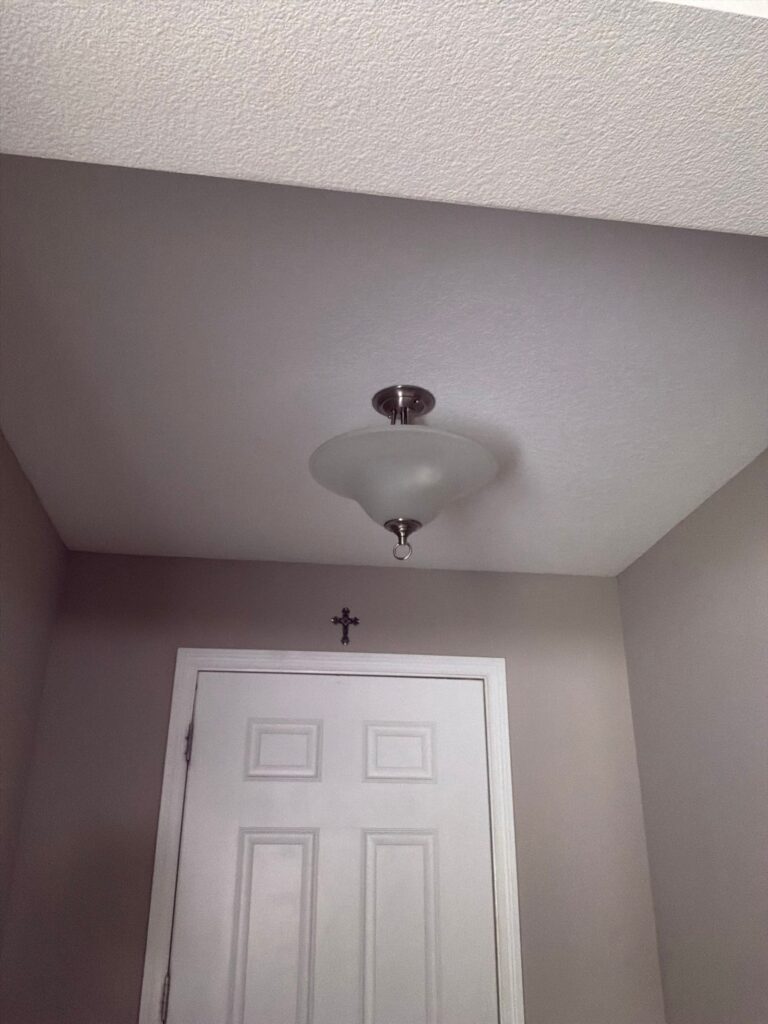
The homeowner called to restore power to fixtures that had gone dark after the storm. A few lights that were on during the hurricane simply never came back on, and the smoke alarm had to be removed from the ceiling because it was no longer functioning after the surge event.
“Several lights stopped working after the storm, and the smoke alarm had to come down. I just want everything working again.”
Investigation
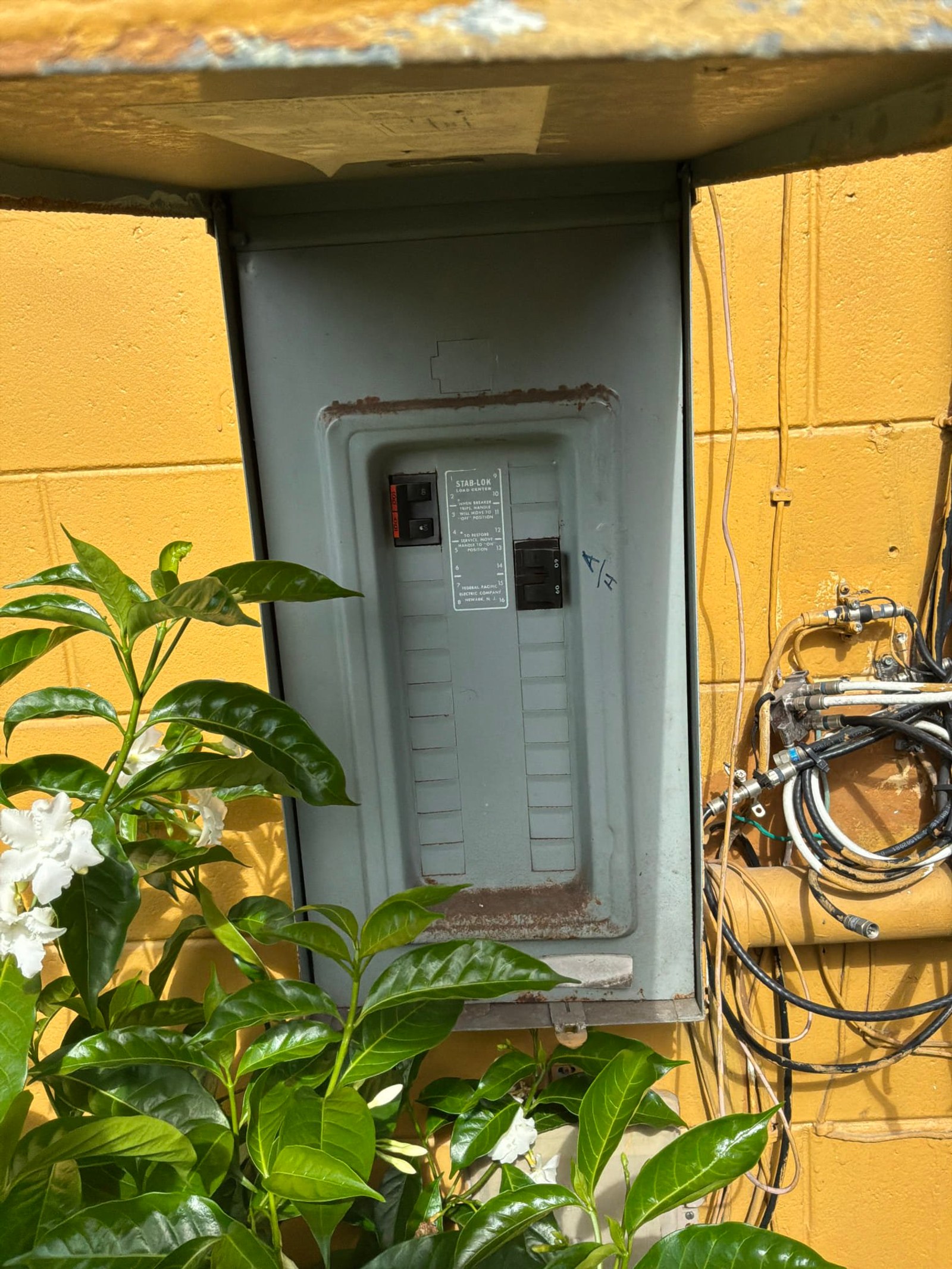
Our technician on-site started with a full visual safety inspection of the Eaton BR 200-amp panel. The inspection results were largely positive. Neutrals and grounds were properly separated, breakers were correctly sized, AFCI protection was in place, and the grounding system passed every check. The panel directory was clearly labeled, and there were no open knockouts or double-tapped breakers.
Two conditions stood out, however. First, the panel had no surge protective device installed at the service entrance. Without that layer of protection, the transient voltage spike that accompanied the hurricane traveled freely through every branch circuit in the home. Second, the smoke detectors did not meet current code requirements, a direct result of the surge-damaged unit that had been removed.
A closer look at the branch circuits confirmed the scope of the surge’s reach. Multiple LED fixtures had stopped responding, consistent with LED driver boards that absorbed the transient voltage. The bath fan had also failed, and the affected smoke alarm was confirmed non-functional.
Notably, the panel itself held up well. The Eaton BR series is a solid, code-compliant platform, and no breaker damage or busbar issues were found.
What We Fixed
Panel-Side Work
The most important addition was a whole-home surge protective device (SPD) installed at the service panel, in line with NEC 230.67, which now requires SPDs at the service entrance of all new and upgraded dwelling units. The Type 2 SPD installation followed NEC 285.25 for proper connection at the panel. This single addition is what stands between every future storm and the electronics, appliances, and fixtures throughout the home.
Branch Circuit and Fixture Repairs
Our crew replaced the multiple LED fixtures that the surge had rendered inoperable. LED driver circuitry is sensitive to voltage spikes, and these units simply could not recover from the transient event. Replacing them with new fixtures restored full lighting to the affected rooms.
The bath fan was replaced as well. Like the LED drivers, bath fan motors and control boards can absorb surge energy and fail silently, so the replacement brings that circuit back to full, reliable operation.
Finally, a replacement smoke alarm was installed to bring the home back into compliance with NFPA 72, the governing standard for smoke and carbon monoxide detection. Interconnected detection ensures that if any unit activates, every alarm in the home responds.
Why This Orlando Surge Repair Matters for Homeowners
Hurricane season in Central Florida is a fact of life, and voltage transients from nearby lightning strikes are common well outside of a direct hit. Without a panel-level SPD, every storm that passes through sends ripple effects into the circuits powering your lights, your HVAC controls, your refrigerator, and your smart-home devices. With the SPD now in place, the household can get through every storm season knowing those circuits have a dedicated layer of defense.
For this family, the morning routine after a storm no longer has to start with checking which lights work and which do not. The LED fixtures are back, the bath fan runs quietly when it should, and the smoke alarm is active again. That is exactly the kind of reliability that makes a home feel like a home.
Additionally, homes in the Orlando area that lack pre-wire for a standby generator represent an opportunity worth planning ahead for. The inspection flagged that this home has no generator pre-wire and no standby unit in place. As storm seasons become more active, many families in Central Florida are adding transfer switches and generator circuits so the home stays comfortable even when the grid goes down. Our team can walk through those options at any future visit.
Above all, the repairs here were straightforward because the underlying panel was in good shape. Investing in surge protection now means the Eaton BR panel and the branch circuits it feeds are far more likely to stay that way through many more storm seasons to come.
Code Compliance Cited in This Job
Every fix above maps to a specific section of the 2020 NEC, the edition Florida enforces under the 8th Edition Florida Building Code. Florida adopts the 2023 edition of the NEC when the 9th Edition takes effect on December 31, 2026. Each card links to NFPA’s public NEC index.
Surge Protective Devices at Service Entrance
NEC 230.67 requires a listed surge protective device at the service entrance of all dwelling units. This home had no SPD installed when the technician arrived, leaving every branch circuit exposed to the transient voltage that caused the fixture and smoke alarm damage after Hurricane Milton. Installing the SPD at the Eaton BR panel directly addresses this gap. NFPA reference ›
Type 2 SPD Installation Requirements
NEC 285.25 governs how a Type 2 SPD must be connected at the load side of the service entrance equipment. Our crew followed these requirements when mounting and wiring the device at the Eaton BR panel, ensuring the protection is positioned to intercept transients before they reach branch circuits. NFPA reference ›
AFCI Protection for Dwelling Unit Branch Circuits
NEC 210.12 requires arc-fault circuit interrupter protection on branch circuits in dwelling units, including bedrooms and living areas. The inspection confirmed AFCI protection was already in place at this home, which is a positive finding that complements the new surge protection layer. NFPA reference ›
Replacement Receptacle Requirements
NEC 406.4(D) specifies that replacement devices must meet current code requirements, including tamper resistance. The inspection confirmed existing outlets in this home were already tamper-resistant and properly grounded, so no receptacle upgrades were needed alongside the fixture and fan replacements. NFPA reference ›
Common Questions
Questions homeowners ask after seeing this kind of work.
Does every home in Orlando need a whole-home surge protector?
Florida sees more lightning strikes per square mile than almost anywhere else in the country, making surge protection especially worthwhile for Central Florida homes. A panel-level SPD protects LED fixtures, HVAC controls, smart-home devices, and appliances from the transient voltage that travels through branch circuits during nearby strikes. Homes without one are exposed every storm season. If you are not sure whether your panel has one installed, our team can check during a quick visit. Schedule online to get on the calendar.
Why did my LED lights stop working after a power surge but my regular appliances are fine?
LED fixtures rely on a small internal driver board to convert line voltage to the lower DC voltage the LEDs need. Those driver boards are sensitive to transient spikes and often fail permanently after a surge event, even a brief one, while devices with more robust components may come through unaffected. Replacing the fixture is usually the most reliable fix because the driver board is not a serviceable part in most residential LED units. If you have lights that went dark after a storm, book a repair visit and our technician can confirm the cause and replace the affected fixtures.
How often should I have my home’s electrical system inspected?
A yearly inspection is a good baseline for most homes. Homes built before 1990 and homes that have weathered recent storms may benefit from inspections more often, since older wiring and post-storm surge exposure can create conditions that are worth catching early. Annual check-ins keep the panel directory current, confirm that GFCI and AFCI protection is intact, and give you a clear picture of anything that has changed. Schedule online to set up your next inspection.
My smoke alarm was damaged in a storm. Can I just replace it myself?
Replacing a smoke alarm is a relatively simple task for a homeowner if the unit is a standard battery-operated detector, but hardwired and interconnected units require a bit more care to ensure the new device is compatible with the rest of the system and that all alarms communicate correctly. NFPA 72 governs detector placement and interconnection requirements, and a licensed electrician can confirm the replacement meets those standards. If your existing alarm was hardwired, book a same-day visit so we can handle the swap and verify the whole system is active.
What is the difference between a whole-home surge protector and the power strips I already use?
Point-of-use power strips protect only the devices plugged directly into them and typically offer limited joule ratings that deplete over time without any visible indication. A panel-level Type 2 surge protective device intercepts transients at the service entrance before they reach any branch circuit in the home, covering every outlet, fixture, and hardwired appliance at once. The two layers work well together: the panel SPD handles large transients from the grid or nearby lightning, and point-of-use strips provide a secondary layer for sensitive electronics. If your panel does not have an SPD installed, schedule an evaluation and our team can recommend the right device for your service size.
Want to see more real jobs like this one? Browse our completed case studies or explore our services.