What follows is a real electrical inspection story from Ocoee, FL: the symptoms, the diagnosis, and the finished work. A homeowner in Ocoee, FL called us about a light fixture, and what our field team found during the visit painted a fuller picture of a home whose electrical system had quietly aged past current standards. The immediate fixture work got handled right away. Beyond that, our licensed electrician on site documented a grounding system that predated current code, bathroom outlets without GFCI protection, backstabbed receptacles throughout, and no whole-home surge protection. The family now has a clear, prioritized plan to bring the home up to current 2020 NEC requirements, and one new LED ceiling light that works beautifully.
The Problem
The call came in as a light-fixture repair, but the homeowner also mentioned something worth noting:
“We’ve been noticing some mild shocking sensations from outlets around the house, and the bathroom outlets have always felt a little off.”
That kind of feedback told our technician on-site to look beyond the fixture itself.
Investigation
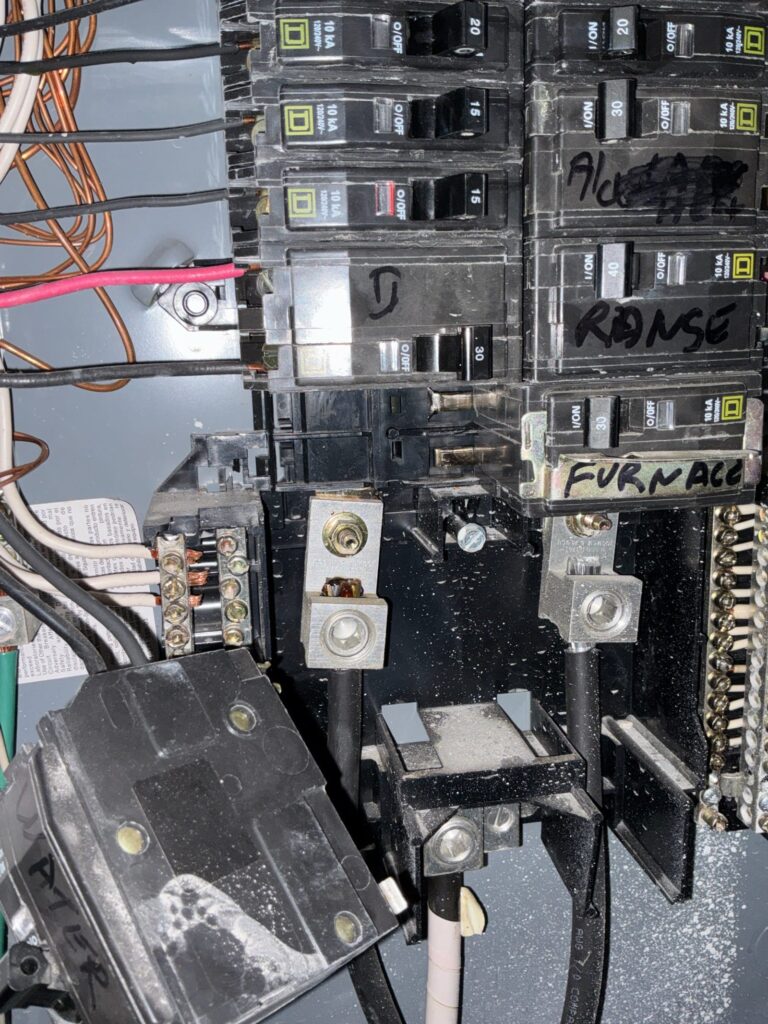
The home is served by a 150-amp Square D QO panel. The panel itself is in reasonable condition: breakers are properly sized, the bus bar is clean, neutrals and grounds are separated, and the outside service disconnect is in place. That’s a solid foundation.
However, several areas of the home predate current code requirements and are worth addressing:
Grounding System
No ground rod was found at the meter can. The grounding system present in the home is consistent with older wiring practices, functional for its era, but no longer aligned with NEC 250.52 and 250.66 requirements for a complete grounding electrode system. The inspection flagged the grounding system as not up to current code, even though outlets tested as grounded. Modernizing the grounding electrode system is the recommended starting point.
Backstabbed Outlets and Switches
Virtually every outlet and switch in the home used the backstab (push-in) connection method. This was a common installation shortcut in homes wired before roughly 2005. Over time, the spring tension in backstab connections loosens, contact resistance increases, and the result is exactly what this homeowner described, intermittent sensations and voltage drop at outlets. The inspection confirmed voltage drop concerns across the home. Re-terminating all devices with screw-secured connections is the right fix.
GFCI Protection in Bathrooms
The bathroom outlets do not currently have GFCI protection, a standard that has been required in bathrooms since the 1975 code cycle and reinforced in every edition since. This is very common in homes of this vintage. Replacing these outlets with GFCI-protected receptacles brings the home in line with NEC 210.8.
No Whole-Home Surge Protection
The home currently has no surge protective device at the panel or at the AC unit. Central Florida’s lightning activity makes whole-home surge protection one of the most practical upgrades a homeowner can invest in. NEC 230.67 now requires SPDs on new service installations, and adding one to an existing home is straightforward.
Additional Findings
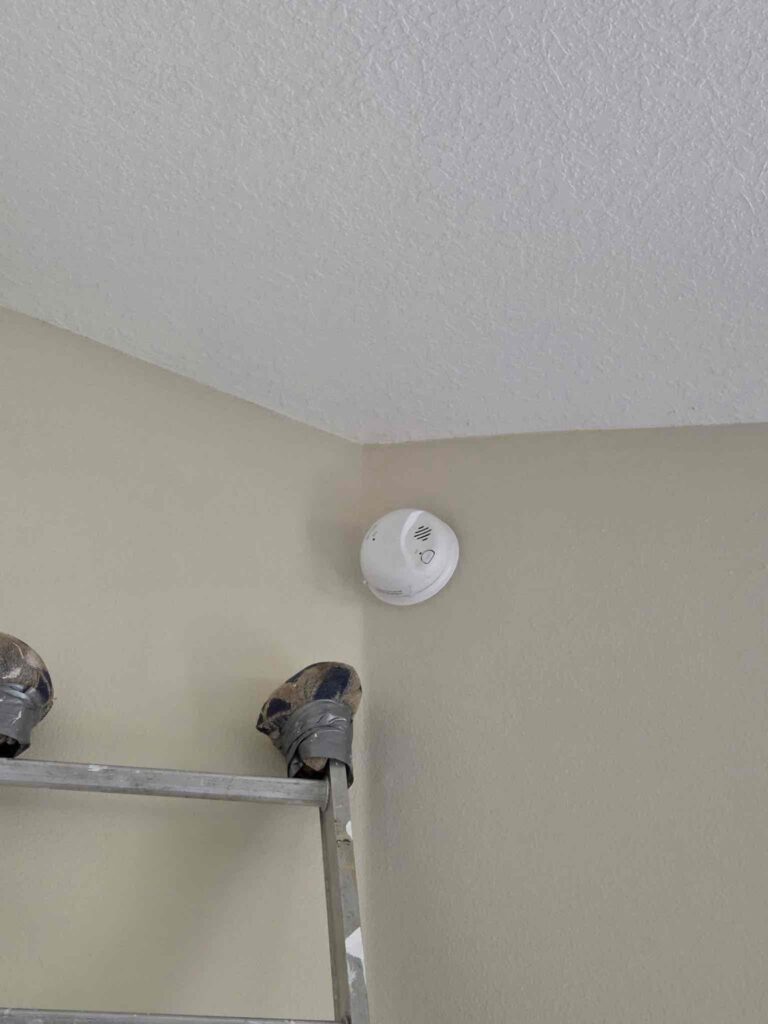
The inspection also flagged double-tapped breakers, an unlabeled panel directory, open splices, missing AFCI protection, and outlets that are not tamper-resistant, all consistent with a home that hasn’t had a full electrical review in some time. The smoke detector and carbon monoxide detector situation also deserves attention, as both rated as concerns rather than pass.
What We Fixed
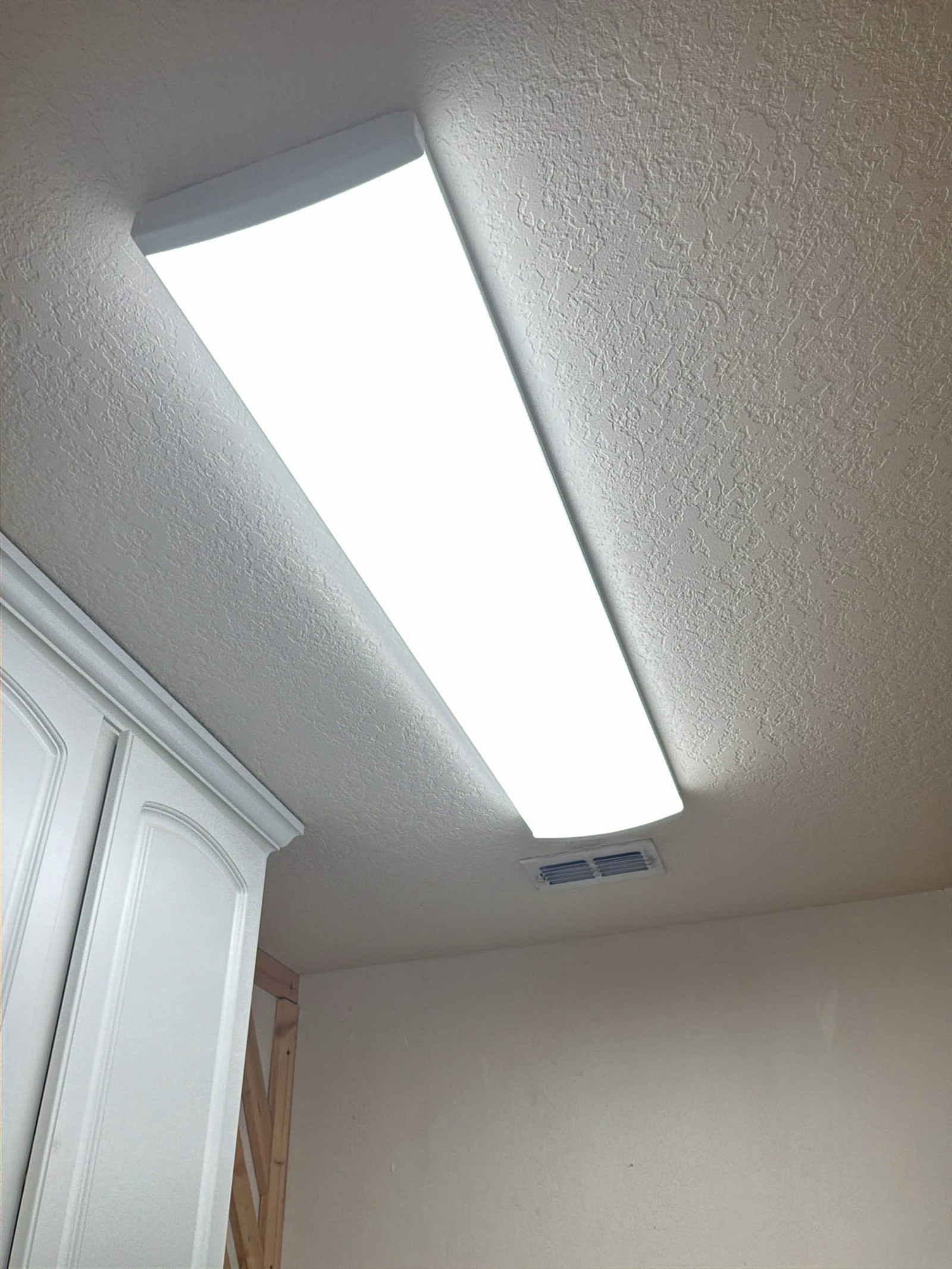
During this visit, our crew completed the immediate work order: we installed a new 12-inch low-profile LED surface ceiling light (1,100 lumens, selectable between 3000K, 4000K, and 5000K, dimmable) at an existing powered location. The homeowner now has a bright, energy-efficient fixture in place.
Additionally, our technician on-site documented all inspection findings, photographed conditions throughout the panel and living areas, and provided the homeowner with a prioritized set of options for the remaining work. The grounding system, GFCI bathroom outlets, device re-termination, surge protection, and panel labeling are all queued as next steps at the homeowner’s direction.
Why This Electrical Inspection Matters for Ocoee Homeowners
For a family going through their daily routine (mornings getting ready in the bathroom, evenings watching TV, kids plugging in tablets and chargers), a home that just works quietly in the background is the goal. When outlets feel off or lights flicker, it’s easy to dismiss those signs. In reality, they’re the home asking for attention.
Modernizing the grounding system, adding GFCI protection, and re-terminating backstabbed devices addresses the root cause of what this family was feeling. Furthermore, adding a whole-home surge protector at the panel and at the AC unit means the refrigerator, televisions, computers, and the AC itself ride through Florida’s summer storm season without skipping a beat, no matter what the weather does.
Above all, the value of a thorough inspection like this one is peace of mind. The family in Ocoee now knows exactly where their home stands, what is working well, and the Square D QO panel is a genuinely good foundation, and what the clear, manageable path forward looks like. No surprises. No guessing. Just a well-documented plan and a crew ready to carry it out.
Code Compliance Cited in This Job
Every fix above maps to a specific section of the 2020 NEC, the edition Florida enforces under the 8th Edition Florida Building Code. Florida adopts the 2023 edition of the NEC when the 9th Edition takes effect on December 31, 2026. Each card links to NFPA’s public NEC index.
GFCI Protection for Personnel
NEC 210.8 requires GFCI protection on receptacles in bathrooms, kitchens, garages, and outdoor areas of dwelling units. The bathroom outlets in this Ocoee home lacked GFCI protection, common in homes of this era but no longer aligned with current requirements. Replacing these outlets with GFCI-protected receptacles brings the home fully in line with this section. NFPA reference ›
Grounding Electrodes
NEC 250.52 defines the approved types of grounding electrodes, including driven ground rods, that must be present as part of a complete grounding electrode system. No ground rod was found at the meter can during this inspection. Installing a proper grounding electrode assembly addresses this finding directly. NFPA reference ›
Grounding Electrode Conductor Sizing
NEC 250.66 governs the sizing of the conductor that connects the panel to the grounding electrode system. When the new ground rod and grounding electrode system are installed, the conductor must be sized in accordance with this section based on the service entrance conductor size, important context for the upcoming grounding upgrade at this home. NFPA reference ›
Surge Protective Devices at Services
NEC 230.67 requires a listed surge protective device (SPD) at the service of all new dwelling unit installations. While this section applies to new services, retrofitting an SPD to an existing 150-amp Square D QO panel is a direct and practical way to align with the intent of this requirement and protect the home’s electronics and appliances. NFPA reference ›
AFCI Protection
NEC 210.12 requires arc-fault circuit interrupter protection on branch circuits supplying outlets in dwelling unit bedrooms, kitchens, living rooms, and other areas. The inspection found no AFCI protection present in this home, consistent with construction predating the expanded AFCI requirements, making it an upgrade worth discussing as part of the home’s broader modernization. NFPA reference ›
Circuit Directory and Identification
NEC 408.4 requires that every circuit in a panelboard be legibly identified as to its purpose or the equipment it serves. The panel in this Ocoee home was flagged as unlabeled during inspection. Completing a proper circuit directory is a straightforward step that supports safe panel operation and accurate troubleshooting for any future work. NFPA reference ›
Common Questions
Questions homeowners ask after seeing this kind of work.
What does it mean when outlets feel like they’re giving a mild shock?
A mild sensation at an outlet is often a sign that something in the grounding or device-termination system deserves a closer look. In this home, backstabbed connections and an aging grounding electrode system were the underlying contributors. A licensed electrician can confirm the cause with a quick inspection and outlet tester. If this sounds familiar, schedule a same-day inspection to find out what’s going on.
Are backstabbed outlets really worth replacing if they seem to be working?
Backstabbed outlets were a common installation method for decades and many still function day-to-day. However, over time the spring-clip connections loosen, resistance climbs, and you may notice dimming, voltage drop, or outlets that feel warm. Re-terminating devices with screw connections is a durable, low-cost fix that restores reliable performance. If your home was built before 2005, it’s worth having our team take a look during your next inspection.
How often should I have my home’s electrical system inspected?
For most homes, a full electrical inspection once a year is a good baseline. Older homes built before 1990, homes that have gone through recent storm seasons, and homes where you’ve noticed anything unusual (flickering lights, tripping breakers, outlets that feel warm), may benefit from inspections more frequently. Our team can book a 30-minute visual inspection so you know exactly where your home stands.
Why would a home need surge protection at both the panel and the AC unit?
A whole-home Type 2 surge protector at the panel guards every circuit in the house from surges entering through the utility service. The AC unit, however, is a large inductive load that can generate its own internal voltage spikes when it cycles on and off, a separate SPD at the condenser unit addresses that localized stress. Together, both devices give your appliances and electronics the most complete coverage. Schedule online to discuss the right setup for your home.
Is a double-tapped breaker something that needs to be fixed right away?
Double-tapped breakers, where two conductors are connected to a single breaker terminal not rated for that, don’t meet current code standards and can lead to unreliable circuit performance over time. Most breakers are listed for only one conductor per terminal. The fix typically involves adding a tandem breaker or a sub-panel, depending on available space. Our licensed electricians can assess your panel and recommend the most straightforward solution.
Want to see more real jobs like this one? Browse our completed case studies or explore our services.