This Mount Dora outlet repair case study walks through the real diagnosis, the fix, and the code details from a recent service call. A homeowner in Mount Dora, FL called us about a garage outlet that had stopped working overnight. What started as a straightforward outlet repair turned into a full safety inspection that revealed several items worth addressing, including exposed wiring, missing plate covers, and a Square D QO 150-amp panel with no whole-home surge protection installed.
The Problem
The homeowner noticed the garage outlet had stopped working and needed it back in service quickly.
“The outlet in the garage has not been working since yesterday. Need it fixed as soon as possible.”
Our field team arrived the same day, diagnosed the outlet, and performed a full walkthrough of the electrical system while on site.
Investigation
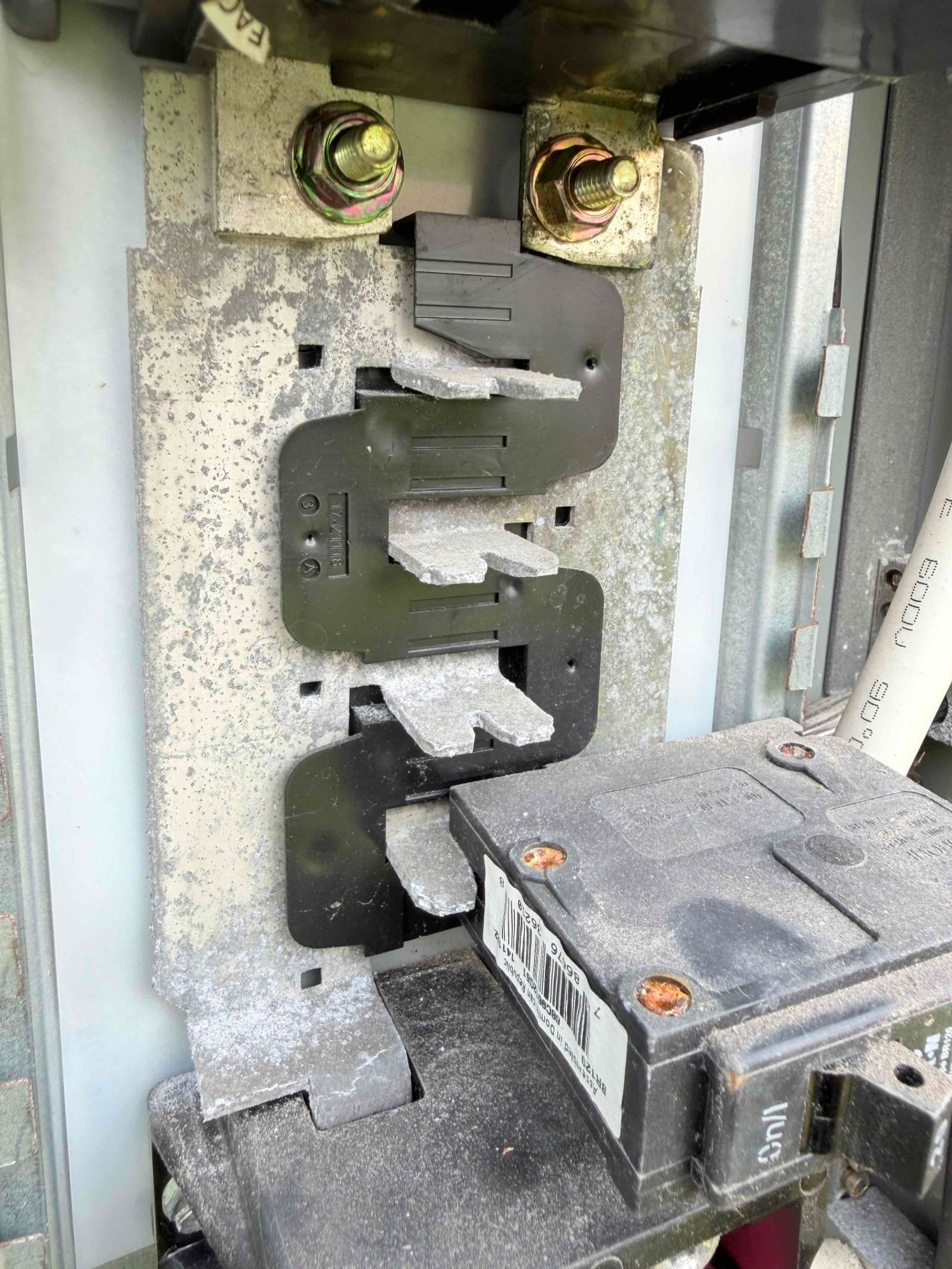
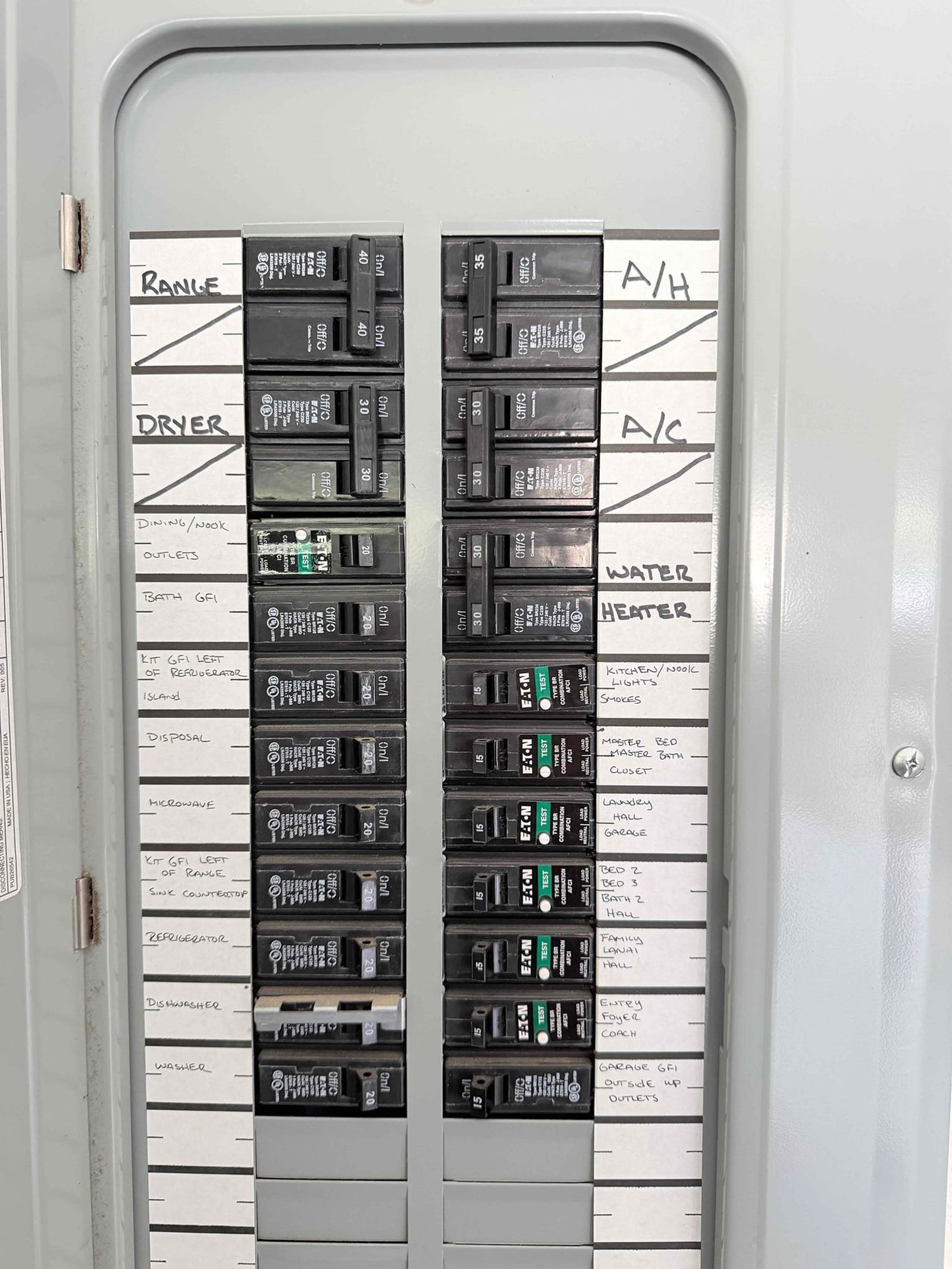
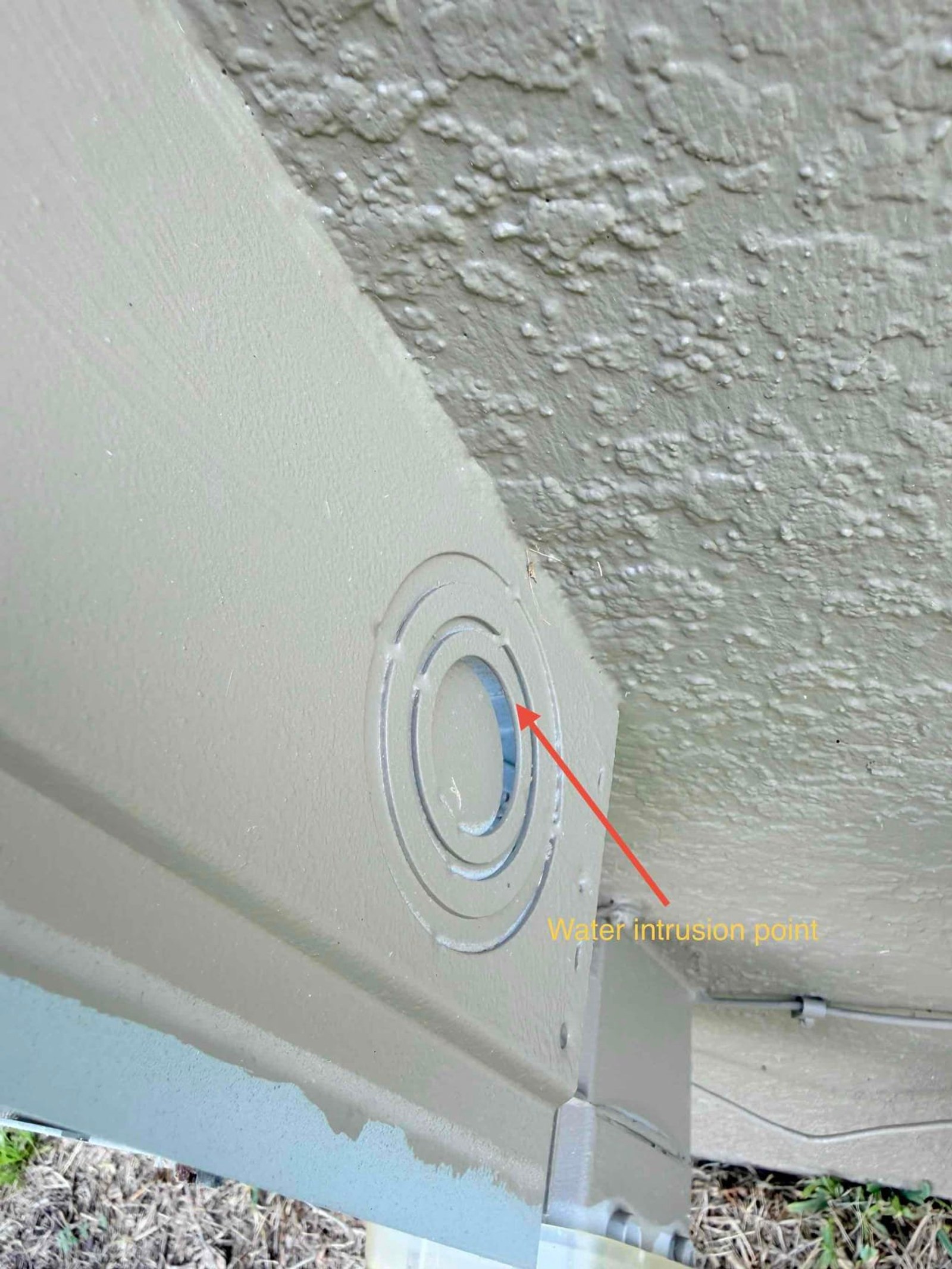
The licensed electrician on site replaced the non-functioning outlet as the primary job. From there, the inspection told a fuller story.
Panel and Service Condition
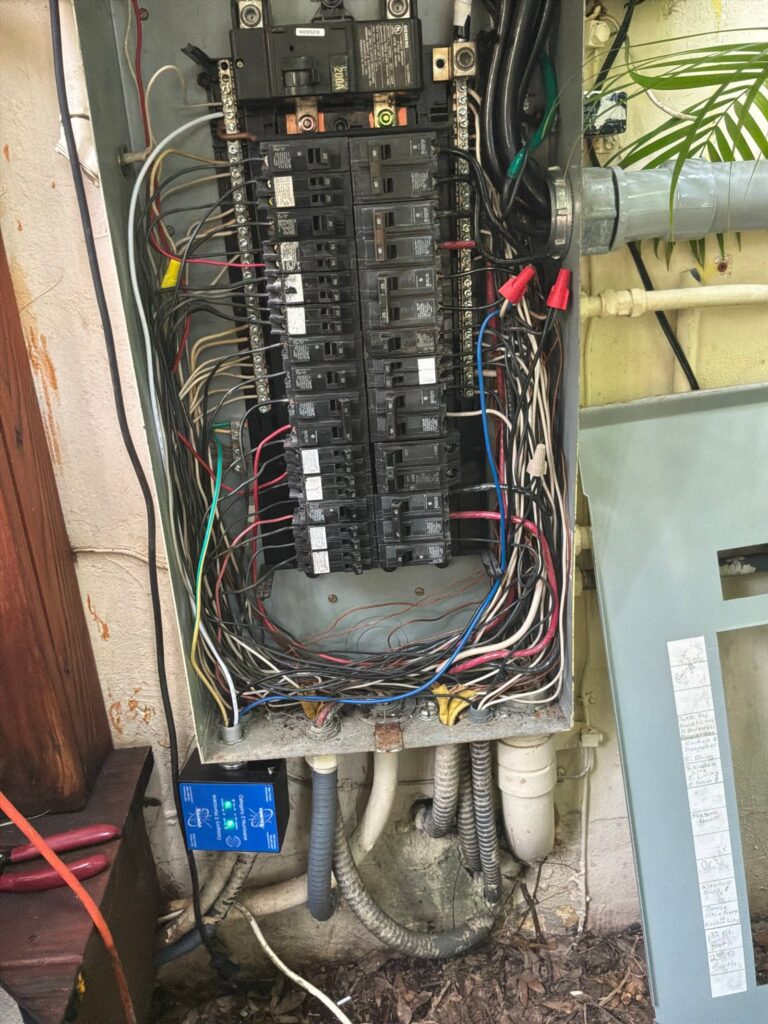
The home runs on a Square D QO 150-amp panel, a solid and well-supported platform. The inspection confirmed proper breaker sizing, correctly separated neutrals and grounds, no double-tapped breakers, and a functioning grounding system. Those are real strengths for a home of this vintage.
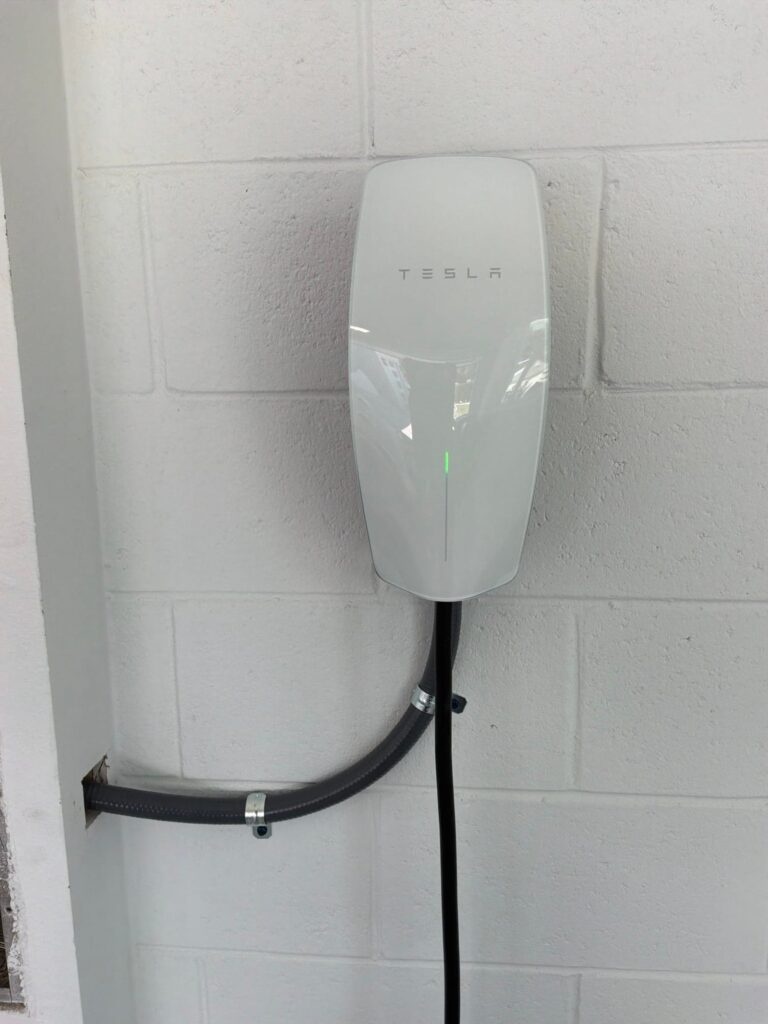
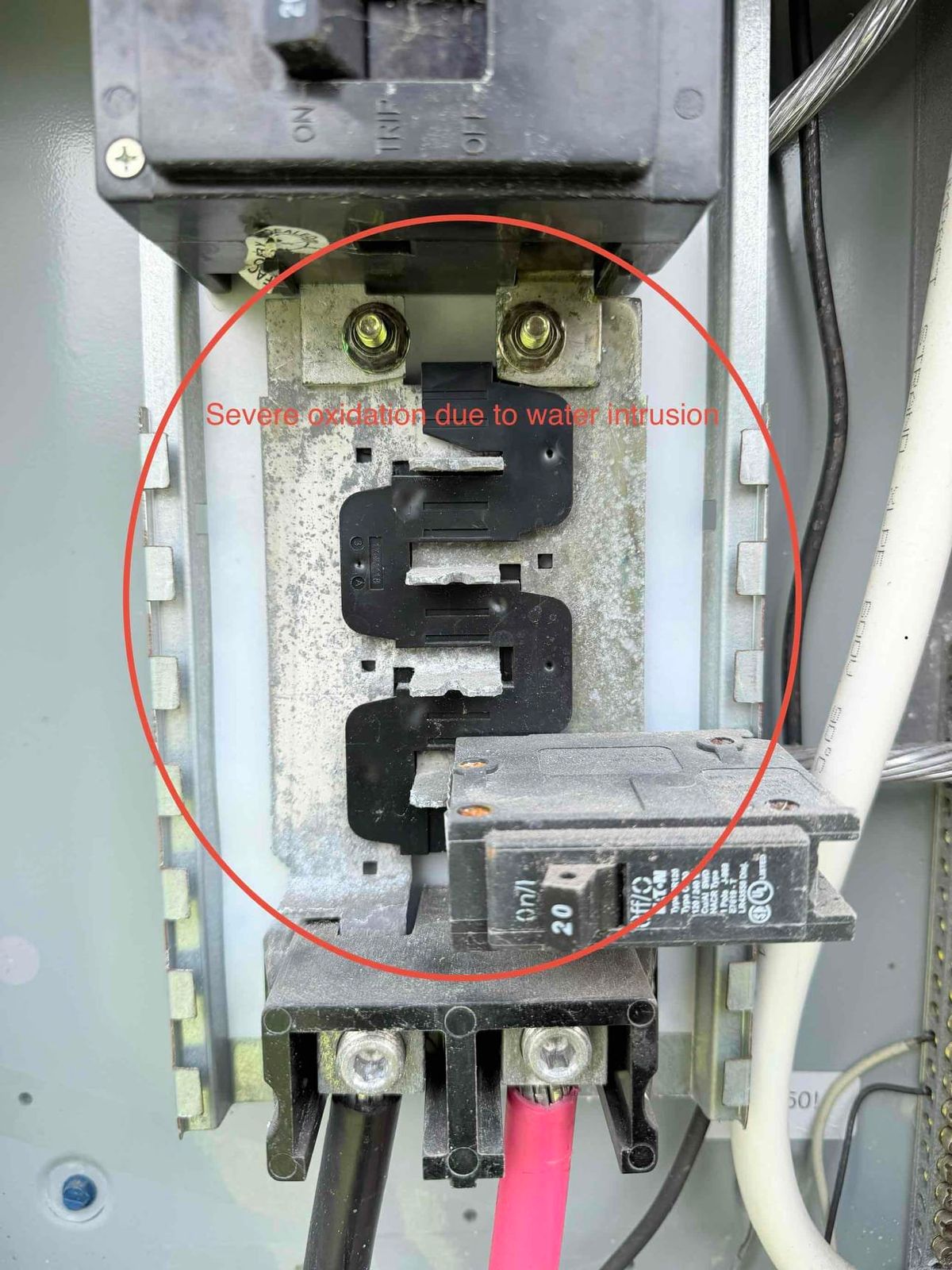
However, the panel had no whole-home surge protective device installed. Homes in Central Florida face frequent lightning and grid-switching events throughout storm season. Without panel-level surge protection, every major appliance and connected device in the home absorbs that energy directly. Adding a Type 2 SPD at the service panel is now addressed under NEC 230.67, which requires surge protection at the service for new and upgraded dwelling-unit services.
Wiring and Enclosure Concerns
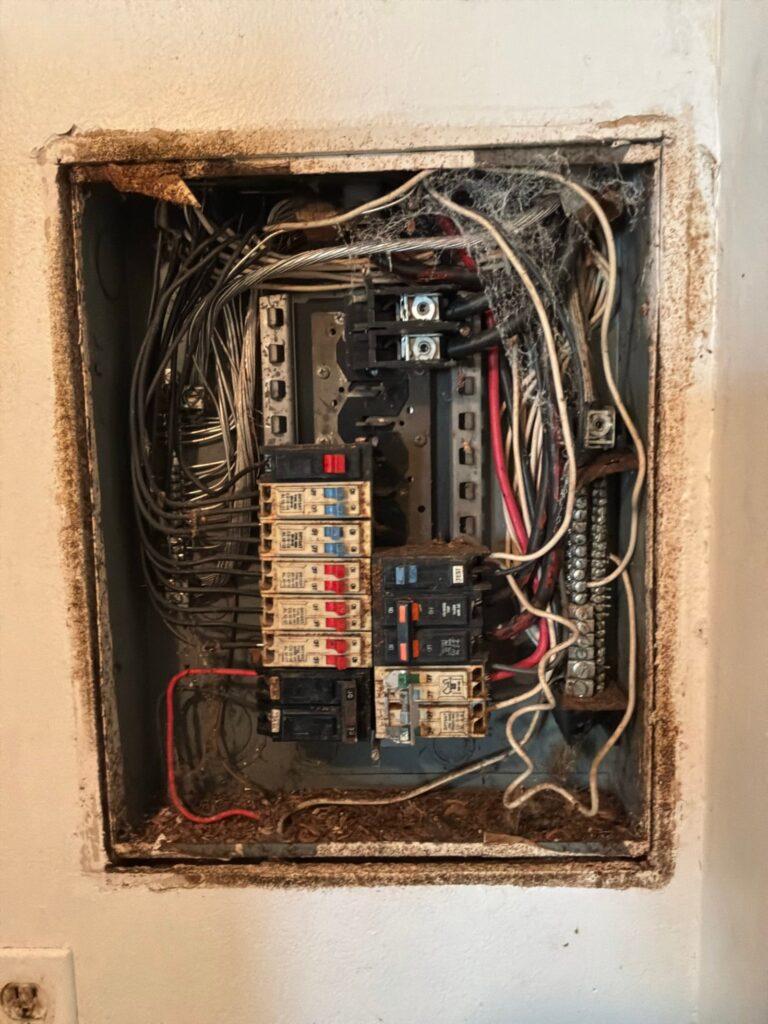
The team documented exposed wiring in both the garage and exterior areas of the home, along with missing device plate covers in several locations. Exposed conductors and open enclosures are a condition worth addressing. Current code, specifically NEC 110.14(B), requires all splices and connections to be enclosed and protected. These findings are consistent with older construction that predates more recent code cycles requiring complete enclosure of all wiring.
AFCI Protection
The inspection also found that AFCI protection is not present on the applicable branch circuits. NEC 210.12 now requires arc-fault circuit interrupter protection on bedroom, kitchen, and living-area branch circuits in dwelling units. Homes wired before this requirement became standard can be brought up to current code with AFCI breaker replacements in the existing Square D QO panel, which accepts a full line of compatible AFCI and dual-function breakers.
Smoke Alarm Status
Smoke alarms at the property had been recently replaced, which is a positive sign. The inspection flagged them as not fully meeting current code, likely a placement or interconnect gap rather than a missing detector. NFPA 72 governs smoke alarm placement, spacing, and interconnect requirements. Our team noted this finding so the homeowner can schedule a follow-up to confirm full compliance.
What We Fixed
Our crew installed the client-provided replacement outlet in the garage, restoring power to the circuit. All connections were made to current torque specifications per NEC 110.14(D), and the outlet was tested for proper ground, polarity, and voltage before the job was closed. The team also documented all inspection findings in detail so the homeowner has a clear picture of what is in great shape and what is worth scheduling next.
Why This Mount Dora Outlet Repair Matters for Homeowners
A dead garage outlet is easy to dismiss as a minor annoyance. In this case, it was the reason the team was on site to find a broader set of items that deserve attention over time. That is the real value of combining a repair visit with a thorough inspection.
For a family in Mount Dora, the combination of missing surge protection and absent AFCI protection means the home’s electrical system is working harder than it needs to without the backup layers that modern code recommends. Adding a Type 2 SPD to the Square D QO panel means the refrigerator, AC, computers, and televisions ride out every summer storm without skipping a beat. That is the kind of reliability a household can feel in everyday life, especially during the months when Central Florida sees near-daily afternoon storms.
Addressing the exposed wiring and missing covers is straightforward work that closes the gap between this home’s current condition and what current code considers best practice. None of these findings reflect poor care of the home. They reflect a house that was built to the standards of its era and is now ready for a thoughtful, phased modernization. Our team is here to help plan that work at whatever pace fits the household’s schedule and budget.
For more general guidance on home electrical safety, the Electrical Safety Foundation International offers excellent homeowner resources that pair well with a professional inspection.
Code Compliance Cited in This Job
Every fix above maps to a specific section of the 2020 NEC, the edition Florida enforces under the 8th Edition Florida Building Code. Florida adopts the 2023 edition of the NEC when the 9th Edition takes effect on December 31, 2026. Each card links to NFPA’s public NEC index.
Surge Protective Device at Service
NEC 230.67 requires a listed surge protective device (SPD) at the service entrance of all new and upgraded dwelling-unit electrical services. This home’s Square D QO 150-amp panel had no SPD installed, leaving all connected appliances and electronics without panel-level surge protection. Installing a Type 2 SPD directly in the panel is the code-compliant path forward. NFPA reference ›
AFCI Protection for Dwelling Units
NEC 210.12 requires arc-fault circuit interrupter protection on branch circuits supplying bedroom, kitchen, and living-area outlets in dwelling units. The inspection confirmed AFCI protection was not present on the applicable circuits in this home. The existing Square D QO panel accepts compatible AFCI breakers, making an upgrade straightforward. NFPA reference ›
GFCI Protection for Personnel
NEC 210.8 requires GFCI protection at receptacles in garages, bathrooms, kitchens, outdoor locations, and other specified areas. The inspection confirmed GFCI coverage was present in required locations, and the replaced garage outlet was confirmed properly grounded and functional upon completion of the repair. NFPA reference ›
Electrical Connections
NEC 110.14(B) and 110.14(D) require that all electrical connections be properly enclosed and torqued to manufacturer specifications. The exposed wiring documented in the garage and exterior areas does not meet current enclosure requirements. The replacement outlet installed on this visit was torque-verified and tested before the job was closed. NFPA reference ›
Replacement Receptacle Requirements
NEC 406.4(D) requires that replacement receptacles in older homes meet current code requirements for the location, including GFCI protection where required. The garage outlet replaced on this visit was installed and tested in compliance with the applicable location-based requirements under current code. NFPA reference ›
Common Questions
Questions homeowners ask after seeing this kind of work.
Why would a garage outlet stop working without any obvious cause?
Garage outlets are frequently protected by a GFCI device located elsewhere, sometimes in a bathroom, utility room, or another part of the garage. If that upstream GFCI trips, it can cut power to every outlet wired downstream of it, making the problem appear in a completely different location. A licensed electrician can trace the circuit in minutes and restore power quickly. If this sounds like what you’re seeing at home, a same-day inspection can confirm the cause. Schedule online to get on the calendar.
What does a whole-home surge protector actually do for my appliances?
A Type 2 surge protective device installs directly inside your main panel and intercepts voltage spikes before they reach your circuits. In Central Florida, where afternoon thunderstorms are routine, panel-level protection means your refrigerator, AC system, and home electronics keep running smoothly after every weather event. Point-of-use surge strips offer a second layer but are not a substitute for panel-level protection. Curious whether your panel has one installed? Our team can book a 30-minute visual inspection so you know either way.
How often should I have my home’s electrical system inspected?
A yearly inspection is a good baseline for most homes. Homes built before 1990 and homes that have weathered recent storms may benefit from inspections more frequently, since older wiring systems and storm-related thermal stress can create conditions that develop gradually between visits. An annual check gives your household peace of mind and keeps small findings from becoming larger projects. Schedule online to put your yearly inspection on the calendar.
My home was built before AFCI breakers were required. Do I really need to upgrade?
Homes wired before NEC 210.12 became standard were built to the code of their era, and there is nothing wrong with the original installation. That said, upgrading to AFCI breakers today adds a layer of protection that modern code considers best practice for bedroom and living-area circuits. On a Square D QO panel, the swap is straightforward because compatible AFCI and dual-function breakers are widely available. If your home is the same vintage, it is worth having a licensed electrician take a look before the next storm season.
Is exposed wiring in a garage something I need to fix right away?
Exposed conductors and missing device covers are a condition worth addressing, though the right timeline depends on the specific location and how the wiring is run. In a garage, where the area sees more activity and potential contact than finished living spaces, getting covers and enclosures in place sooner rather than later is a reasonable priority. Our team can assess the scope in a single visit and give you a clear picture of what is involved. Schedule online to get a licensed electrician on site.
Want to see more real jobs like this one? Browse our completed case studies or explore our services.