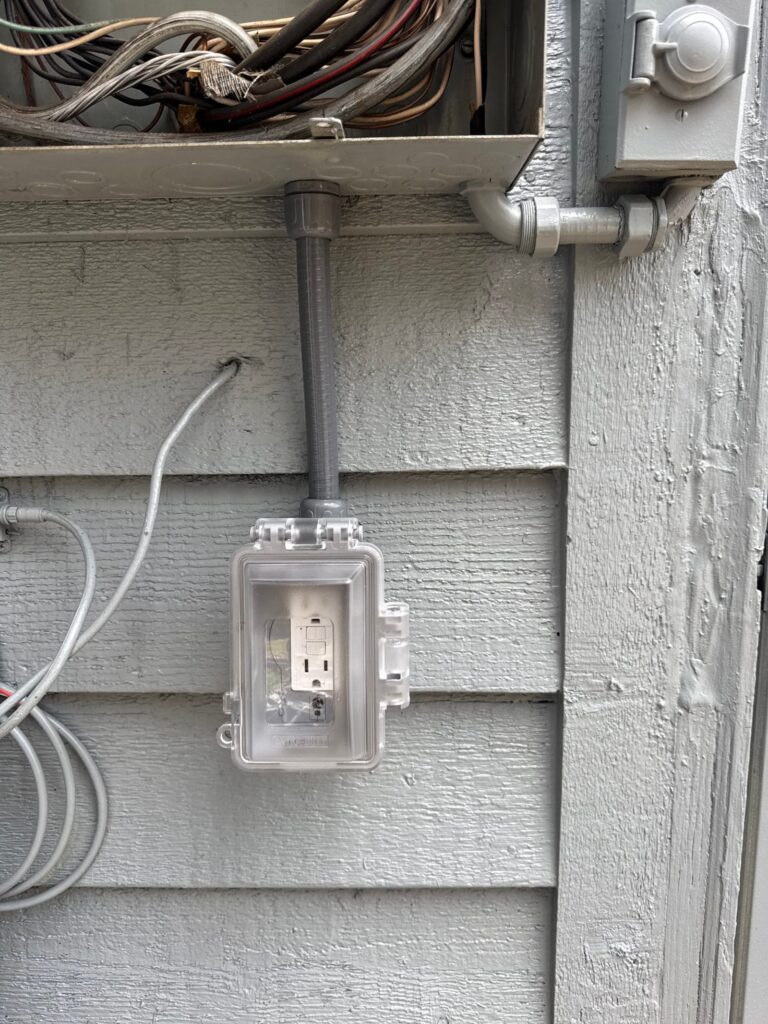
This Winter Garden lanai outlet case study walks through the real diagnosis, the fix, and the code details from a recent service call. A homeowner in Winter Garden, FL reached out after the outdoor outlet inside their lanai stopped working entirely. Our field team traced the problem to an unsecured neutral at the exterior service entrance and also noted the absence of whole-home surge protection at the main panel, a detail worth addressing for a home in Central Florida’s active storm season.
The Problem
The homeowner scheduled an appointment after noticing the patio outlet in their covered lanai had no power.
“The outdoor patio outlet inside the lanai isn’t working.”
At first glance, a dead lanai outlet can point to a tripped GFCI elsewhere on the circuit, a tripped breaker, or a wiring issue further upstream. Our technician on-site started at the source to find out which it was.
Investigation
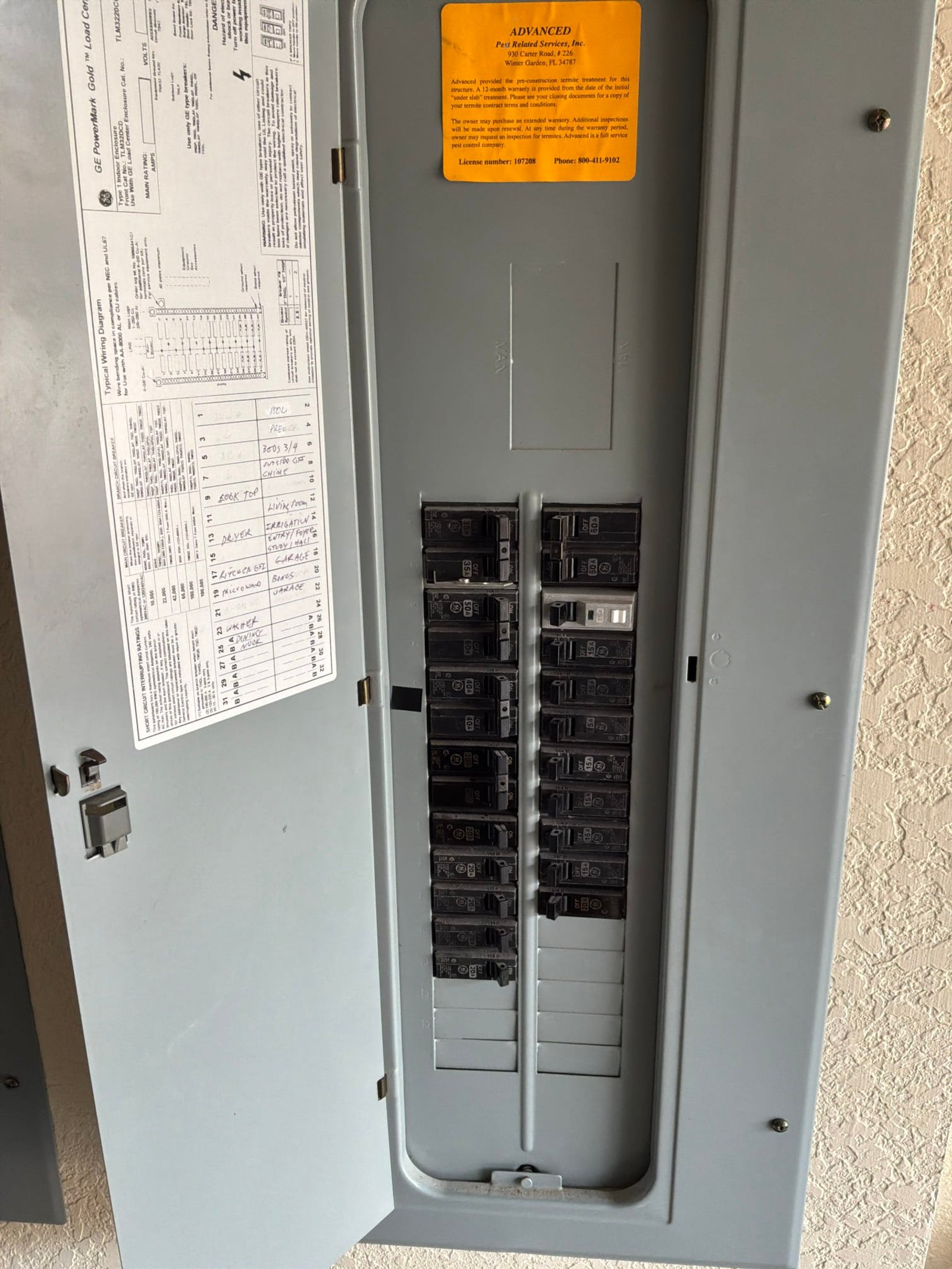
The inspection started at the main panel, a 150-amp GE unit. Looking at the panel deadfront, the circuit directory and black toggle breakers were clearly visible. The panel directory was legible and the breakers showed no obvious signs of thermal stress or corrosion.
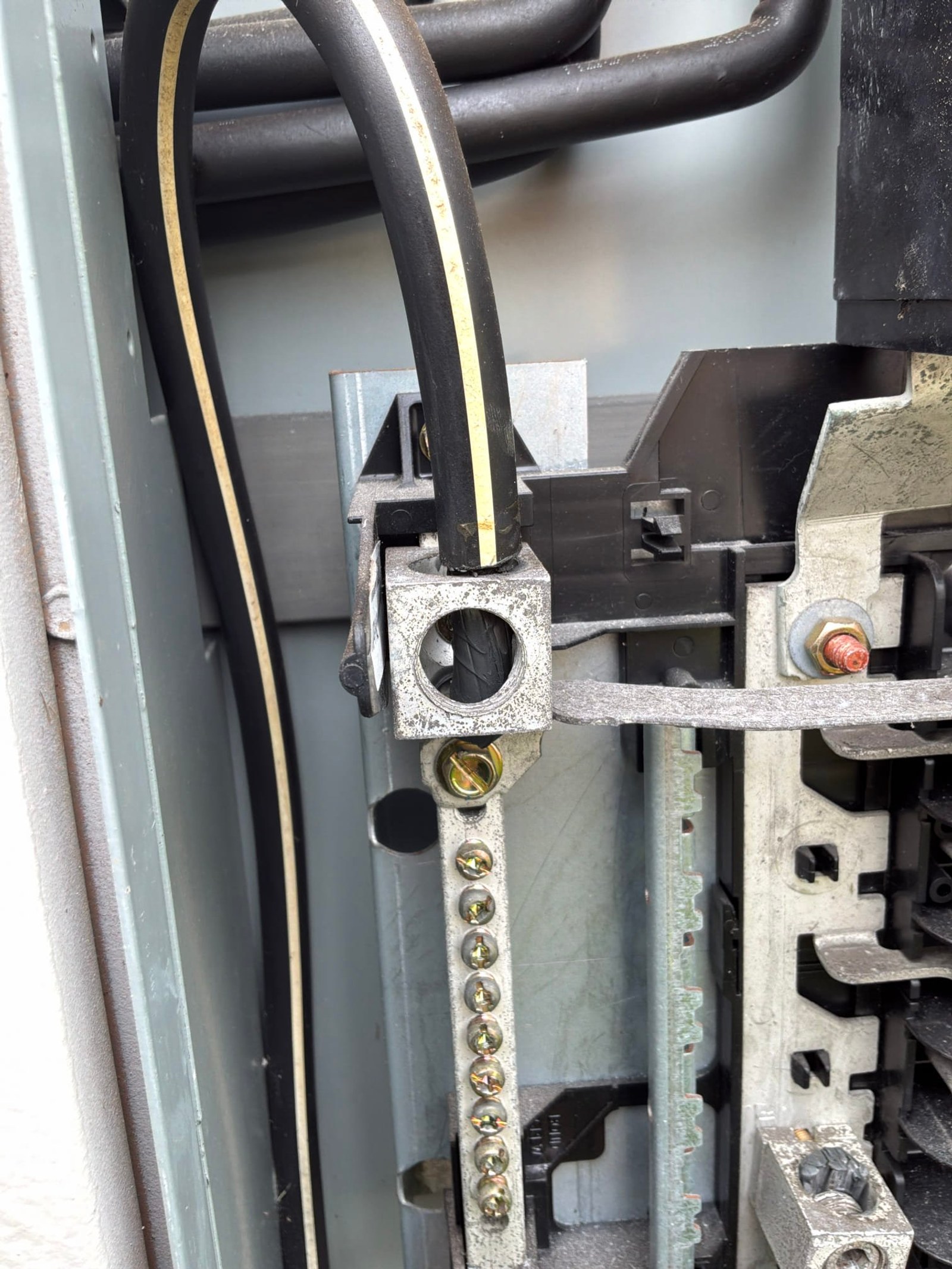
Moving to the exterior service entrance, the team examined the brass lugs and service conductors at the feed point. The large insulated conductors running into the brass terminal screws showed that the neutral was not properly secured at that connection point. A loose neutral at the service entrance can create intermittent or complete loss of power on downstream circuits, which is consistent with the symptom the homeowner described.
Additionally, the inspection flagged the absence of a whole-home surge protective device at the main panel. The surge protection provided through the utility was noted as not meeting current recommendations for residential service entrance protection. For a Florida home, where afternoon thunderstorms are routine, this is an opportunity worth acting on.
The rest of the inspection returned solid results. GFCI protection was present in required areas, breakers were properly sized, outlets were not backstabbed, grounding was in place, smoke and carbon monoxide detectors were present, and no open knockouts or open splices were found.
Service Entrance Findings
The neutral conductor connection at the exterior service entrance is one of the less visible parts of a home’s electrical system, but it plays a central role. When that connection loosens over time, the effect can travel all the way to individual outlets and fixtures on the affected circuit. In this case, the lanai outlet was the first sign the homeowner noticed.
Surge Protection Gap
Florida leads the country in lightning strikes per square mile. A whole-home surge protective device installed at the service panel gives every circuit in the house a first line of defense. Without one, voltage spikes from nearby strikes pass freely through the service entrance and reach appliances, electronics, and HVAC equipment on every branch circuit. The utility company’s equipment is designed to protect the grid, not individual home loads, so relying on it alone leaves a gap that current standards now address directly.
What We Fixed
Our technician on-site performed minor troubleshooting, which included checking the outlet, resetting the circuit, and conducting a visual inspection to identify the likely cause. The loose neutral at the exterior service entrance was documented as the root cause of the dead lanai outlet. The full inspection also surfaced the missing surge protection at the 150-amp GE panel as a condition worth addressing in a follow-up visit.
Why This Lanai Panel Upgrade Matters for Homeowners
For a family in Winter Garden, the lanai is often the extension of the living space. Whether it is a weekend cookout, kids playing outside in the evening, or a ceiling fan keeping things comfortable through a warm Florida afternoon, a dead outlet disrupts the way the space is meant to be used. Restoring reliable power there means the household gets that space back, fully functional and working the way it should.
Beyond the immediate fix, the inspection gave the homeowner a clear picture of what the panel is doing well and where one upgrade would meaningfully improve the home’s resilience. A whole-home surge protector installed at the service panel, in line with NEC 230.67 requirements, means the refrigerator, AC system, televisions, and computers all ride through the next storm without skipping a beat.
Peace of mind for a household does not come from worrying about the next lightning season. It comes from knowing the system has already been looked at by a licensed team and that any gaps have been clearly identified. That is exactly what this visit delivered.
Code Compliance Cited in This Job
Every fix above maps to a specific section of NEC 2020. Each card links to NFPA’s public NEC index.
Surge Protective Device at Service
NEC 230.67 requires a listed surge protective device (SPD) to be installed at the service of a dwelling unit. This home’s 150-amp GE panel had no whole-home SPD present. Adding one would bring the service entrance in line with current code and give every downstream circuit a layer of transient voltage protection. NFPA reference ›
Electrical Connections
NEC 110.14(B) addresses the integrity of conductor terminations and splices. The neutral conductor at the exterior service entrance was found to be not properly secured at its terminal, which is the condition that corresponded to the loss of power at the lanai outlet. Proper termination is required for reliable and code-compliant service. NFPA reference ›
Type 2 SPD Installation
NEC 285.25 covers the installation requirements for Type 2 surge protective devices connected on the load side of the service disconnect. Installing a listed Type 2 SPD at the main panel is the standard approach for whole-home surge protection in a single-family dwelling and directly addresses the gap identified during this inspection. NFPA reference ›
Common Questions
Questions homeowners ask after seeing this kind of work.
Why would a loose neutral wire cause a single outlet to stop working?
The neutral conductor completes the circuit for every outlet and fixture it serves. When that connection loosens at the service entrance or panel, resistance increases and power delivery to downstream devices becomes unreliable or stops altogether. It is a straightforward issue to identify during a proper inspection, and addressing it restores normal function to the affected circuit. If a lanai or patio outlet has gone dead in your home, our team can track down the source. Schedule online to get on the calendar.
Is the surge protection from my utility company enough for my home?
Utility-side equipment is designed to protect the distribution grid, not the appliances and electronics inside individual homes. Voltage spikes from nearby lightning strikes can still reach your service entrance and travel through every branch circuit. A whole-home surge protective device installed at the main panel, as outlined in NEC 230.67, adds a layer of protection specifically for your household loads. If you are unsure whether your home has one, our team can check during a visual inspection. Book a safety check and we will let you know exactly what is in place.
How often should I have my home’s electrical system inspected?
A yearly inspection is a solid baseline for most homeowners. Homes built before 1990 and homes that have been through recent storm seasons may benefit from more frequent check-ins, since older wiring and weather-related stress can create conditions that are worth catching early. An annual visit keeps the household’s electrical system running the way the family expects it to, year after year. Schedule online to set up your next inspection.
What areas of a home are required to have GFCI-protected outlets?
Under NEC 210.8, GFCI protection is required in kitchens, bathrooms, garages, outdoor locations, unfinished basements, crawl spaces, and areas within a certain distance of pools and spas. Lanai and patio receptacles fall under the outdoor and wet-location requirements. This home passed its GFCI inspection, meaning those protections were already in place. If your home is older, it is worth confirming the same applies to yours. Book a 30-minute visual inspection so you know either way.
Can I add whole-home surge protection to an existing panel without replacing the panel?
In most cases, yes. A Type 2 surge protective device can be added to an existing service panel as a dedicated installation on the load side of the main breaker. It does not require a full panel replacement and works with most major panel brands, including GE, Square D, Eaton, and Siemens. The result is whole-home protection for your appliances, HVAC system, and electronics from the next storm season forward. Schedule online to find out what fits your panel.
Want to see more real jobs like this one? Browse our completed case studies, explore our services. Ready to book a visit of your own? Contact our Lake Mary office.