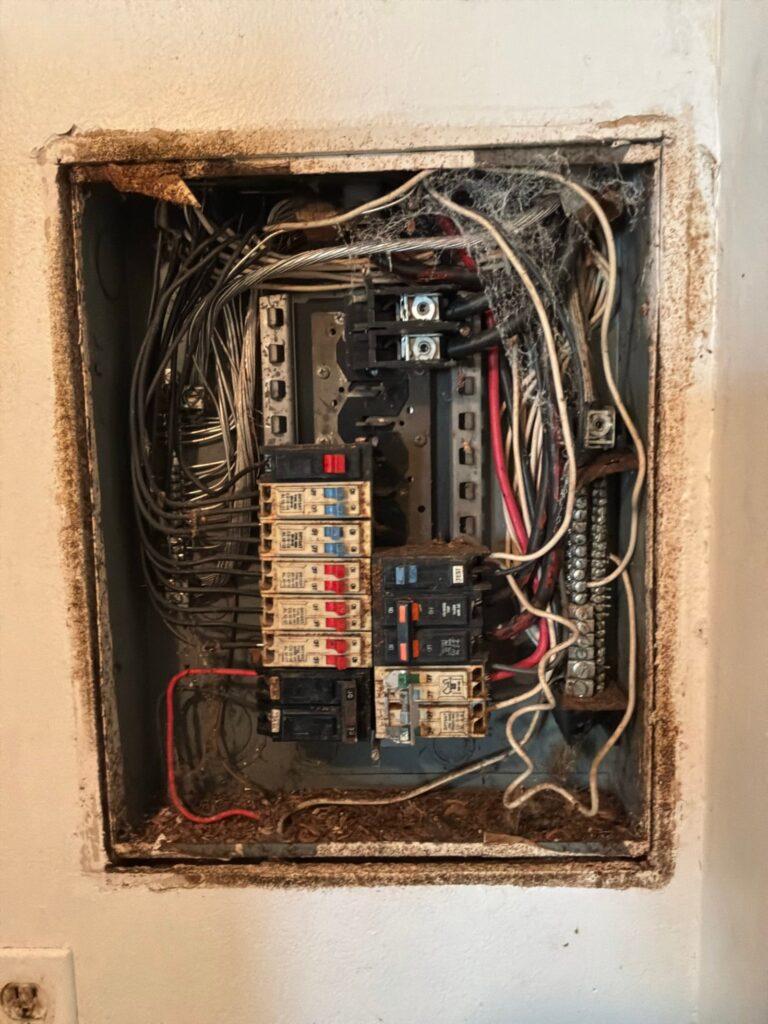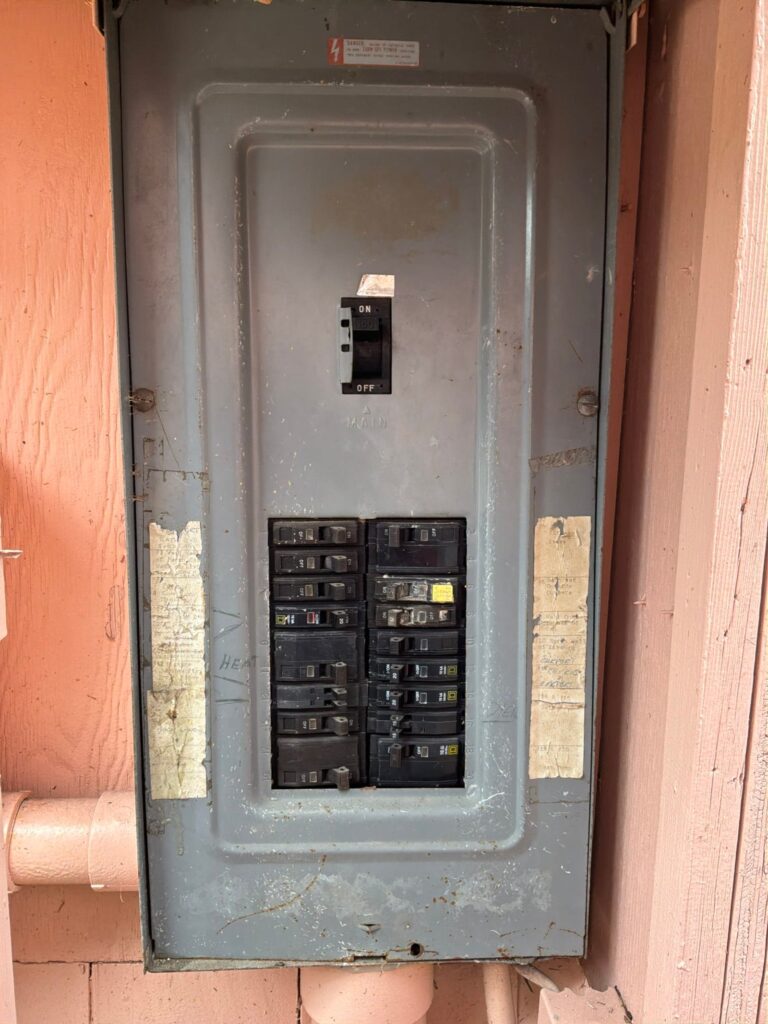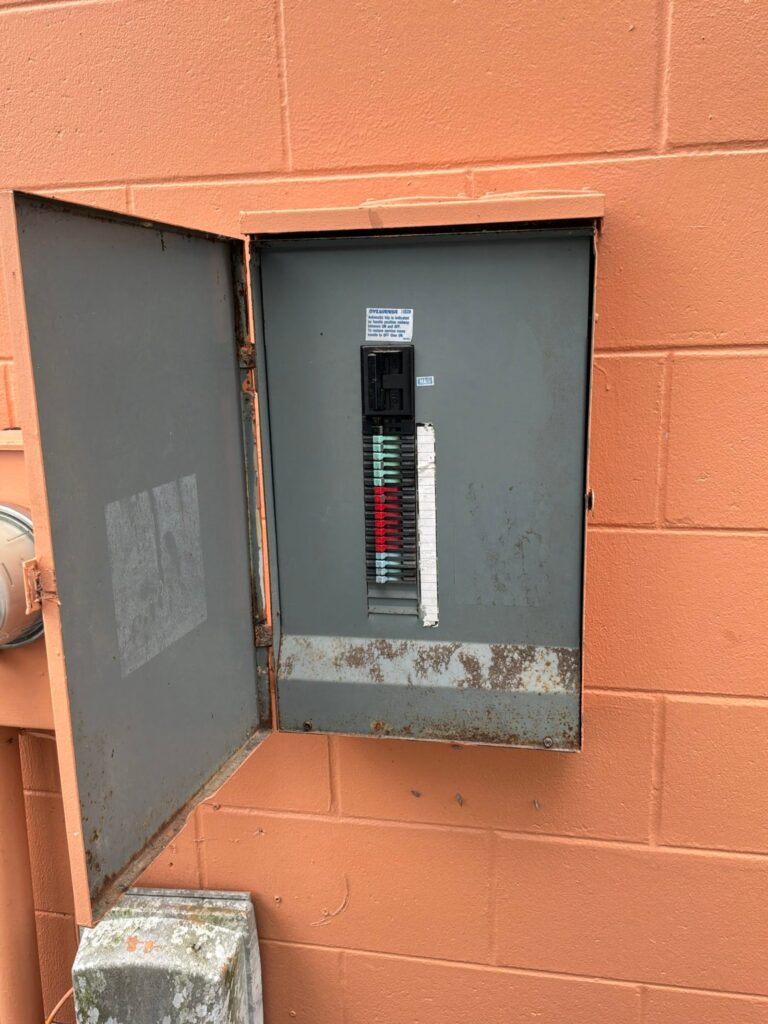
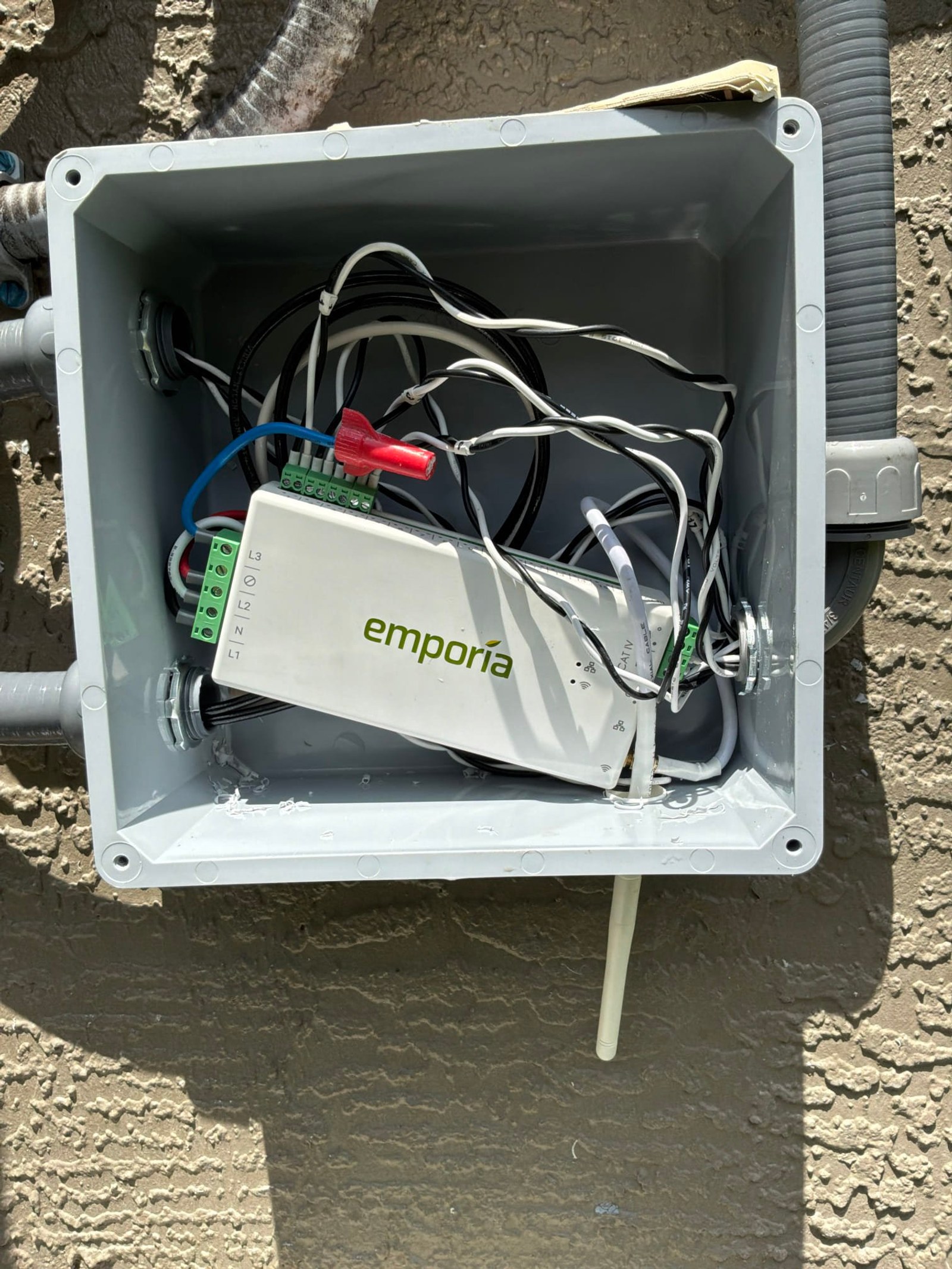
Before & After
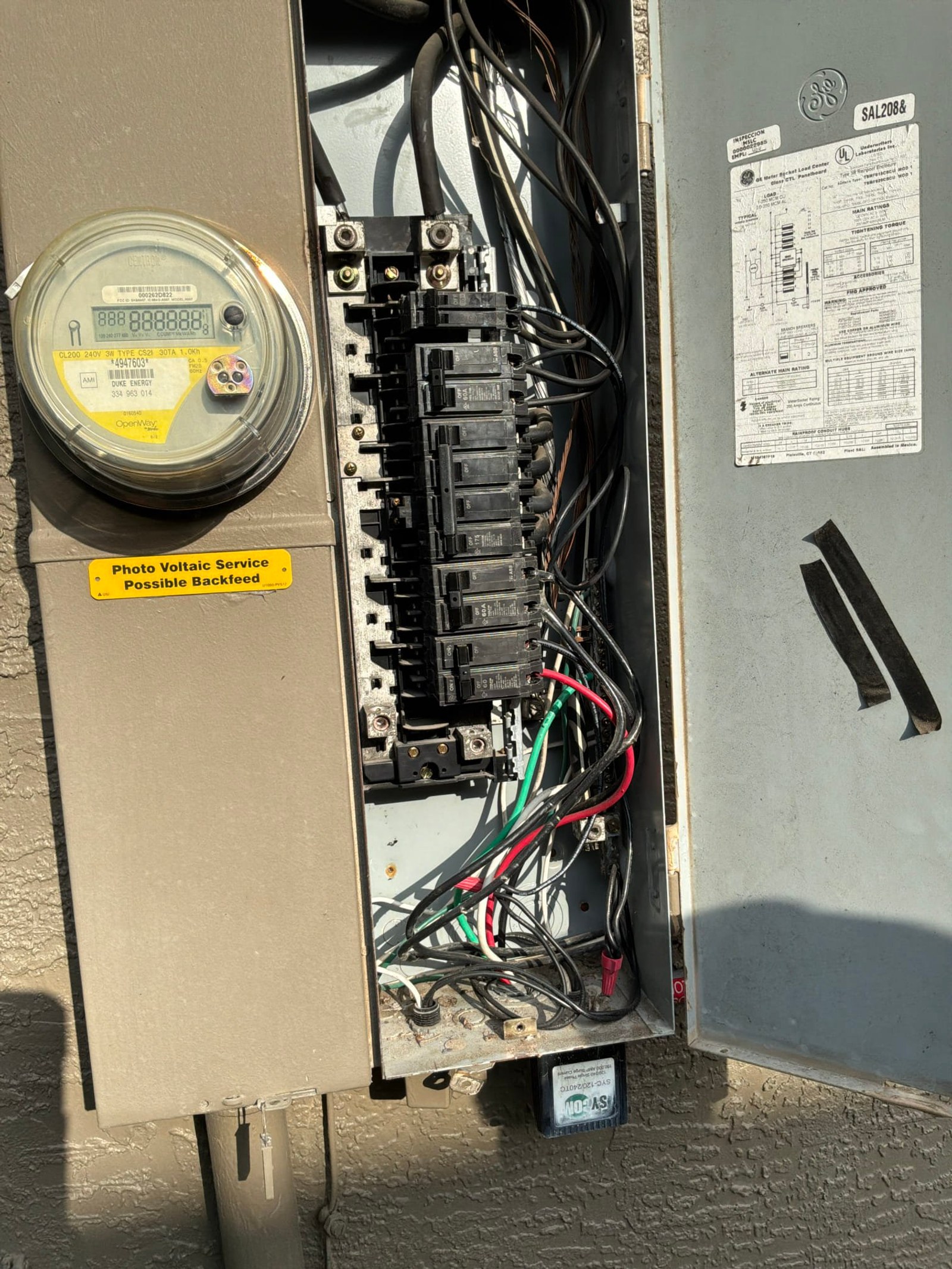
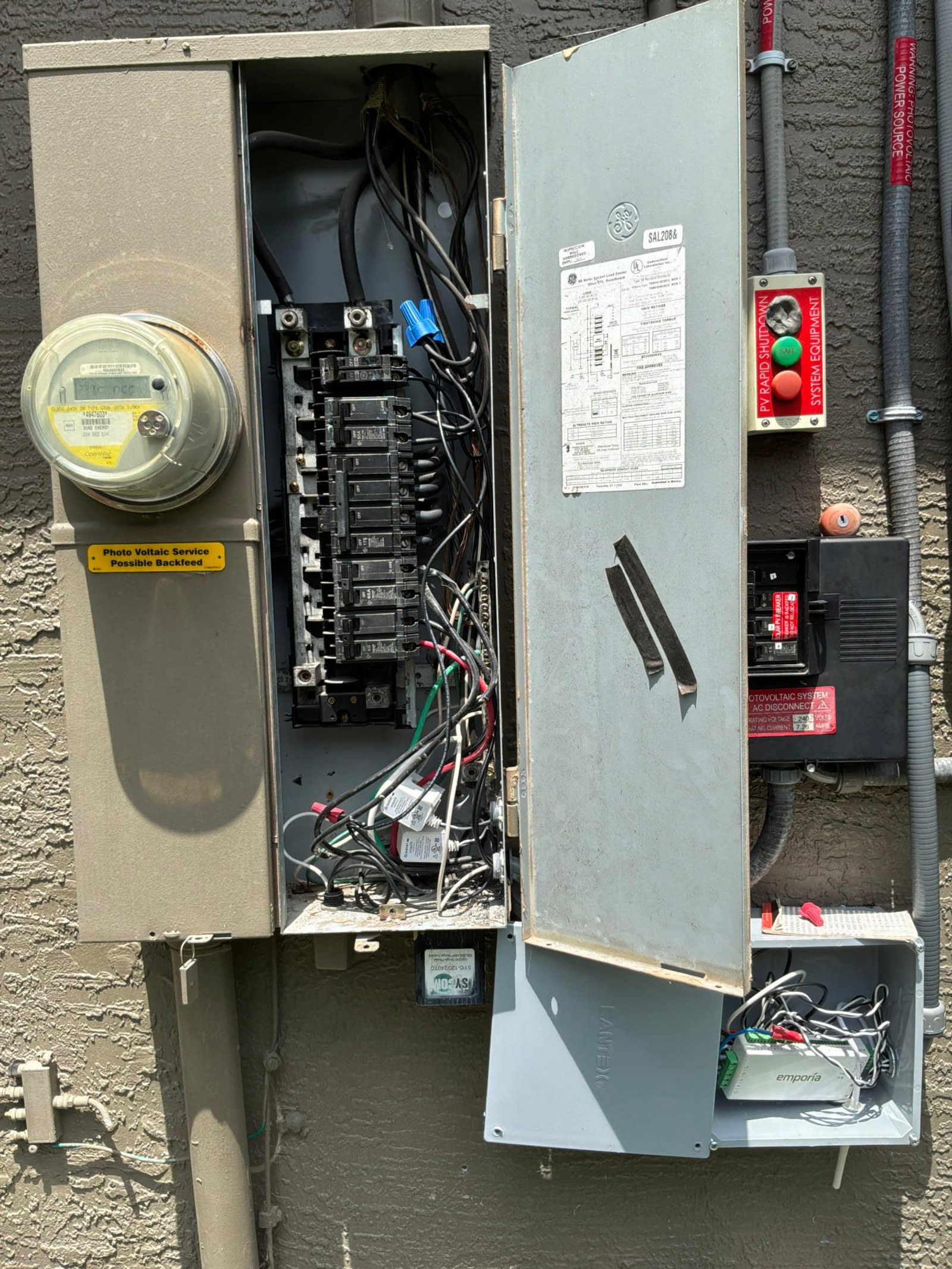
This Oviedo solar monitoring case study walks through the real diagnosis, the fix, and the code details from a recent service call. A homeowner in Oviedo, FL wanted real-time visibility into their solar production and household energy use, so they called us to install an Emporia Vue 3 residential solar power monitoring system under a properly issued Seminole County electrical permit. While our field team was inside the Square D QO 100-amp panel, they documented several conditions worth addressing and walked the homeowner through every finding before leaving.
The Problem
The homeowner had recently added solar and wanted accurate, app-based data on production, grid import, and grid export. The Emporia Vue 3 system requires current transformers (CTs) on both the main service conductors and the solar feed circuit, a dedicated breaker for power and voltage sensing, and a reliable Wi-Fi or ethernet connection. Getting all of that right, and pulling the required permit, is where a licensed electrician makes the difference.
“I want to see exactly how much solar I’m generating and how much power each circuit is pulling, and I want it done properly with a permit.”
Investigation
With the main breaker shut down safely, the field team opened the Square D QO panel and took stock of what was there. The panel itself was labeled properly and the main breaker was sized correctly for the 100-amp service. However, several conditions came up that are common in homes of this era.
Panel Interior Findings
The inspection revealed neutrals and grounds sharing terminals, a configuration that predates current separation requirements. Double-tapped breakers were also present on the bus, meaning two conductors shared a single breaker lug not rated for that arrangement. Open knockouts in the enclosure were documented as well. Additionally, rust and paint were noted on the busbar surface, and the grounding system did not fully meet current NEC standards. Surge protection was not present.
Branch Circuit and Outlet Observations
The receptacles and switches appeared original to the home. Backstabbed connections, a common shortcut used before roughly 2005, were found throughout. Over time, the spring tension in backstabbed terminals eases, contact resistance climbs, and intermittent issues can follow. Kitchen GFCI protection was also flagged as an area to bring up to current code. AFCI protection and tamper-resistant receptacles were not yet in place, consistent with the home’s age. The weatherhead, AC disconnect, meter can, and smoke detector coverage were noted as items to revisit on a follow-up visit.
What We Fixed
The immediate scope of work centered on the permitted Emporia Vue 3 installation, and the team completed every step of it cleanly.
First, the main breaker was shut down and the panel was opened safely. The Emporia monitoring device was mounted inside the enclosure, and current transformers were clipped around the main service conductors to capture whole-home usage. Additional CTs were installed on the solar circuit so the system can independently track solar production alongside utility consumption.
To power and sense voltage for the monitor, the team installed a new Eaton BR220 20-amp, 2-pole breaker, a listed breaker properly sized for the monitoring device’s requirements. An 8×8×4 PVC junction box with cover was installed to manage the low-voltage wiring neatly and protect the connections, keeping the interior organized and accessible. Ten feet of 3/4″ Carflex liquidtight flexible nonmetallic conduit with straight connectors was used to route the wiring cleanly from the panel to the junction box.
With power restored, the technician on-site verified all CT orientations, confirmed accurate sensor polarity, and connected the device to the home’s Wi-Fi network. The Emporia app was configured and tested: energy consumption, solar production, and grid import/export data all reported correctly before the team left the job.
All work was performed under a properly issued Seminole County electrical permit, and the findings from the full inspection were documented and shared with the homeowner for future planning.
Why This Oviedo Panel Inspection Matters for Homeowners
Energy monitoring is one of the most practical upgrades a solar homeowner can make. With the Emporia Vue 3 in place, the household can see, in real time, how much solar power is being produced, how much energy each branch circuit is drawing, and whether the home is importing or exporting to the grid. That kind of visibility helps families make small daily adjustments that add up to real savings over the year.
The panel inspection findings documented during this visit are also worth keeping in mind. Conditions like shared neutral-ground terminals, double-tapped lugs, and an absent grounding electrode system are all straightforward to address, and doing so brings the home in line with 2020 NEC standards that weren’t required when the home was originally wired. None of these findings are uncommon for a home of this vintage; they simply reflect how code requirements have evolved over the decades.
Above all, the peace of mind that comes from permitted, inspected electrical work is something the whole household benefits from, whether that’s the kids charging devices in the evening, the family running the AC through a Florida summer, or the homeowner checking the Emporia app in the morning to see how much solar the roof generated overnight. When the work is done right and documented properly, there’s nothing left to wonder about.
“Marc was amazing walking me through and installing my Emporia Vue energy mgmt system. Super thorough and professional in all regards.”
Code Compliance Cited in This Job
Every fix above maps to a specific section of the 2020 NEC, the edition Florida enforces under the 8th Edition Florida Building Code. Florida adopts the 2023 edition of the NEC when the 9th Edition takes effect on December 31, 2026. Each card links to NFPA’s public NEC index.
Surge Protective Device at Service
NEC 230.67 requires a listed surge protective device (SPD) at the service entrance of all new dwelling-unit services. During this inspection, no SPD was present on the Oviedo home’s 100-amp service, a finding documented for the homeowner’s follow-up planning. Adding a whole-home Type 2 SPD would bring the service in line with this requirement and protect the solar inverter and household electronics. NFPA reference ›
Type 2 SPD Installation Requirements
NEC 285.25 governs the installation of Type 2 SPDs at the load side of the service disconnect. Because the Oviedo panel currently lacks surge protection, a future installation would need to follow this section’s mounting and connection requirements. This is especially relevant for a solar home where inverter electronics represent a significant investment. NFPA reference ›
Grounding Electrode System
NEC 250.50 requires a complete grounding electrode system incorporating all available electrodes at the structure: ground rods, metal water pipe, and any concrete-encased electrodes. The inspection found the grounding system at this Oviedo home did not fully meet current standards, a condition consistent with older installations that predate today’s requirements. NFPA reference ›
Electrical Connections
NEC 110.14 (B) requires that conductors be connected using listed pressure connectors, splices, or terminals rated for the conductor type and count. Double-tapped breakers observed in this panel place two conductors on a single lug not listed for that arrangement, a configuration that doesn’t meet current connection requirements and is worth correcting when the panel is next opened. NFPA reference ›
GFCI Protection for Personnel
NEC 210.8 requires GFCI protection for receptacles in kitchens, bathrooms, garages, outdoor areas, and other specified locations. The inspection confirmed kitchen GFCI protection was not present in the Oviedo home, common for homes wired before the code cycle that expanded kitchen GFCI requirements. Updating to GFCI-protected outlets brings the kitchen in line with current standards. NFPA reference ›
AFCI Protection
NEC 210.12 requires arc-fault circuit interrupter protection on branch circuits supplying dwelling-unit bedroom, living area, kitchen, and other specified spaces. AFCI protection was not present in this home, consistent with wiring that predates the NEC cycles that progressively expanded AFCI requirements. This is an upgrade worth planning alongside any future panel work. NFPA reference ›
Common Questions
Questions homeowners ask after seeing this kind of work.
Does installing an Emporia Vue 3 energy monitor require an electrical permit in Seminole County, FL?
Yes, in Seminole County, installing a monitoring device inside a service panel and adding a dedicated breaker requires a properly issued electrical permit. Pulling the permit ensures the work is inspected and on record, which matters for homeowners with solar systems and for future real estate transactions. Our team handled the permit for this Oviedo installation start to finish. Schedule online if you’d like us to do the same for your home.
What is an FPE panel and why did the technician note it during the inspection?
Federal Pacific Electric (FPE) Stab-Lok panels were common in homes built from the 1950s through the 1980s. Over time, independent testing found that some FPE breakers do not trip reliably under overload conditions, meaning they don’t always do what a breaker is supposed to do. Homes with FPE panels are worth having evaluated by a licensed electrician, especially before adding new loads like solar monitoring equipment or EV chargers. Book a panel inspection and we’ll walk you through your options.
How often should I have my home’s electrical system inspected?
A yearly inspection is a solid baseline for most homeowners. It keeps you current on any code changes and catches small issues before they become larger ones. Homes built before 1990, homes with solar or EV charging equipment, and homes that have been through recent storm seasons can benefit from inspections more often. Schedule online to get your annual inspection on the calendar.
What are backstabbed outlets and do they need to be replaced?
Backstabbed connections use a spring-loaded slot in the back of a receptacle rather than a screw terminal on the side. They were a common installation shortcut used before roughly 2005. Over time, the spring tension eases and contact resistance increases, which can cause intermittent flickering or warm outlets. Replacing them with properly screw-terminated connections is straightforward and restores a secure, durable contact. If your home’s outlets look original and are more than 15–20 years old, it’s worth having a licensed electrician take a look.
Can the Emporia Vue 3 monitor both solar production and grid usage at the same time?
Yes, that’s one of its strengths. The system uses separate current transformers on the main service conductors and on the solar feed circuit, so it can simultaneously track whole-home consumption, solar production, and the net grid import or export. The Emporia app displays all three data streams in real time and logs historical data so you can see trends over weeks and months. For the most accurate setup, sensor orientation and polarity need to be verified during installation, which is exactly why permitted, professional installation pays off. Schedule online to get your system installed correctly.
Want to see more real jobs like this one? Browse our completed case studies or explore our services.