
Geothermal heating Orlando builders quote for a new house usually comes up while the plans are still rough. The lot is picked, the plans are not final, and the budget is already tight. In Central Florida, the choices you make on paper decide how the house handles heat, storms, and power bills.
Geothermal heating and cooling comes up often in those early talks. It does work here. The math just looks different than it does in cold states, because our winters are short and our summers are not.
Cooling Load Comes First for Geothermal Heating Orlando Homes
A new house in Winter Garden or St. Cloud runs its air conditioner most of the year. Cooling drives the bill, so size the system around July, not January. Heating is a small side note by comparison.
A ground-source heat pump moves heat into the earth or into water. It never has to fight 95-degree outdoor air the way a standard unit does. That is where the savings show up.
The U.S. Department of Energy has a plain guide to how geothermal heat pumps work. It is worth a read before you price the system.
Ground Loops Need Room and Early Planning
Sandy soil and a high water table make loop work here its own animal. Some lots suit vertical bores. Others sit near a pond, which opens the door to a water loop.
Either way, the loop goes in before the yard is finished. Trenching after the pool, the pavers, and the sod is a costly do-over. If a pool is in the plan, dig once and do both jobs together.
Many newer areas around Lake Nona, Oviedo, and Lake Mary also have review boards. Ask about loop fields, pad space, and screening rules early. That is much easier than asking for forgiveness later.
Humidity Is the Other Half of Comfort
In our climate, comfort is not only about degrees. It is about how much water the air holds. A house that feels clammy at 74 degrees has a moisture problem, not a size problem.
Variable-speed gear helps, because it runs longer at a low speed and wrings out more water. That style of unit wants steady power and its own circuit. A whole-house dehumidifier needs one too, so plan for the space now.
The Panel Is the Part People Forget
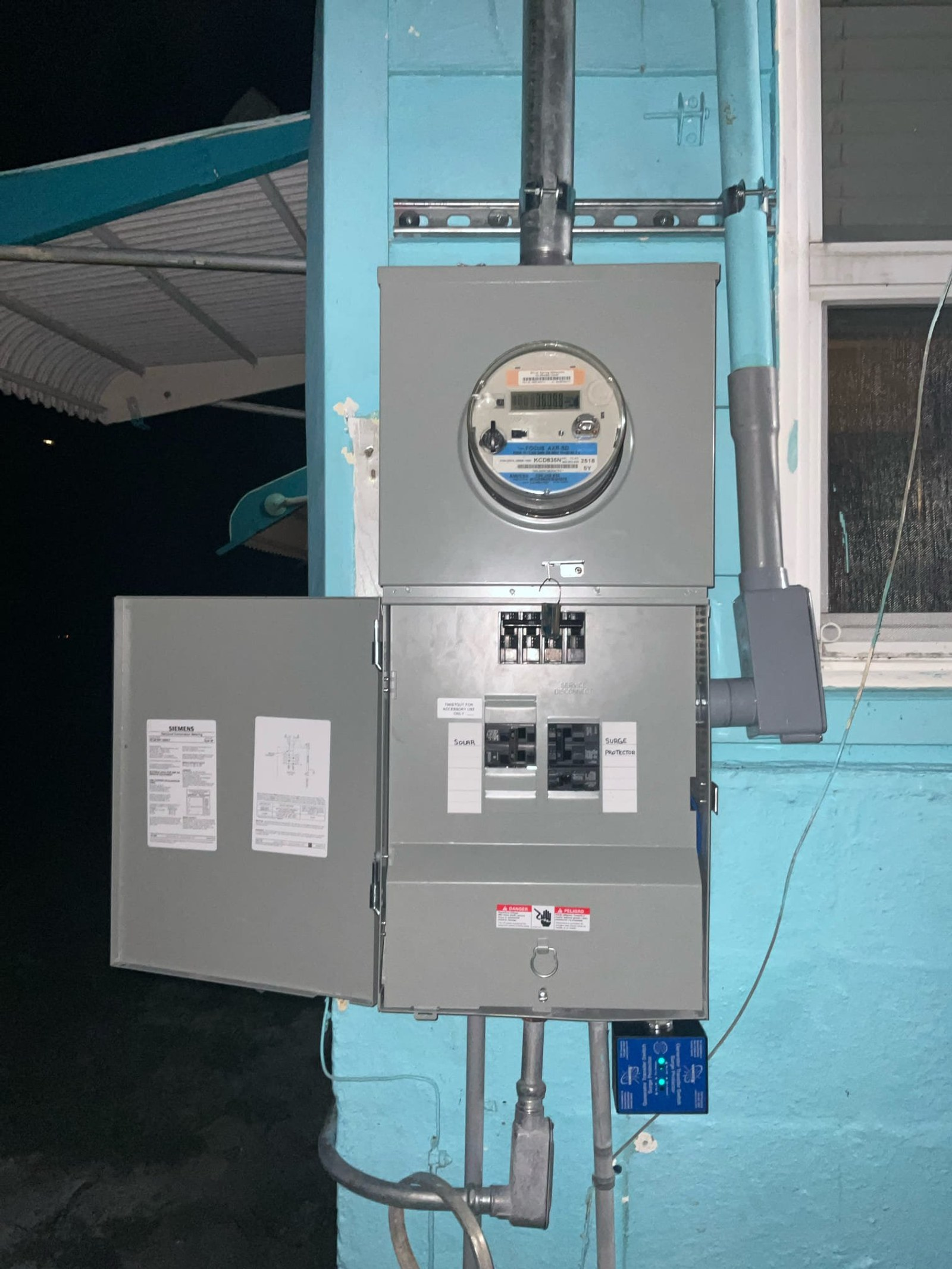
A heat pump is only one load. Add a pool pump, a well pump, a tankless water heater, and an electric car, and a 200-amp service fills up fast. Backup heat strips add more on top.
So we run the numbers before the plans are locked. Panel capacity is the quiet catch behind geothermal heating Orlando homeowners want to add. A load study tells you the service size and the panel space you need. Our walk-through of how a home load calculation works covers the basics.
Space matters as much as amps. A full panel means a sub-panel later, at full price. Ask the builder for spare breaker slots on day one.
Plan These Before the Slab Goes Down
A few cheap moves during framing save real money later. Most of them take minutes while the walls are still open.
- A spare conduit sleeve from the panel to the garage wall for a car charger.
- Room in the panel for a whole-home surge device.
- A generator inlet and transfer switch, or at least the wire path for one.
- Its own circuit for the pool pump, the well pump, and the heat pump.
- Low-voltage runs for thermostats, cameras, and sensors.
- Weather-rated outlets on the lanai and near the driveway.
- An attic light and outlet near the air handler, so service calls are safe.
Storm Season Belongs in the Plan
Central Florida sees more lightning than any other part of the country. A strike near a power line can push a spike into the house. Heat pumps, control boards, and smart gear are the first things to die.
A surge device at the panel is the first layer. Plug-in units at the TV and the office desk are the second. You can see how we handled this for a Belle Isle home during a panel upgrade.
Storm season runs June through November. Backup power rarely shows up on a geothermal heating Orlando quote, yet it belongs in the budget. Wiring the house for a generator now costs far less than adding it after the first long outage.
Payback Looks Different Down Here
Ground-source gear costs more up front. Most of the payback comes from the cooling months, which is why the timeline in Florida is not the same as in a cold state.
Ask your builder and your HVAC contractor for a written estimate with real numbers for your lot. Then ask us what the power side adds. Nobody should guess at either half.
Get the Trades Talking Early
Most build problems we see are not wiring mistakes. They are handoff mistakes. The HVAC crew sizes a unit, the wiring crew never hears about it, and the circuit is short by the time the unit lands.
Ask for one meeting with the builder, the HVAC contractor, and the electrician in the same room. Bring the model numbers. Ten minutes there can save a change order later.
Pool builders belong in that talk as well. Pumps, heaters, and lights all land on the same panel. In this market a pool is the rule, not the exception, so plan for it from the start.
Check the Work Before the Drywall Goes Up
Rough-in is the last easy look at the wiring. Once the board is hung, every fix costs more. A second set of eyes at that stage is cheap insurance.
We do that with an electrical safety inspection during the build, then again at the end. If you plan to add smart gear later, our notes on future-proofing an Orlando home are worth a read.
Most of these questions end in the same place. Will the panel keep up? Answer that early and the rest of the build gets much simpler.
Thomas Edison Electric works with homeowners and builders in Orlando, Winter Park, Oviedo, Sanford, Apopka, and Kissimmee. Call (407) 490-0004 to talk through your plans. Florida license EC13015487.