
Orlando drivers pile up miles. Between I-4, the 417, and school runs across Seminole County, a daily commute adds up fast. The EV charger benefits Orlando households notice first show up right in the driveway. Charging at home turns a weekly errand into something that happens while you sleep.
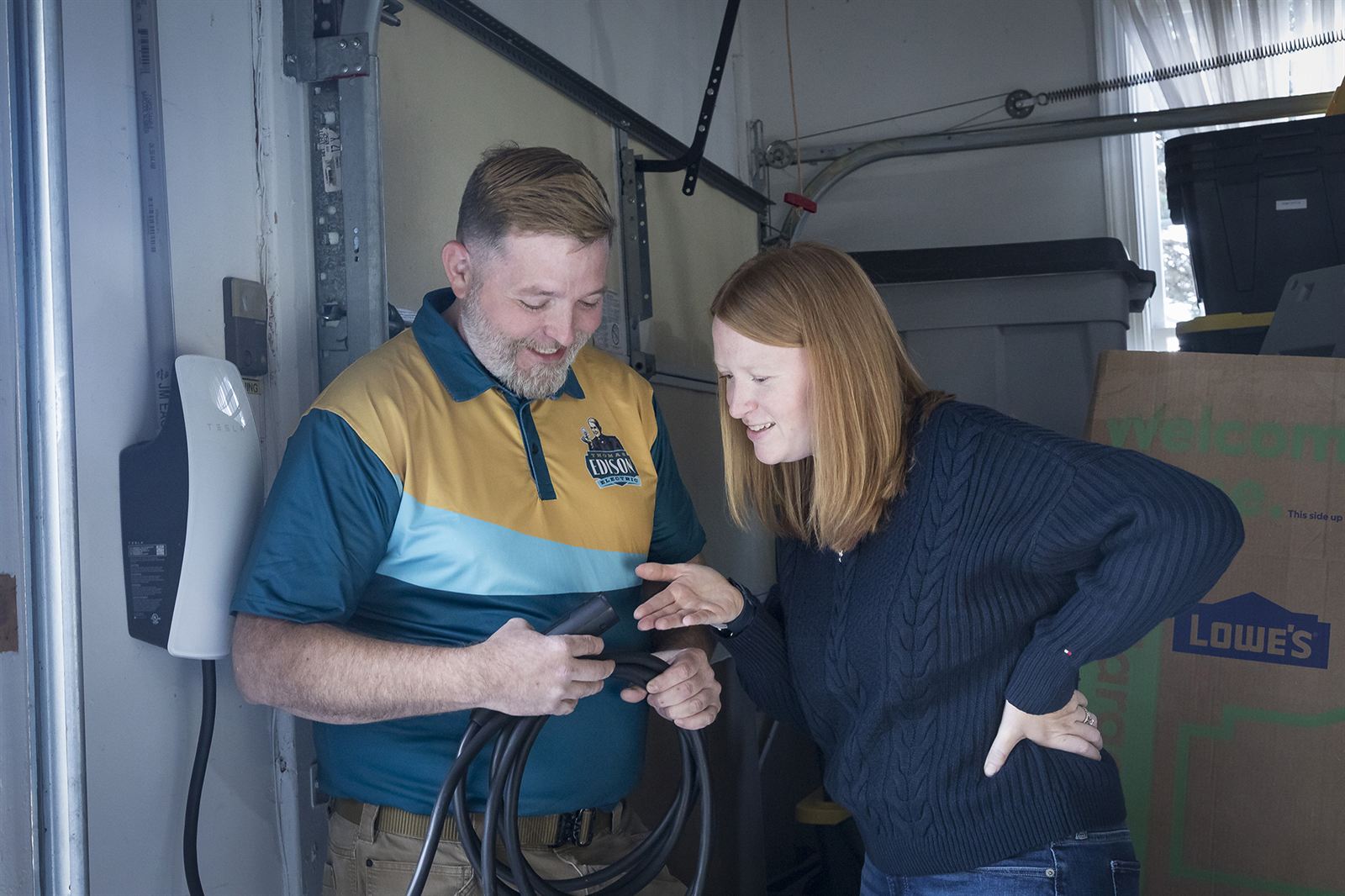
Home Charging Costs Less Per Mile
Public fast charging is priced for speed and convenience. Electricity at the house almost always costs less per kilowatt-hour than a commercial station.
Several Central Florida utilities offer time-of-use plans that reward overnight use. Shifting your charging window can lower your cost per mile even further.
A Level 2 unit adds roughly 25 to 40 miles of range per hour for most vehicles. Plug in after dinner and you wake up full.
The math is easy to check yourself. Divide the miles you drive each week by your car’s efficiency, then multiply by your rate per kilowatt-hour.
Compare that number to a month of public charging receipts. For most commuters here, the gap pays back the equipment faster than they expect.
EV Charger Benefits Orlando Families Feel Every Morning
Heat is the local villain. A car parked in an open driveway can reach punishing cabin temperatures by mid-afternoon.
When the vehicle sits on a charger, you can pre-cool the cabin from your phone without spending range. The energy comes from the house instead of the battery.
That one habit makes summer far more pleasant. It also eases the load your pack sees during the first few miles of a trip.
Storm Season Readiness
Hurricane season runs June through November. A full battery is genuinely useful when a system is tracking toward Central Florida.
- A charged vehicle gives you evacuation range before fuel and charging stops get crowded.
- Some models can run household essentials through an accessory outlet or a bidirectional setup.
- Home charging removes your dependence on public stations that may lose power.
- Topping off before landfall is simple when the equipment already hangs in your garage.
None of that replaces standby power for the house. Our notes on generator safety during Central Florida storm season cover that side of the plan.
Charging Habits That Fit an Orlando Schedule
Not everyone here works nine to five. Hospitality and attractions schedules send people out at odd hours, and a home charger covers all of them.
Most vehicles and chargers let you set a departure time. The car then finishes charging right before you leave, which is easier on the pack.
If you have solar, a midday session may make more sense than an overnight one. Your inverter output and your rate plan decide which window wins.
Either way, you stop planning errands around a charging stop. That alone changes how an electric vehicle feels to own.
Gentler Charging Protects the Battery
Repeated fast charging in high ambient heat is harder on a pack than a slow overnight session. Our summers keep battery temperatures elevated to begin with.
A home unit delivers energy at a calmer rate. Many owners also cap daily charging near 80 percent, which most manufacturers suggest for routine use.
Curious how the equipment communicates with the car? Our explainer on how home EV chargers work breaks it down without jargon.
Time Saved and Value Added
Public charging costs you time more than money. Twenty minutes here and there adds up across a month.
A charging station in the garage also travels well as a selling point. Buyers in Lake Mary, Winter Garden, and Oviedo increasingly ask whether one is already installed.
Safety groups treat correct installation as part of that value. The Electrical Safety Foundation International publishes plain-language guidance for homeowners.
What Installation Actually Involves
This is not a plug-and-play project. A Level 2 unit needs a dedicated 240-volt circuit sized for a continuous load.
We start with a load calculation. Homes here already run heavy air conditioning, and many add a pool pump and an electric water heater on top of that.
Older panels sometimes need an upgrade or a load management device. See what four hidden problems surfaced during a Belle Isle panel modernization.
Permits and inspection are part of a legitimate job. Our EV charger installation team pulls the permit and meets the inspector.
One More Reason: Fewer Trips in the Heat
Standing beside a car at a shopping center charger in August is nobody’s idea of fun. Home charging removes that errand from your week entirely.
It also helps households with two drivers. A single charger can serve two vehicles overnight when you alternate nights or use load sharing.
Where the Equipment Should Live
Charging hardware carries a rated operating temperature. A west-facing wall in July is a hostile spot for it.
We look for shade, airflow, and a mounting height that keeps the cable off the ground. Anything outdoors needs an enclosure rating built for driving rain.
Most of the EV charger benefits Orlando drivers hear about depend on one unglamorous detail. The circuit has to be sized and protected correctly.
The Department of Energy overview of home charging is a useful starting point before you shop.
Schedule an Orlando EV Charger Consultation
Every house is different, and so is every driveway. A short visit tells us what your panel can support and what the work will take.
Call Thomas Edison Electric at (407) 490-0004 to get started. We hold Florida license EC13015487 and serve Orlando, Winter Park, Kissimmee, Sanford, Altamonte Springs, and the surrounding area.