
Summer afternoons in Central Florida bring thunder almost every day, and thunder often means the lights blink. A backup generator Orlando homeowners size correctly keeps the AC, the fridge, and the water running when the grid drops. The planning is the part most people skip. Here is how we walk through it.
Why Outages Land Harder Here
Our storms are not a once-a-year event. Central Florida sees more lightning than any other part of the country. One strike near a power line can drop a whole street in seconds.
Hurricane season runs from June through November. After a big storm, repair crews may work for days. The heat does not pause while they do.
That is the real issue here. Indoor air gets hot fast, food spoils, and homes on well water lose the pump too. The National Weather Service lightning safety page is a good primer on how our storm season behaves.
Sizing a Backup Generator Orlando Homes Can Rely On
There is no standard size. The right unit depends on what you want running, not on square footage alone.
So we start with a load calculation. That means adding up the real draw of each item on your list. Guesswork leads to a unit that is too small or a bill that is too big.
- Central AC or a mini split, the largest load in most homes here
- Fridge, freezer, and a couple of kitchen circuits
- Well pump or lift pump, common around Oviedo, Apopka, and Sanford
- Pool pump, so the water keeps moving during a long outage
- Lights, internet, garage door, and any medical gear
Some families want only the basics covered. Others want the house to feel normal, which means a larger unit and more fuel. Both choices work, and both change the price.
Essential Circuits or the Whole House?
This is the fork in the road, and it drives the budget more than any other choice.
An essential-circuits setup feeds a short list through a smaller transfer switch. You keep the fridge, some lights, the internet, and often one cooling zone. Many homeowners here add the well pump and a single bedroom AC head.
A whole-house setup runs the panel as normal. Central AC, laundry, kitchen, and the pool all keep going. It costs more up front and burns more fuel, yet the house barely notices the outage.
We price both so you can compare them side by side. There is no wrong answer, only the one that matches how you live.
Natural Gas or Propane?
Natural gas is not on every street here. Many blocks in Winter Garden, Oviedo, and St. Cloud have no gas main at all.
With gas service, the unit taps the line and runs without refueling. Without it, propane is the normal answer.
Propane means a tank, and tank size sets your run time. We size the tank around days of outage, not hours. Maker sizing guides, such as the ones on Generac’s site, make a useful starting point.
Where the Unit Can Sit
Placement is its own puzzle. Code sets clearances from windows, doors, and vents, and the maker adds rules of its own.
Lots here are often tight. A screened lanai sits on one side and the AC gear on the other. We look for airflow, service room, and a clean path for the fuel line.
Two local wrinkles come up a lot. Many HOAs in Lake Mary, Winter Garden, and Kissimmee ask for screening or a set spot. And on low ground, the pad needs height so heavy rain never reaches the unit.
Your Panel Has to Be Ready
The unit ties in through an automatic transfer switch. That switch drops the house off the utility before the generator picks up, which keeps line crews safe.
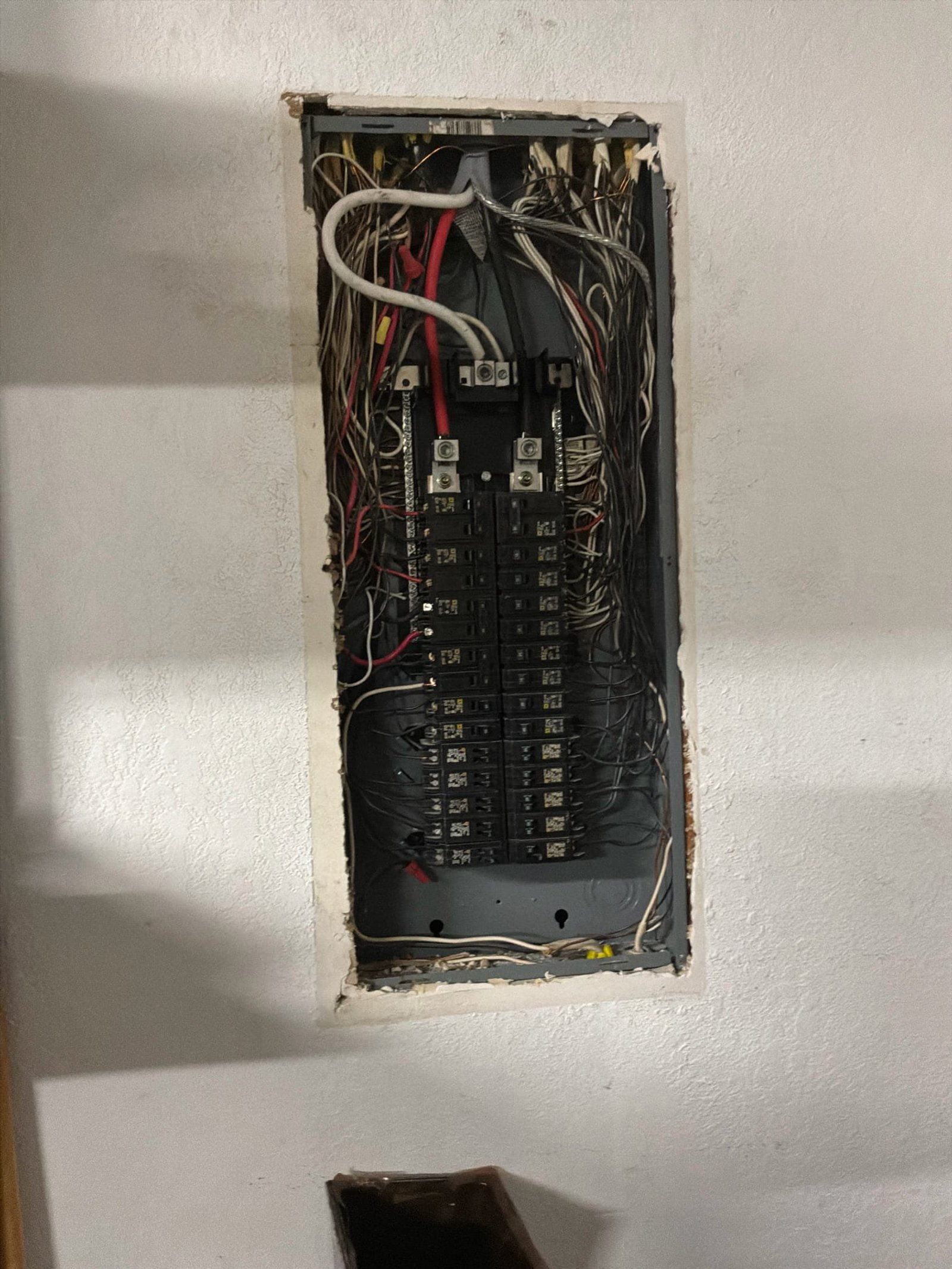
Older panels do not always have the room or the condition for that work. Crowded bus bars, rust, and double-tapped breakers show up often in homes around here. In one Belle Isle home, a panel upgrade cleared the way for the rest of the safety work.
So we check the panel first, then quote the generator installation with any panel work spelled out. Nobody likes a surprise halfway through.
What a Proper Install Includes
Setting a unit on a pad is the easy part. The rest is what makes it work at 2 a.m. in a storm.
Our crews handle the load math, the transfer switch, the pad, the fuel tie-in, the permit, and a full test run. We also show you how to read the status light and how the weekly self-test works. If you keep a portable unit as well, read our guide to hooking one up safely before you need it.
Every unit we set gets a permit and an inspection. That paper trail matters at resale, and it matters to your insurer.
What Yearly Service Looks Like
Every standby unit here benefits from a yearly checkup, because sun, rain, and humidity are hard on rubber and metal.
A service visit covers the oil, the filters, the battery, and the fuel line. We also watch a full start cycle and check the transfer switch under load.
Two habits help between visits. Let the weekly self-test run, and keep grass, mulch, and shrubs clear of the vents.
Plan Before the Next Named Storm
The rush starts the moment a storm gets a name. Wait lists grow, parts move slowly, and choices narrow.
Booking in the spring gives you time to compare sizes, settle HOA questions, and pull permits without pressure. It also means your unit is tested well before June. For more on what to do once the wind picks up, see our notes on generator safety during storm season.
Talk It Through With a Local Team
Thomas Edison Electric works in Orlando, Winter Park, Sanford, Ocoee, Maitland, and the towns nearby. We hold Florida license EC13015487, and we pull the permits and meet the inspector ourselves. Call (407) 490-0004 and we will help you size the backup generator Orlando weather really calls for.