
Power outages in Central Florida rarely wait for a good time. Hurricane season runs from June through November, and even a routine August storm can darken your street for hours. For a lot of families the answer is a portable generator Orlando hardware stores sell out of every June. One will keep the refrigerator cold and the fans turning, but connecting it safely takes planning.
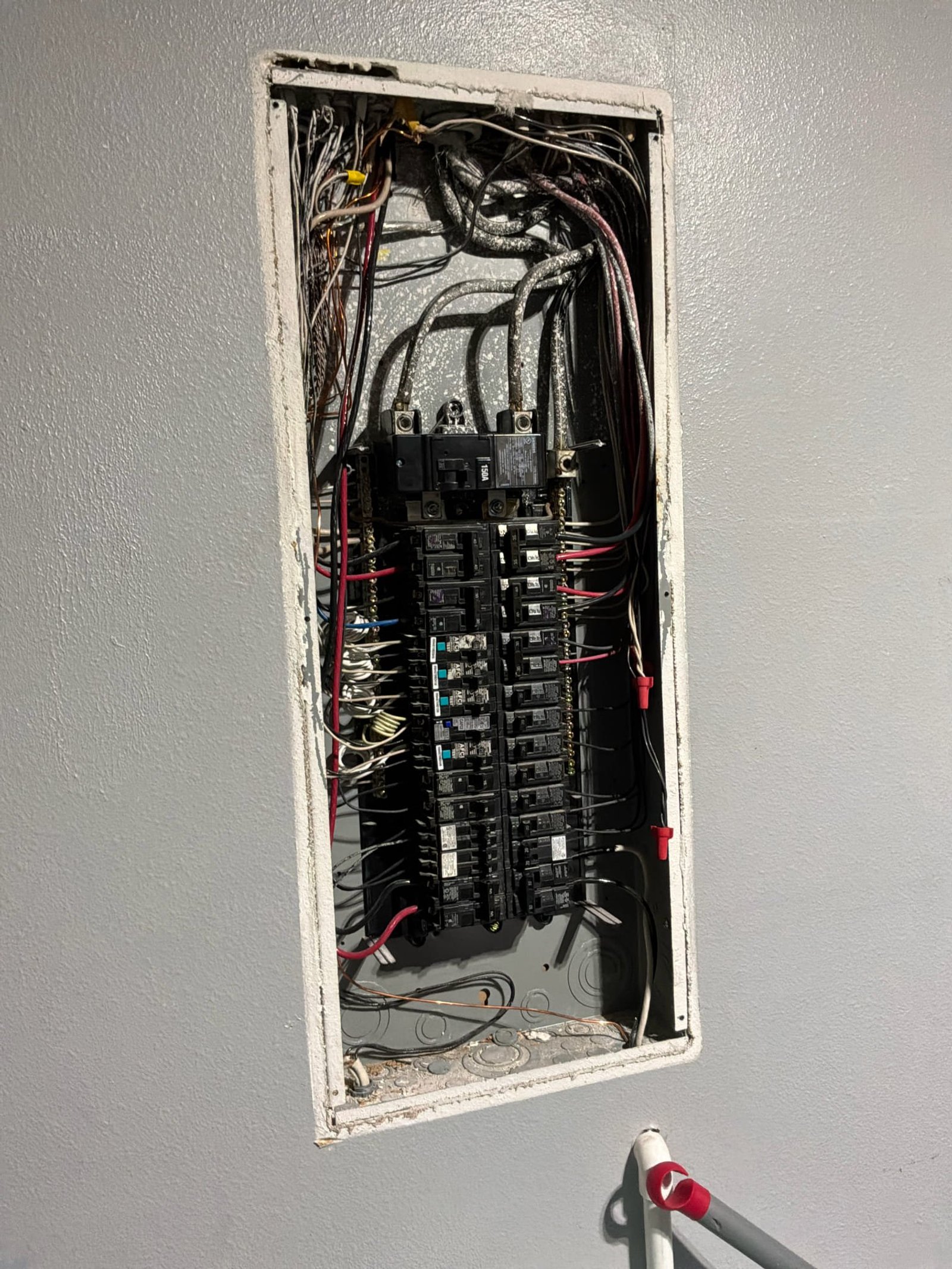
The hookup is what makes backup power safe or risky. At Thomas Edison Electric (Florida license EC13015487), we wire generator connections across Orlando, Winter Park, and Oviedo. This guide covers the installation side: the panel, the switch, the inlet, and the permit.
Why Backfeeding Is the Real Danger
The riskiest shortcut is backfeeding. That means plugging a running machine into a wall outlet with a double-ended cord. Power then flows backward through your panel and out to the street.
As a result, a lineworker restoring your block can be shocked. Backfeeding also skips your main breaker, so nothing limits the current your wiring sees. When utility power returns, the collision often ruins the machine and your appliances.
A Transfer Switch Is the Safe Path
A transfer switch is the code-compliant way to tie a generator into your house circuits. It isolates your home from the grid before backup power flows. Therefore backfeeding becomes physically impossible.
A switch also lets you choose the circuits that matter. Most families here pick the refrigerator, a few lights, the garage door, Wi-Fi, and a well pump. Our team installs a transfer switch and generator inlet sized to your unit.
Interlock Kit or Transfer Switch?
Homeowners often ask about interlock kits. An interlock is a metal slide that stops the main breaker and the generator breaker from being on at the same time. It costs less than a switch panel, because it uses breakers you already own.
That said, an interlock has to be listed for your exact panel. A ten-circuit transfer switch gives you clearer labels and simpler operation in the dark. We compare both at your panel before quoting anything.
Your Panel Has to Pass First
Every hookup starts with an honest look inside the panel. Corroded bus bars, double-tapped breakers, and a full slot count all change the plan. An interlock also needs a free space directly under the main breaker.
Some older meter-main combinations around Orange County have no listed interlock at all. In that case a separate transfer switch is the cleaner answer. If the panel itself is failing, replacing it comes first.
Cost and Permits for a Portable Generator Orlando Homeowners Own
Cost tracks three things: panel condition, the length of the wire run, and where the inlet lands. Ask for a written scope so nothing surprises you later. Every job here also shares a few fixed realities:
- A permit. Orange, Seminole, and Osceola counties all require one for this work.
- An inspection. The inspector checks bonding, the inlet, and the switch wiring.
- A licensed contractor. Florida requires one, and ours is license EC13015487.
- Time on site. Most straightforward hookups take part of a single day.
- A written circuit list, so you know exactly what the switch feeds.
Where the Inlet Box Goes
The inlet box is the weatherproof plug on your exterior wall. Three things drive its placement: distance to the panel, usable cord length, and weather exposure. A short, direct run means less voltage drop and less cord underfoot.
We mount it above splash level, because our summer rain pools fast, and clear of roof runoff. Remember that the inlet also decides where the machine ends up. So pick a wall with open ground nearby, since the engine has to run well away from the house.
Match the Inlet, the Cord, and the Amperage
The inlet, the cord, and the generator outlet all have to agree. A 30-amp inlet needs a 30-amp cord and a matching locking receptacle on the machine.
Length matters too. Past roughly 50 feet, voltage drop starts to punish motors like a well pump. Because of that, we size conductors for the actual run rather than a guess.
Many homeowners buy the machine first and the hookup second. That order works fine. Just bring the model number to the estimate, because it sets the inlet, the cord, and the switch rating.
Sizing the Transfer Switch Circuit List
Sizing is really a circuit question, not an engine question. Decide which circuits move onto the switch, then confirm the unit can carry them together.
Motors are the tricky part. A well pump, a chest freezer, and a window AC each pull a large surge at startup. In one project we hardwired a dedicated circuit for an overheating pump, and you can see how we handled this for a Belle Isle home.
Most families settle on six to ten circuits. Whole-house cooling is a different conversation, and it usually points toward a standby unit instead.
Portable or Standby?
The decision point is simple. If you are willing to roll out a machine, plug in a cord, and add fuel, a portable unit does the job.
However, an automatic standby makes more sense if you travel during hurricane season. It also fits homes where someone depends on powered medical equipment. Standby units start themselves and run on natural gas or propane.
Cost runs the other direction. A portable generator Orlando families can wheel out of the garage costs far less to wire than a full standby system. That is why most households start there.
What the Inspector Actually Looks At
Inspections move quickly when the work is clean. The inspector confirms the interlock is listed for your panel and correctly mounted.
They also check conductor size, the inlet box, grounding and bonding, and the labeling. A permanent label at the panel has to spell out the operating steps. Most failures trace back to small things: an unlisted interlock, a missing label, or an inlet mounted too low.
Practice Before Storm Season
Learn the system on a sunny day, not during a warning. Give any new setup two dry runs before June, while the weather is calm and you have daylight.
Start the engine, move the switch, load a few circuits, then shut everything down in the right order. Time yourself, and write the steps on a card for the garage wall.
Operating habits are a separate subject. Exhaust placement, canopies, refueling, and carbon monoxide alarms are all covered in our guide to generator safety for Central Florida storm season. To keep the machine dependable between storms, read our guide to home generator monitoring and maintenance.
What to Ask Your Electrician
A short list of questions tells you a lot in five minutes:
- Will you pull the permit, and which county reviews it?
- Is my panel listed for an interlock kit, or do I need a separate switch?
- How many circuits will the switch actually cover?
- What inlet and cord rating fits the machine I already own?
- Where will the inlet box sit, and why there?
Clear answers come quickly from a licensed contractor. Before you buy, read the NFPA generator safety tip sheet and the hurricane guidance from the Electrical Safety Foundation International. Please note that we install and connect generators, but we do not repair the portable machines themselves.
Ready for storm-season backup power? Call Thomas Edison Electric at (407) 490-0004, and a licensed electrician (license EC13015487) will plan the hookup with you. We serve Orlando, Winter Park, Oviedo, Sanford, Lake Mary, and nearby Central Florida towns.