
Cooling runs nearly year round here, so the air conditioners Orlando homes depend on work harder than almost anything else you own. All of that load lands on your wiring, your breakers, and your panel. Picking a unit is as much a power question as a comfort one.
Central Systems and the Circuits They Need
A central system needs its own 240-volt circuit and a disconnect within sight of the outdoor unit. That disconnect lets a tech kill power without walking back to the panel.
Many homes in Orlando and Winter Park still carry panels sized for a much smaller load. If the panel is full, a new system can force a service upgrade before the HVAC crew can finish.
So the honest order of work is panel first, unit second. We check capacity, breaker space, and wire size before anyone orders equipment.
Mini Splits for Lanais, Garages, and Additions
Ductless mini splits fit our market well. They cool one zone, draw less than a central system, and skip ductwork in an attic that turns brutal by noon.
Homeowners use them for a converted garage, a bonus room, or an enclosed porch. Each head still needs its own feed and a disconnect. Our guide to mini split setups covers the sizing details.
Window and Portable Units
Window units usually plug into a normal 120-volt outlet. Trouble starts when one shares a circuit with a fridge or a bank of chargers.
Skip extension cords with any cooling unit. Cords heat up, and the plug end is where fires tend to start. If a window unit trips a breaker often, the circuit is telling you something.
Heat Pumps Are the Default in Central Florida
Almost every new system here is a heat pump. It cools for most of the year and adds the small amount of heat we need on a cool January morning.
Heat pumps need a dedicated 240-volt circuit and correct wire sizing. Some include electric backup strips, which add real load, so the panel deserves a second look.
Surge Protection for the Air Conditioners Orlando Homes Run
A modern system is a small computer with a compressor attached. A nearby strike can wipe the control board even when the compressor survives.
We see this every summer, because Central Florida gets more lightning than any other part of the country. A whole-home device at the panel is the first layer, and a second device at the outdoor unit adds more.
Our rundown on whole-house surge protection explains how the two layers work together.
Watching What Cooling Actually Costs
Cooling is the biggest line on most summer bills, and the air conditioners Orlando homes run all day drive it. Guessing at that share is a losing game. An energy monitor at the panel shows the draw hour by hour, circuit by circuit.
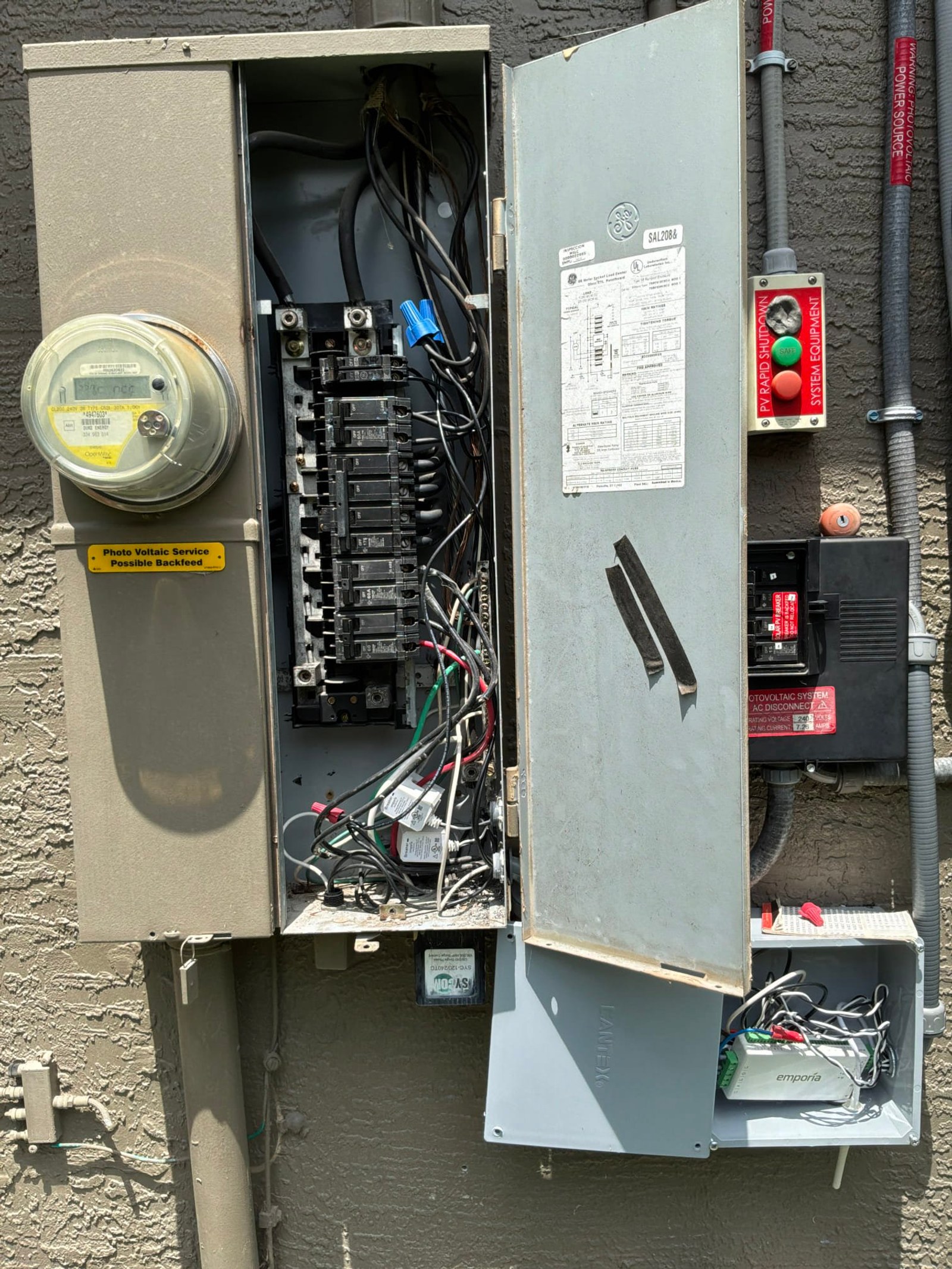
In one Oviedo home we mounted a monitor right below the main panel, and you can see how that install went.
Efficiency ratings help too. The ENERGY STAR listings let you compare units before you shop, and the Energy Saver site covers thermostat habits that cut runtime.
Cooling During an Outage
The air conditioners Orlando families rely on draw far more than a battery can hold for long. Running a full central system on stored power is a tall order, so be careful with any promise that sounds too easy.
A battery system can carry a mini split, fans, lights, and the fridge for a while. That is often enough to keep one room comfortable after a storm.
We size home battery backup around what you truly need cool, not the whole house. It keeps the cost honest.
Thermostats, Wiring, and Smart Controls
Most smart thermostats need a common wire, often called the C wire. Plenty of older homes here were wired without one.
Pulling a new thermostat cable is usually a quick job. It beats an adapter that leaves the system half-happy.
Once the thermostat is online, you can set a higher hold while nobody is home and let the system coast. In our climate, a couple of degrees of setback across a workday adds up over a season.
Outdoor Gear and Our Weather
Compressors, disconnects, and whips live outside all year. Hard sun, daily rain, and heavy humidity all take a toll on them.
We look for rust at the disconnect, cracked whip insulation, and loose lugs. Those small items cause big service calls in August.
Landscaping matters too. Give the outdoor unit clear space on every side, and keep mulch and hedges back from the coil.
Signs Your Wiring Is Straining
Your house usually warns you before something fails. Watch for these.
- Lights dim hard every time the compressor starts
- The breaker for the AC feels warm to the touch
- The outdoor disconnect looks rusted or loose
- A window unit trips its circuit on hot afternoons
- The panel has no open slots left
Any one of those deserves a look before peak season, not during it.
A Short Checklist Before You Buy
Run through these five items with your installer and your electrician.
- Confirm the voltage and breaker size the unit calls for
- Check that the panel has open slots and spare capacity
- Plan a disconnect within sight of the outdoor unit
- Add surge protection before the first storm season
- Ask what permit and inspection the job requires
Talk With a Licensed Local Team
Thomas Edison Electric handles circuits, disconnects, panel work, and surge protection across Orlando, Oviedo, Maitland, Casselberry, and Kissimmee. We work under Florida license EC13015487. Call (407) 490-0004 before your new system arrives, and we will make sure the wiring is ready for it.