
Robot vacuums, mops, and mowers have moved into a lot of Central Florida homes. They are easy to buy and easy to plug in. The electrical planning robot Orlando docks need is the part most owners skip. That is where the trouble starts.
Grass grows here all twelve months. Storms roll through most summer afternoons. Garages get brutally hot. Each of those facts changes how you power a charging base.
Where the Dock Sits Matters More Here
A dock needs a real outlet within a few feet, not a cord run across a hallway. It also needs a spot the device can find on its own.
Heat is the local wrinkle. A closed garage in July can pass 110 degrees, and lithium cells hate that. Keep bases off west walls and out of the sun that slips under the garage door.
Screened lanais look tempting for a mower dock. They stay damp, though, and pollen and lovebugs coat everything each spring. Pick a covered spot up off the slab instead.
Indoor bases have a rule too. Skip laundry rooms, where lint piles up. Skip the wall behind the air handler, where a drain line can drip.
Self-emptying mop docks add one more wrinkle. They usually sit near a laundry tub or a sink, which is GFCI territory. Give that base its own outlet instead of sharing one with the washer.
The Electrical Planning Robot Orlando Homes Need
One vacuum draws almost nothing. Few homes stop at one device, though, and that is when circuits get crowded. A mop base, a mower charger, a Wi-Fi hub, and a garage freezer on one 15-amp circuit will trip sooner or later.
Ask an electrician for a quick load check before you add docks. The fixes are usually simple:
- A new outlet right where the dock belongs
- A dedicated 20-amp circuit for the garage or the laundry
- A wet-rated outdoor outlet for a mower base
- GFCI protection everywhere the code calls for it
- Spare space saved in the panel for the next device
An electrical safety inspection is a simple way to see what your circuits already carry.
Outdoor Docks Need GFCI and a Real Cover
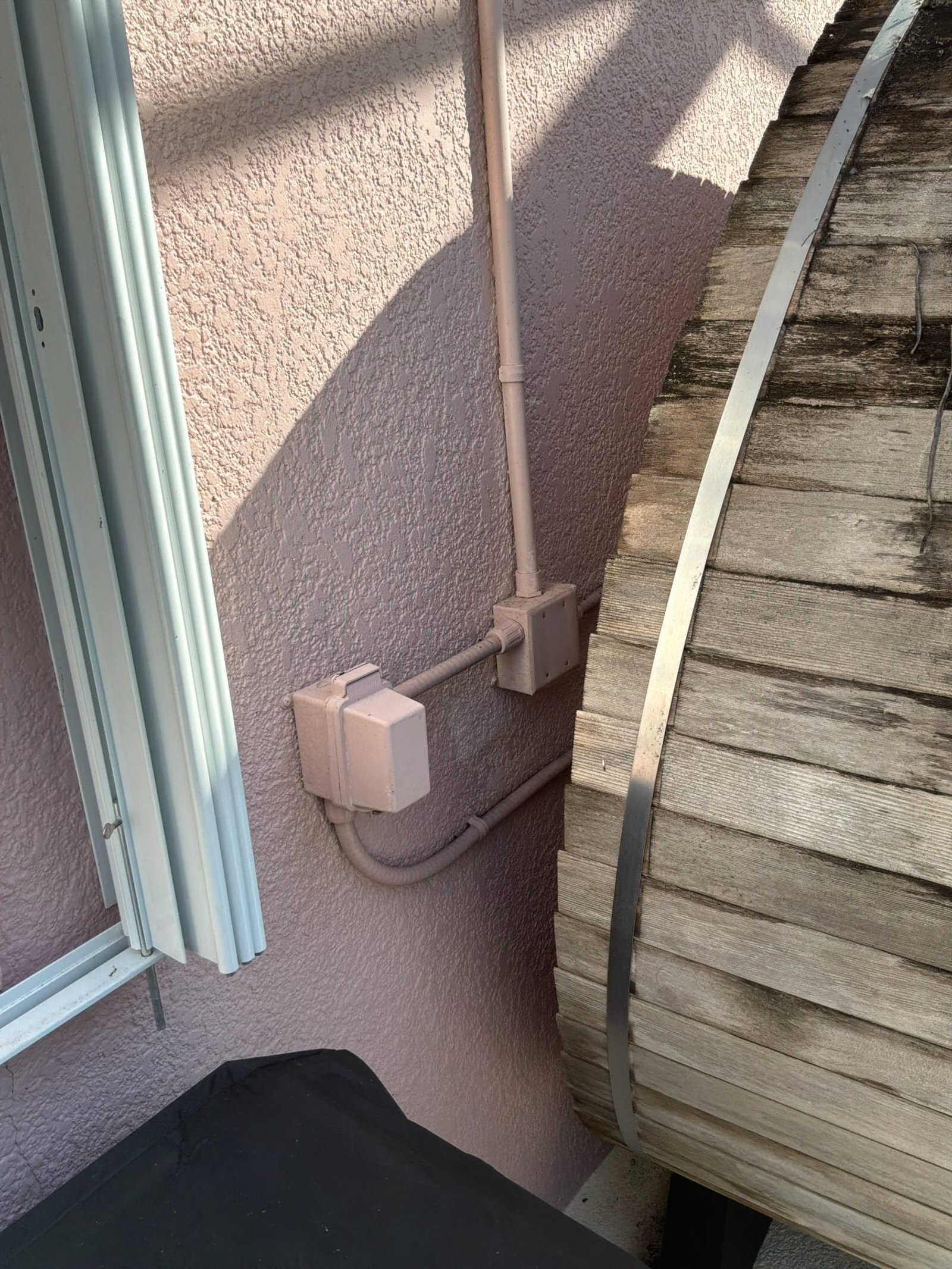
A mower charges outside, which puts it in wet-location territory. The code calls for GFCI protection on outdoor outlets. It also calls for wet-rated devices with in-use covers.
A flat flip lid cannot close over a plugged-in cord. That leaves the outlet open to afternoon rain and to your sprinkler heads. Use a listed in-use cover, and mount it high enough to stay out of the splash.
Grounding matters as much as the outlet does. Sandy soil drains fast, and a weak ground path shows up as tingles or odd trips. Our smart home outlet and safety upgrade in Orlando shows how the pieces fit together.
Lightning Is the Real Threat to a Charging Base
This region records more lightning strikes than any other. Direct hits are rare. Surges riding in on the utility line are not, and they are what kill charging electronics.
A surge device at the panel guards everything downstream, including docks you have not bought yet. A plug-in unit at the outlet adds a second layer. Both together cost less than one new mower base.
Unplugging a dock during a bad storm is still smart. The Electrical Safety Foundation International covers surge basics well.
Mowers Run All Year in This Climate
St. Augustine grass never really goes dormant. A robot mower cuts most weeks of the year, so its base charges far more often than one in a cool climate. More cycles mean more wear.
Check the charging contacts twice a year for pitting and rust. That steady wear is why the electrical planning robot Orlando mowers need is worth getting right the first time.
Set mowing for mid-morning in the rainy season. A machine that finishes before the storm window stays drier and lasts longer.
Pests, Pollen, and the Florida Yard
Fire ants love a warm, dry box. We open outdoor covers packed with nesting dirt on a regular basis. That debris bridges contacts and eats at terminals.
Keep mulch off the mower pad, and check every cover at the start of the rainy season. Trim back turf and vines that hold water against the contacts.
Boundary wire deserves care too. Keep it clear of low-voltage lighting and sprinkler valve wire so the signal stays clean.
Outages, Schedules, and Wi-Fi
Storm season brings short outages. Most docks pick up where they left off, but schedules can drift and hubs sometimes need a reset. Set cleaning windows for the morning, before the storms build.
Good signal near the dock keeps app control working. If the router sits at the far end of the house, a wired access point beats another mesh node. Our notes on hardwiring cameras and doorbells apply to that low-voltage work.
Label the dock circuit in the panel directory, too. When a breaker trips, you will know what went dark and why.
Planning ahead pays off. Our guide to future-proofing your home for smart tech covers saving panel space and running conduit while walls are open. For running costs, ENERGY STAR keeps current ratings.
Set It Up Once, Correctly
Automated gear should save you time, not create service calls. Good outlet spots, GFCI where it belongs, and surge protection handle nearly every problem we see in Oviedo, Maitland, and Winter Garden.
Call Thomas Edison Electric at (407) 490-0004 to plan the circuits before your next device shows up. We hold Florida license EC13015487.