
Wiring rules do not sit still. The electrical code changes Orlando homeowners run into arrive through the Florida Building Code. That code adopts the National Electrical Code, with state edits. A new round lands about every three years.
None of this makes your house illegal. It does mean new work has to meet today’s rules. Knowing what changed saves money and prevents a failed inspection.
Why the Rules Keep Moving
Codes follow real failure data. Fires, shocks, and faulty parts push committees to tighten the rules. Homes also carry loads nobody planned for in 1985.
Central Florida adds its own pressure. Pools, screen rooms, well pumps, and heavy air conditioning all show up in the rules. Daily summer lightning is why surge protection moved from nice to expected.
Florida also edits the national text before adopting it. Storm and flood lessons drive several of those state changes. Your electrician has to track both layers.
Electrical Code Changes Orlando Homeowners Notice Most
A few updates come up in almost every job we quote. None of them are exotic. All of them protect people.
- Whole-home surge protection when a home service panel is replaced
- GFCI coverage well past the bath and kitchen
- An outdoor emergency disconnect at one- and two-family homes
- Arc-fault protection in most living areas, not just bedrooms
- Tamper-resistant outlets in living spaces
- Strict bonding at pools and spas, which inspectors check closely here
Panel labels and grounding draw attention too. Working space in front of a panel gets flagged more than people expect. A closet packed with boxes is a common finding.
What Triggers Compliance
You do not have to rewire a house because the code moved. New work is the trigger. Replace a service, finish a garage, or add a circuit, and that work follows today’s rules.
Remodels can pull in more than planned. A kitchen redo often means new small-appliance circuits and wider GFCI coverage. Talk it through first, as we explain in our guide to calling an electrician before your renovation.
Older Orlando Homes and Grandfathering
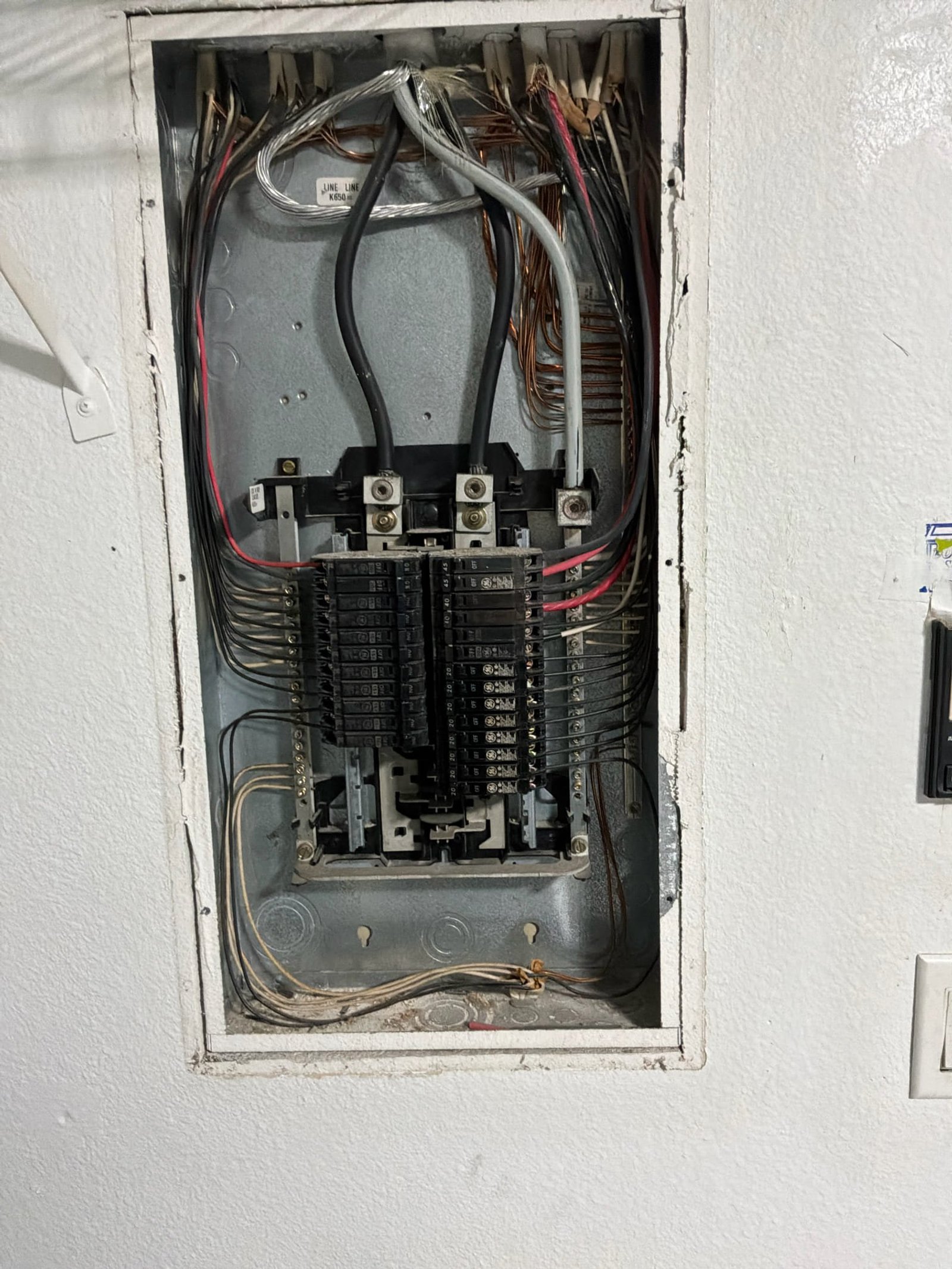
Plenty of houses in College Park, Colonialtown, and older Winter Park blocks still run their first panel. Some brands have no listed breakers left. Others hide attic splices from years of add-on work.
Grandfathering covers old work only while it stays safe and untouched. A hazard is a different story, and an inspector can call for repairs. See what turned up during a home electrical inspection in Oviedo.
Wiring from the 1950s often has no ground at the outlets. Two-prong receptacles are the giveaway. GFCI protection is an accepted fix when a full rewire is not practical.
Aluminum Branch Wiring and Dated Panels
Some homes built from about 1965 to 1973 used aluminum branch circuit wiring. The metal moves more than copper as it heats, so screws work loose over the years. Approved repair methods exist, and a licensed electrician can apply them.
Panel brands matter too. A few older lines have known failure records and no current replacement breakers. Adding circuits to that gear is money spent twice.
A service change brings many rules together at once. Inspectors look at grounding, bonding, wire size, and clear labels. They also check the outdoor disconnect and the surge device.
Insurance, Inspections, and Selling
Florida insurers often ask for a four-point inspection on older homes. Wiring is one of those four points, with roof, plumbing, and HVAC. A dated panel or unpermitted work can stall a policy.
Buyers ask the same questions. A pre-purchase electrical safety inspection gives you a clear picture before closing.
Our post on getting an electrical inspection when buying an Orlando home walks through what we check. It also flags which findings usually become bargaining chips.
Permits and Local Building Departments
Permits happen at the city or county level. Orlando, Winter Park, Ocoee, Apopka, and Sanford each run their own office. Unincorporated areas fall to Orange, Seminole, or Osceola County.
Ask which rules your job must meet before demolition starts. A permit does not change the code, but it does hold the work to the current edition. That one question prevents surprise costs midway.
Permit fees are small next to a failed inspection. Scheduling matters too, since inspectors book out during busy stretches. Ask your contractor for realistic dates up front.
Pools, Lanais, and Outdoor Circuits
Outdoor work draws extra review in this climate. Outlets need weather-rated devices and in-use covers. Gear near a pool has clearance and bonding rules that inspectors verify closely.
Screen rooms, outdoor kitchens, and yard lighting follow similar rules. Sun, rain, and humidity punish shortcuts fast. Doing it right the first time costs less than a callback in August.
New Loads Push Older Services
Home charging, heat pump water heaters, and bigger kitchens all add demand. Code calls for a load calculation before those circuits go in. A 1970s service often cannot absorb them.
Load management devices are an accepted answer now. They let a charger back off while the range and air handler run. That can save the cost of a full service change.
Working With a Licensed Contractor
Most electrical code changes Orlando inspectors enforce trace back to fire and shock. A licensed contractor tracks the current cycle and pulls the permit. That paperwork protects you at resale.
You can follow the code process at NFPA, the group behind the National Electrical Code. The Electrical Safety Foundation International posts plain home safety material as well.
Thomas Edison Electric handles inspections, panel work, and permitted upgrades in Orlando, Oviedo, Maitland, Longwood, and Casselberry. Call (407) 490-0004 to talk through your project with a licensed electrician. Our Florida license is EC13015487.