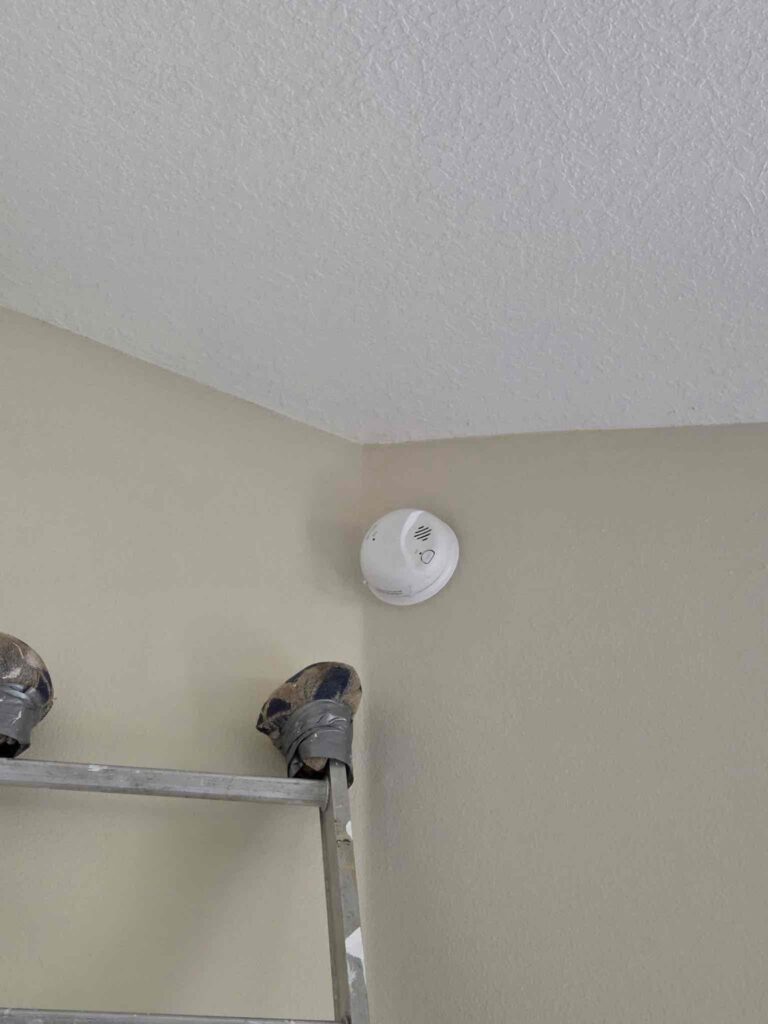
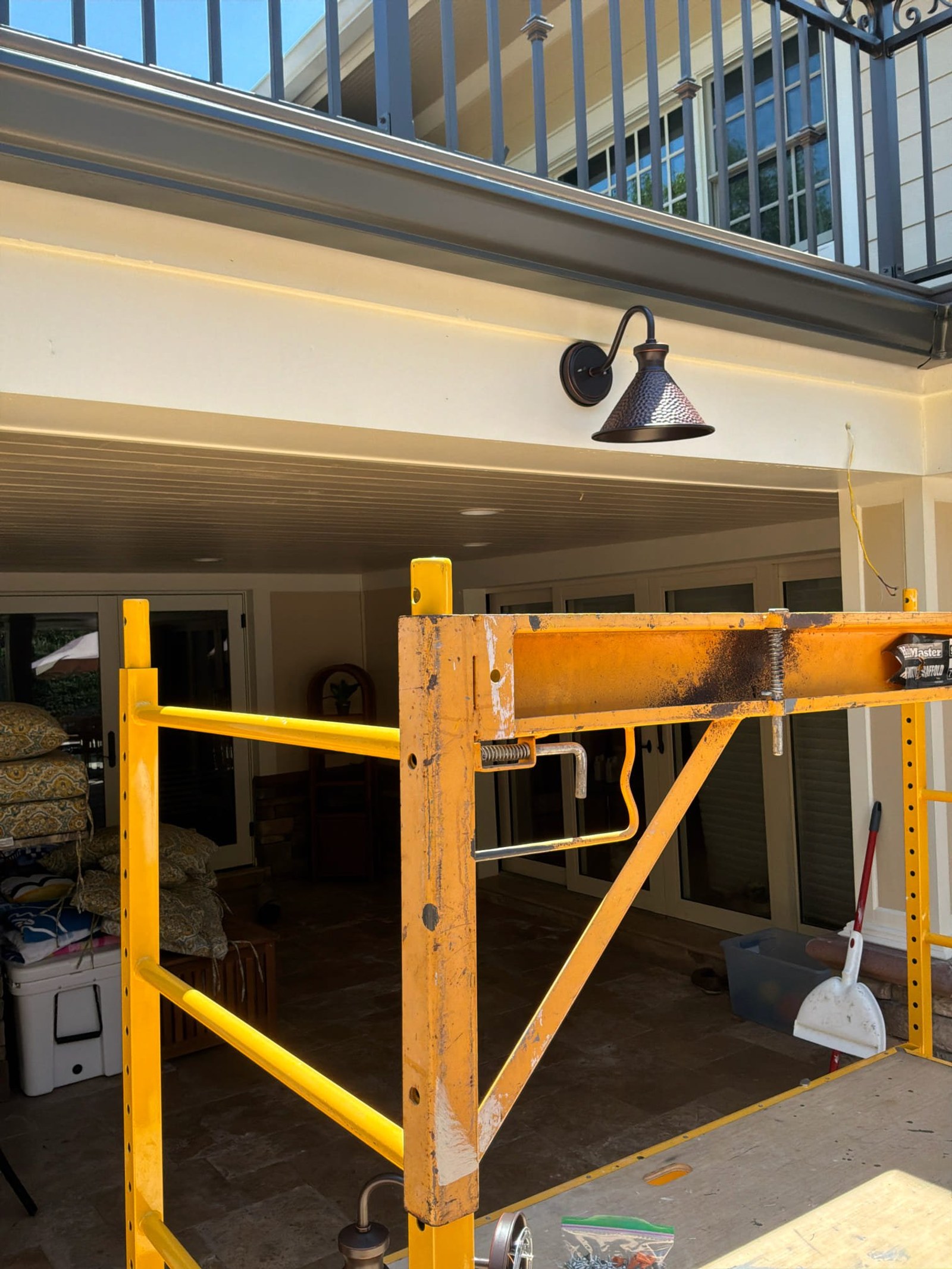
What follows is a real smoke detector installation story from Winter Park, FL: the symptoms, the diagnosis, and the finished work. A homeowner in Winter Park, FL called us to replace an outdoor lighting fixture and check some bulbs. What started as a straightforward fixture service turned into a comprehensive safety modernization: whole-home surge protection, five interconnected smart smoke and carbon monoxide detectors, and a handful of breaker and device upgrades that brought the home’s electrical system squarely in line with the 2020 NEC.
The Problem
The homeowner described the need simply:
“Replacement of existing lighting fixtures, maybe need bulbs replaced. Outside fixture about 6 ft.”
Nothing urgent, just a maintenance call. However, the field team arrived ready to inspect more than the fixture itself.
Investigation
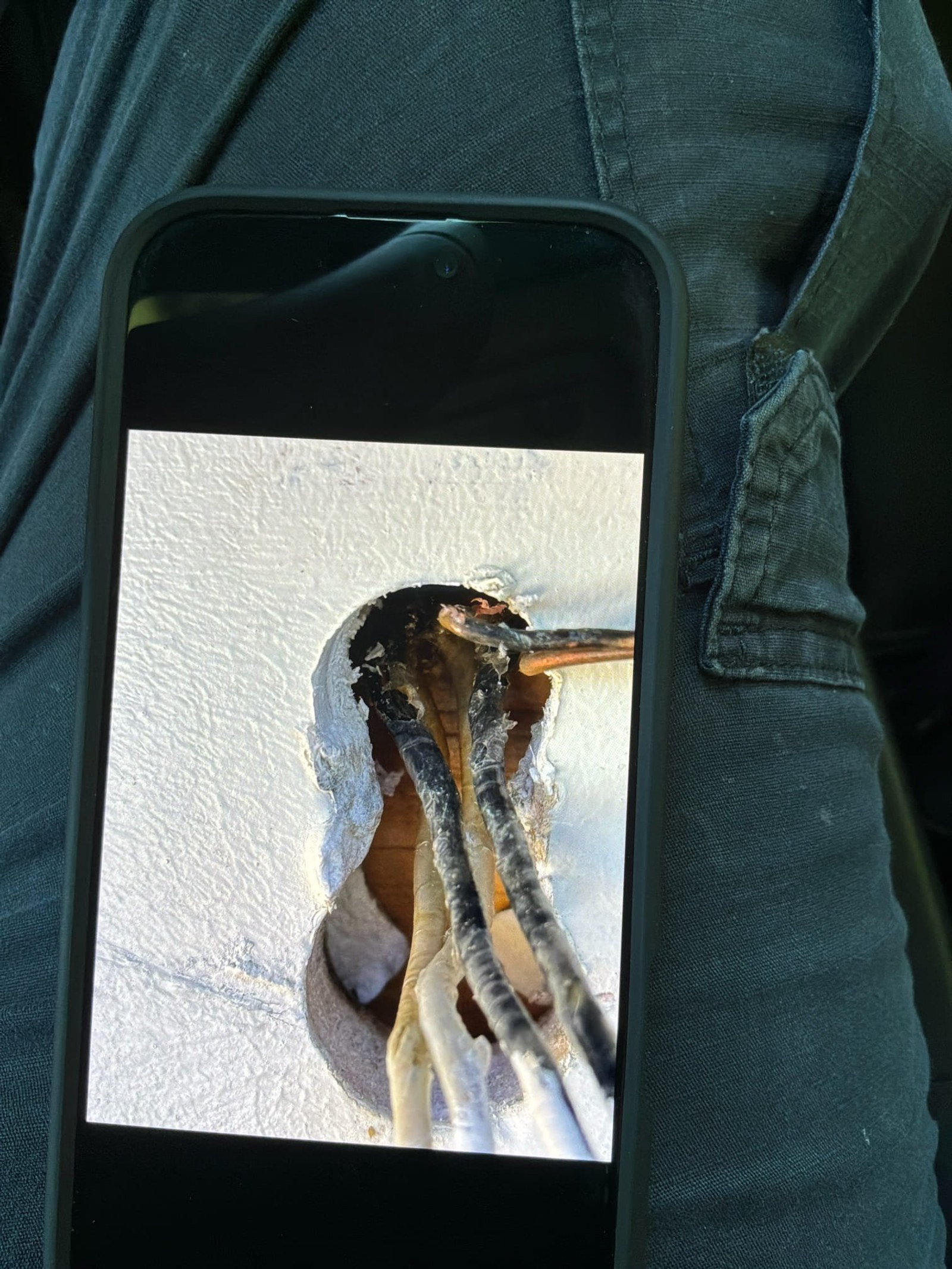
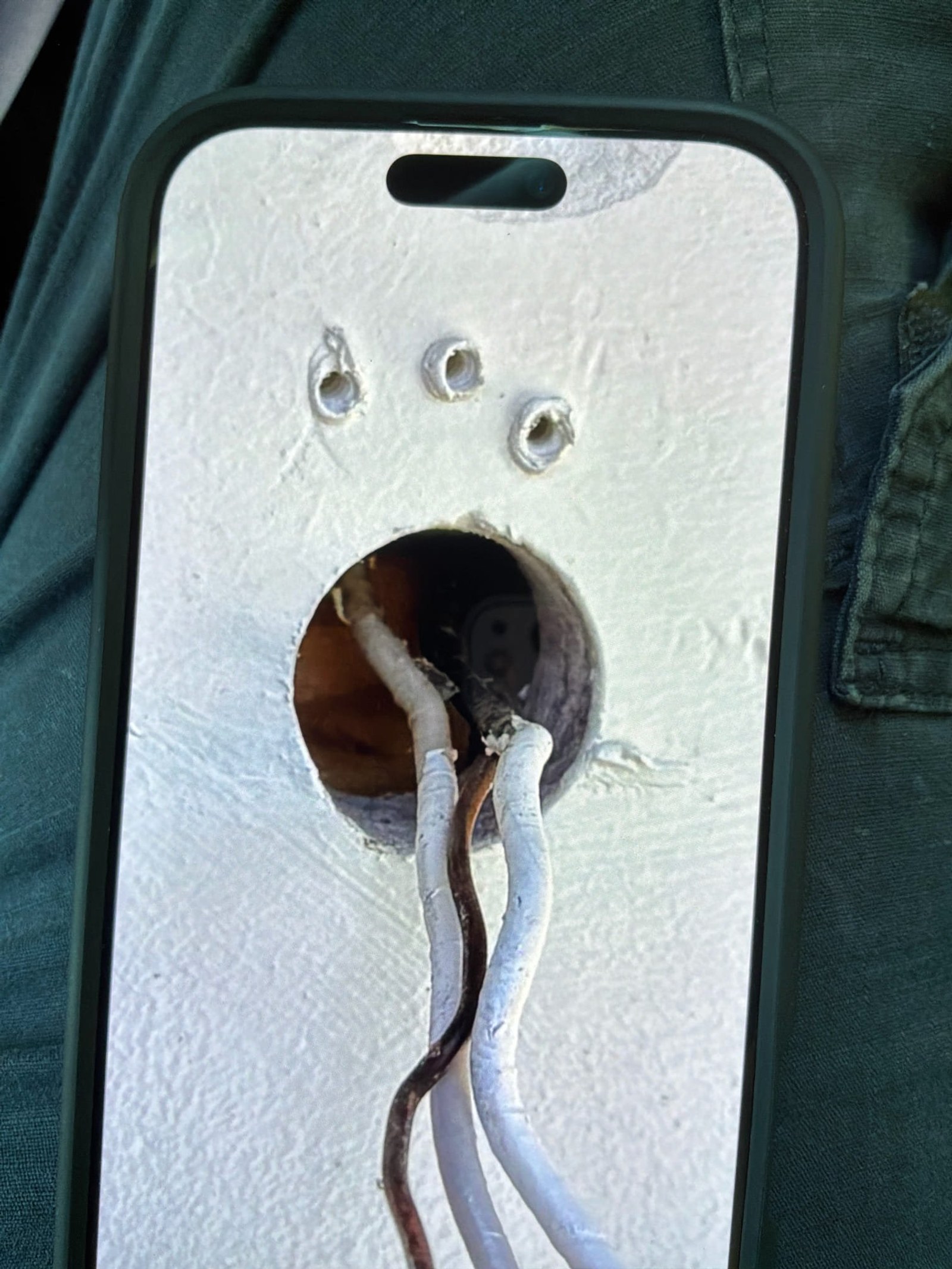
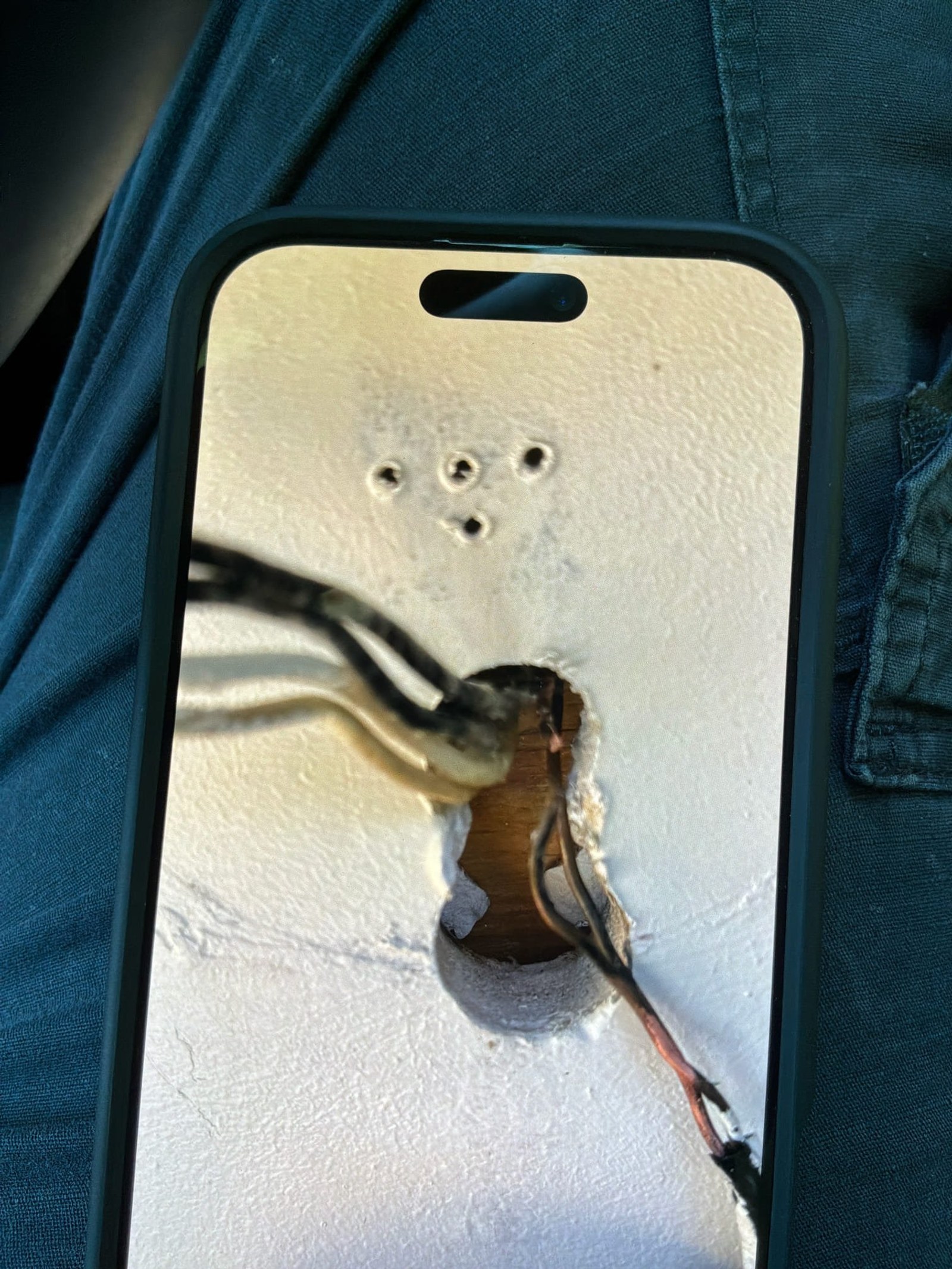
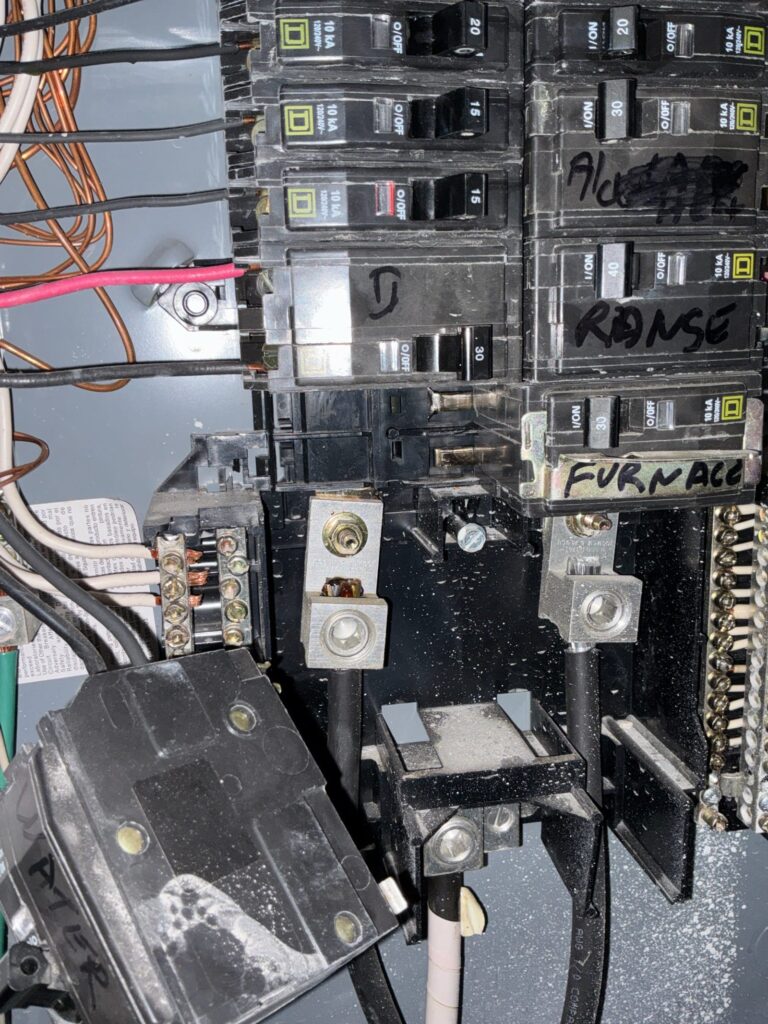
Our technician walked the property and the electrical panel. The fixtures were indeed ready for service, but the panel told a bigger story. The home had a Square D HomeLine load center, a solid workhorse, but it lacked any surge protection and had no interconnected smoke or CO detection beyond the minimum code requirement. A few circuits were running on older breakers that showed thermal wear from years of cycling. Additionally, one receptacle and one switch had backstabbed connections that predated today’s screw-terminal standard. Taken together, these findings represented opportunities to modernize the home’s safety infrastructure while the crew was already on-site.
What We Fixed
First, we installed a PSP Vortex Type 2 surge protector rated for 120 kA, mounted directly in the panel on a new Square D HOM240 two-pole 40-amp breaker. This whole-home device clamps voltage spikes from lightning and grid transients before they reach sensitive electronics. Next, we deployed five Kidde 21031042 smart smoke and carbon monoxide detectors with 10-year sealed lithium batteries and wireless interconnect. Every room now talks to every other room. If one detector senses smoke or CO, all five alarms sound at once. Furthermore, we replaced a worn HOM115 single-pole 15-amp breaker and added a GE THQP230 two-pole 30-amp breaker to accommodate a new dedicated circuit.
On the device side, we swapped out the backstabbed receptacle for a tamper-resistant 15-amp spec-grade unit installed in a deep remodel box, and we replaced an aging toggle switch with a modern decorator-style rocker switch. Additionally, we installed a grounding-type 15-amp cord cap onto an existing appliance cord, bringing that connection up to current standards. Every termination now meets NEC 110.14 (B), secure screw connections, proper torque, full contact area.
Why This Smoke Detector Installation Matters for Winter Park Homeowners
Surge protection isn’t about fear, it’s about reliability. With the PSP Vortex in place, the family’s fridge, HVAC controller, smart TVs, and computers ride out every afternoon thunderstorm without skipping a beat. No lost data, no tripped clocks, no service calls for fried circuit boards. Meanwhile, the five interconnected smoke and CO detectors mean that if something changes anywhere in the home (kitchen, garage, upstairs hallway), the whole household knows at once. That kind of system gives parents peace of mind, especially during the weekends when kids are playing in every room and adults are cooking dinner or working in the garage.
Moreover, screw-terminated devices are simply more durable than backstabbed ones. The spring tension in a backstab connection eases over time, contact resistance climbs, and you get flickering or intermittent faults. By contrast, a properly torqued screw terminal stays tight through decades of thermal cycling. Importantly, this modernization didn’t require a full rewire, just targeted upgrades during a scheduled service call. The home now meets or exceeds the safety benchmarks that Florida’s building inspectors expect on new construction, and the family can enjoy the quiet confidence that comes with knowing their electrical system is built to last.
“Marc was timely and very thorough. In resolving all isssues.”
Code Compliance Cited in This Job
Every fix above maps to a specific section of the 2020 NEC, the edition Florida enforces under the 8th Edition Florida Building Code. Florida adopts the 2023 edition of the NEC when the 9th Edition takes effect on December 31, 2026. Each card links to NFPA’s public NEC index.
Listing of Surge Protective Devices
The PSP Vortex Type 2 surge protector we installed is a third-party listed device that meets this section’s requirement for permanent connection to the service equipment. By clamping transient overvoltages at the panel, it protects every downstream circuit and appliance in the home. NFPA reference ›
Conductor Termination
Every device we installed or replaced (receptacles, switches, breakers) was terminated using the manufacturer’s torque specifications and screw-clamp connections. This ensures full contact area, minimizes resistance, and eliminates the thermal stress and arcing that can develop in push-in backstab connections over time. NFPA reference ›
Arc-Fault Circuit-Interrupter Protection
Although the scope of this job focused on surge protection and smoke detection, the new breakers we installed are AFCI-ready. Under the 2020 NEC that Florida enforces, bedroom, living, and hallway circuits in new and renovated dwellings are protected with combination AFCI breakers, technology that detects the erratic current signature of arcing faults and trips before ignition can occur. NFPA reference ›
Tamper-Resistant Receptacles
The new 15-amp receptacle we installed includes tamper-resistant shutters that block foreign objects unless both slots are engaged simultaneously by a plug. This has been a code requirement in dwelling units since 2008 and is especially important in homes with young children. NFPA reference ›
Common Questions
Questions homeowners ask after seeing this kind of work.
How does a whole-home surge protector work, and do I really need one in Florida?
A Type 2 surge protector like the PSP Vortex sits in your main panel and diverts voltage spikes (from lightning, transformer switching, or grid faults) safely to ground before they reach your appliances. Florida sees more cloud-to-ground lightning strikes per square mile than almost anywhere in the country, so surge protection is a practical layer of defense for your electronics and HVAC equipment. If you’ve ever lost a garage door opener, a smart thermostat, or a TV during storm season, a whole-home device can prevent that from happening again. Curious whether your panel is already protected? Schedule a panel inspection and we’ll walk you through what’s there and what would help.
Why are interconnected smoke detectors better than standalone units?
Interconnected detectors communicate wirelessly, so when one senses smoke or carbon monoxide, every unit in the home sounds an alarm at once. That simultaneous alert gives your family critical extra seconds to react, especially if a fire starts in a remote part of the house (say, the garage or a guest bedroom) while everyone is asleep upstairs. The 2020 NEC and Florida’s building code both mandate interconnected smoke and CO detection in new construction and major renovations. If your home still has standalone battery units, upgrading to a networked system is one of the most effective modernizations you can make. Want to see how it works in your home? Book a free walkthrough and we’ll map out a solution that fits your floor plan.
What’s the difference between backstabbed and screw-terminated connections, and why does it matter?
Backstab connections rely on a spring clip inside the device to grip the wire. Over years of thermal expansion and contraction, that spring tension relaxes, contact resistance increases, and you can get flickering lights, warm outlets, or intermittent faults. Screw-terminated connections, by contrast, clamp the wire under a threaded screw with consistent torque, providing full contact area and a stable, low-resistance connection that lasts decades. Most devices installed before about 2005 used backstabs as a time-saving shortcut. Replacing them with screw-terminal devices is a straightforward fix that improves reliability and safety. If you’re noticing warm outlets or intermittent dimming, it’s worth having a licensed electrician take a look before the next storm season.
How often should I have my home’s electrical system inspected?
We recommend a visual safety inspection once a year, especially for homes built before 1990 or homes that have weathered recent storms. An annual check catches thermal wear on breakers, loose terminations, corrosion in outdoor boxes, and outdated devices before they cause service interruptions. Additionally, if you’re planning a kitchen or bathroom remodel, adding an EV charger, or finishing a garage or attic space, a pre-project inspection ensures your panel has the capacity and your circuits meet current code. Unsure when your home was last inspected? Schedule online or call (407) 490-0004 and we’ll get you on the calendar.
Can I add surge protection and smart detectors to an older panel, or do I need a full panel replacement?
In most cases, you can add a Type 2 surge protector and upgrade to smart smoke/CO detectors without replacing the panel itself, as long as the panel has available breaker spaces and is in good working condition. The crew will inspect the bus bars, check for corrosion or overheating, and confirm that the panel can safely support the new devices. If the panel is obsolete (Federal Pacific, Zinsco, or certain Challenger models) or undersized for your home’s current load, we’ll recommend a panel upgrade. Either way, the goal is a solution that’s code-compliant, reliable, and built to last. Ready to find out what your home needs? Book a panel assessment and we’ll give you a clear, transparent answer.
Want to see more real jobs like this one? Browse our completed case studies or explore our services.