A homeowner in Maitland, FL reached out after noticing intermittent shocking sensations from outlets throughout the home. Our licensed electrician on-site conducted a full inspection — and what the visit uncovered went well beyond the original complaint. The findings pointed to several conditions consistent with homes of this era that are simply worth modernizing, and our team documented each one with a clear set of recommendations.
The Problem
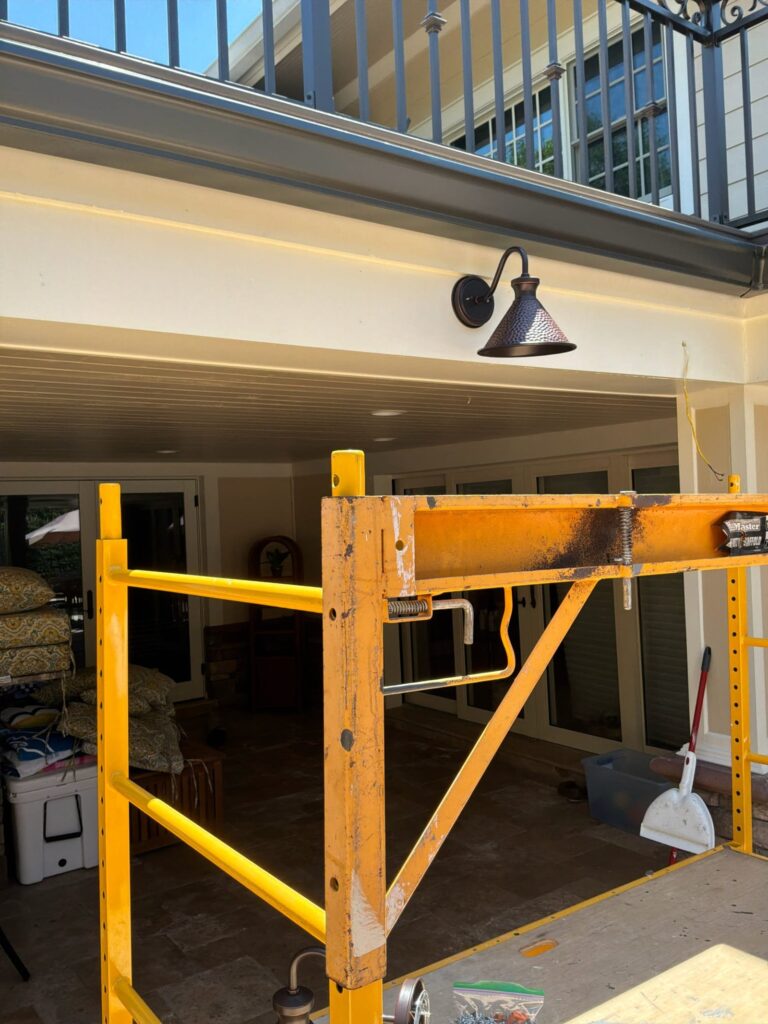
The homeowner initially scheduled a visit to address a handful of smaller items: two light fixture replacements, one outlet pulling loose from the wall, a question about powering a backyard shed, and a request to have a salt system properly disconnected. Once on-site, however, the team quickly identified that the intermittent shocking sensations the household had been experiencing deserved a closer look at the electrical system as a whole.
“We’ve been feeling little shocks here and there from some of the outlets. We also need a couple of light fixtures swapped out and want to know if we can run power to our shed.”
Investigation
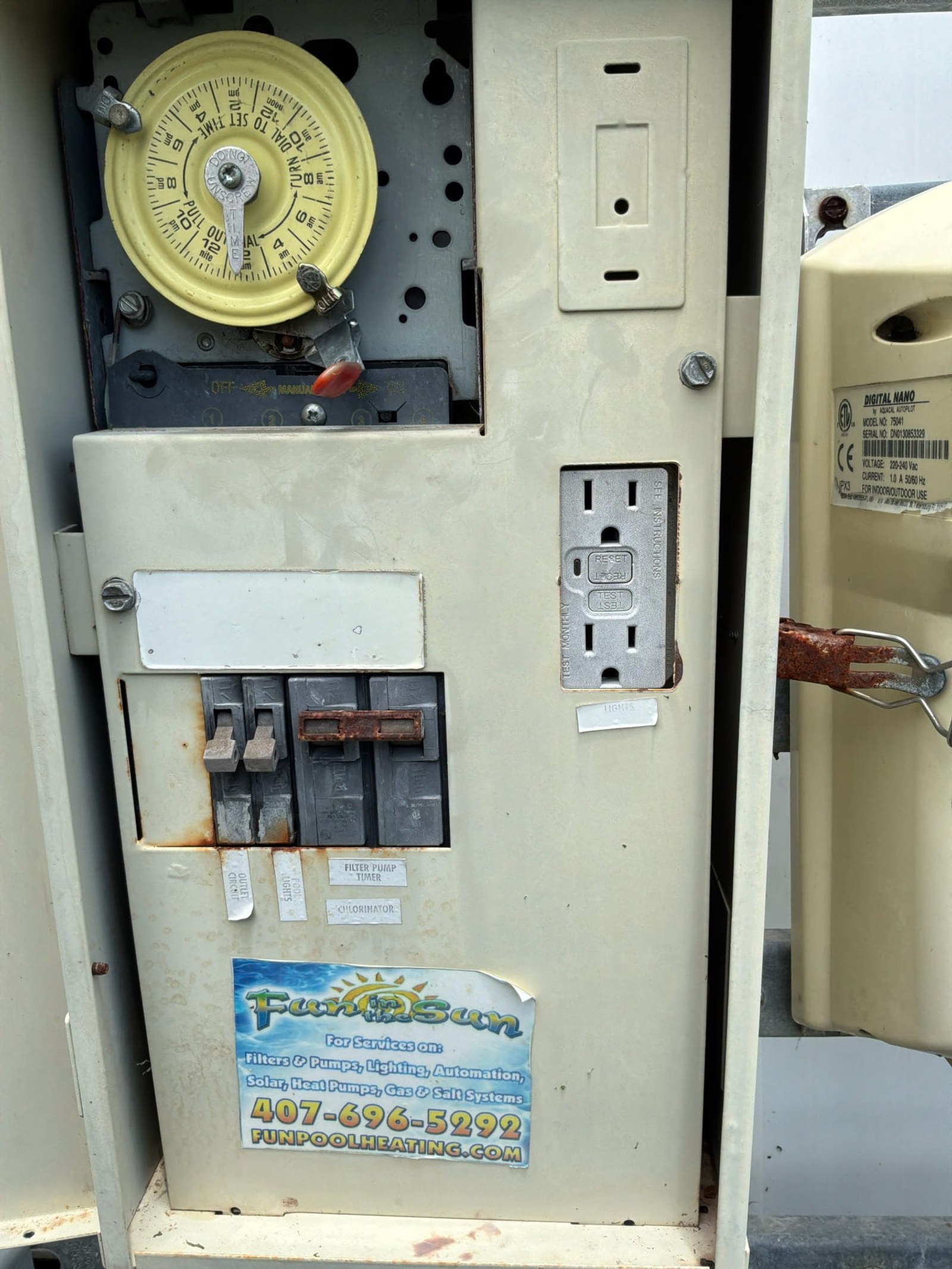
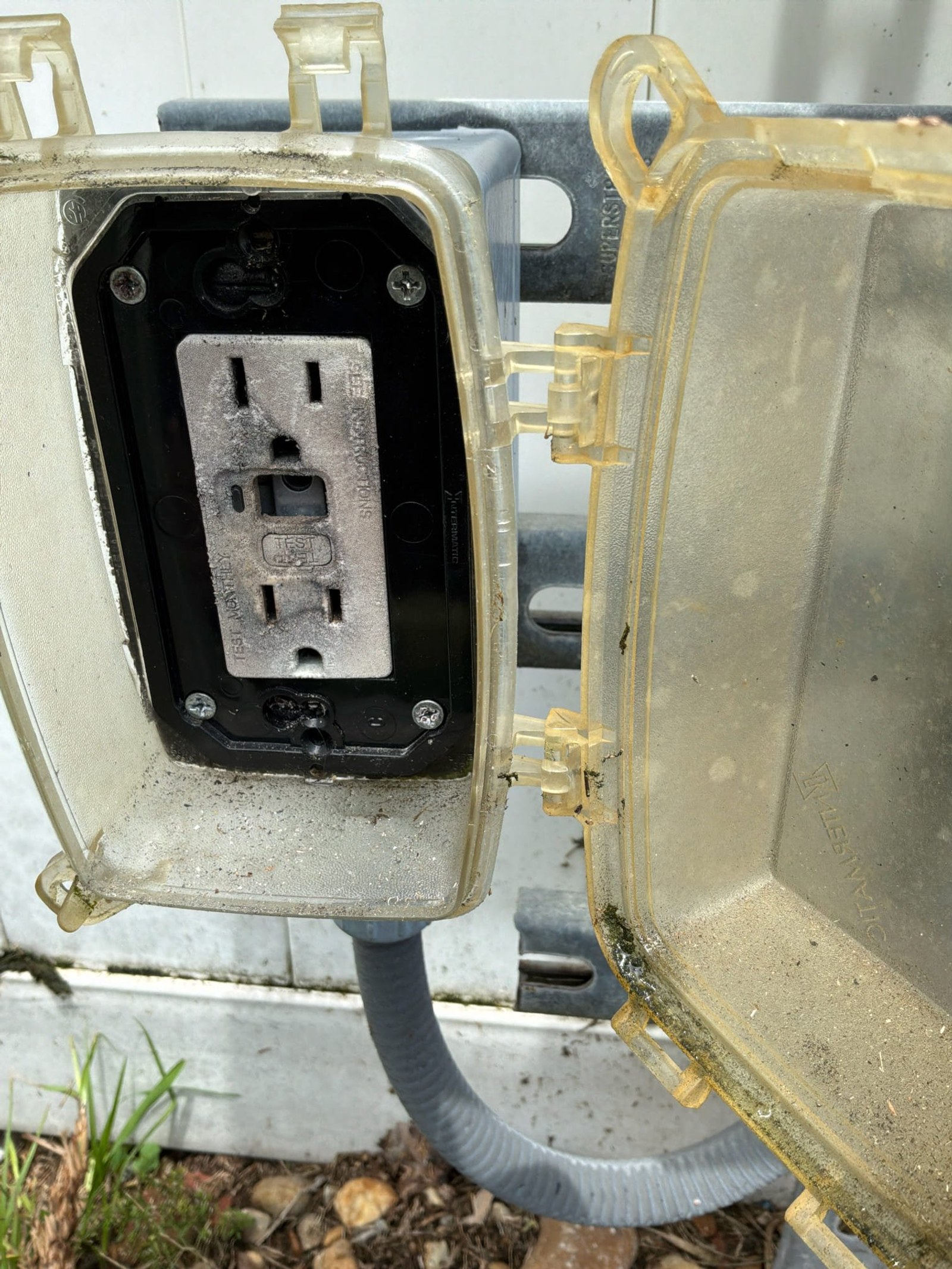
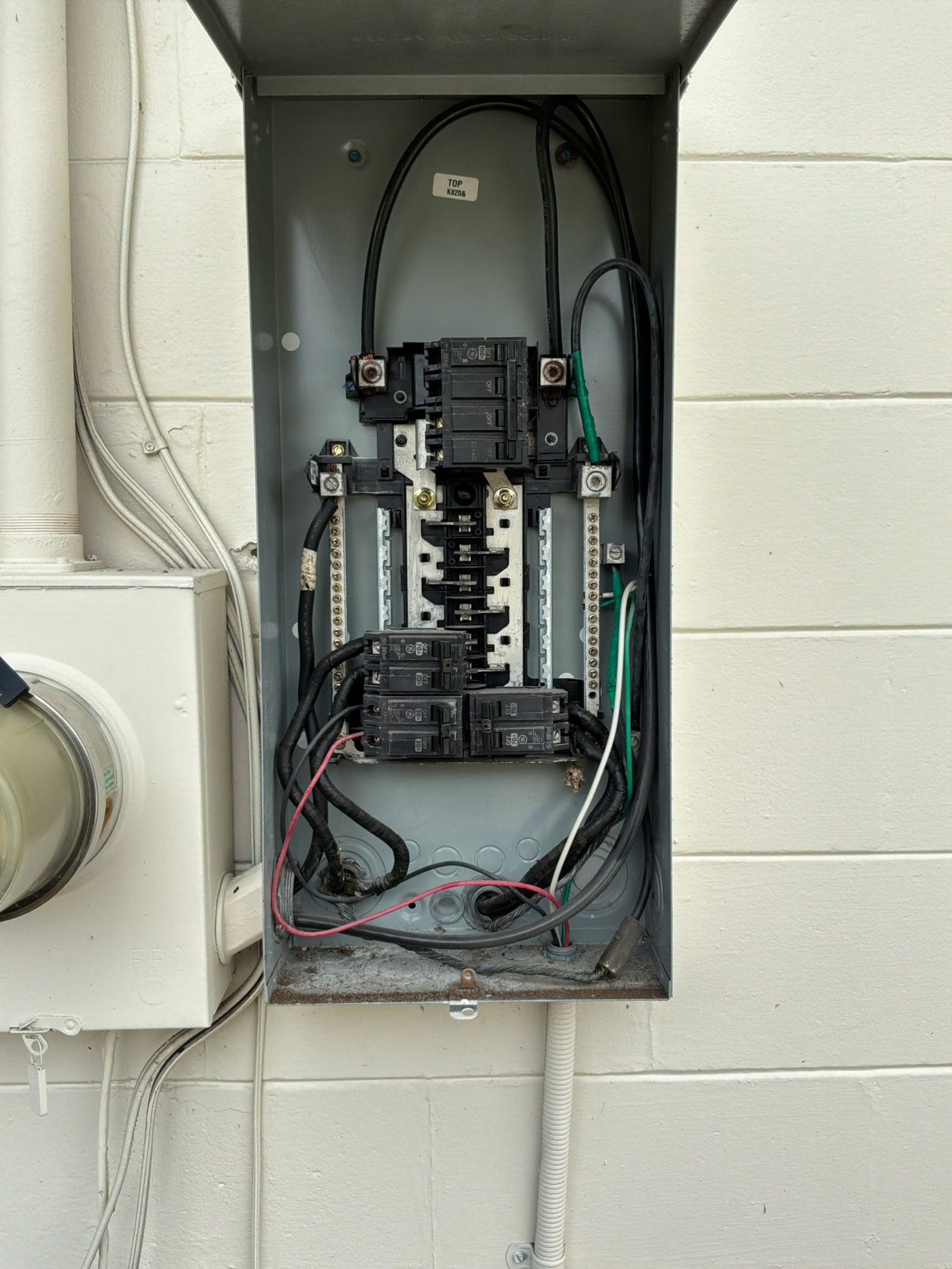
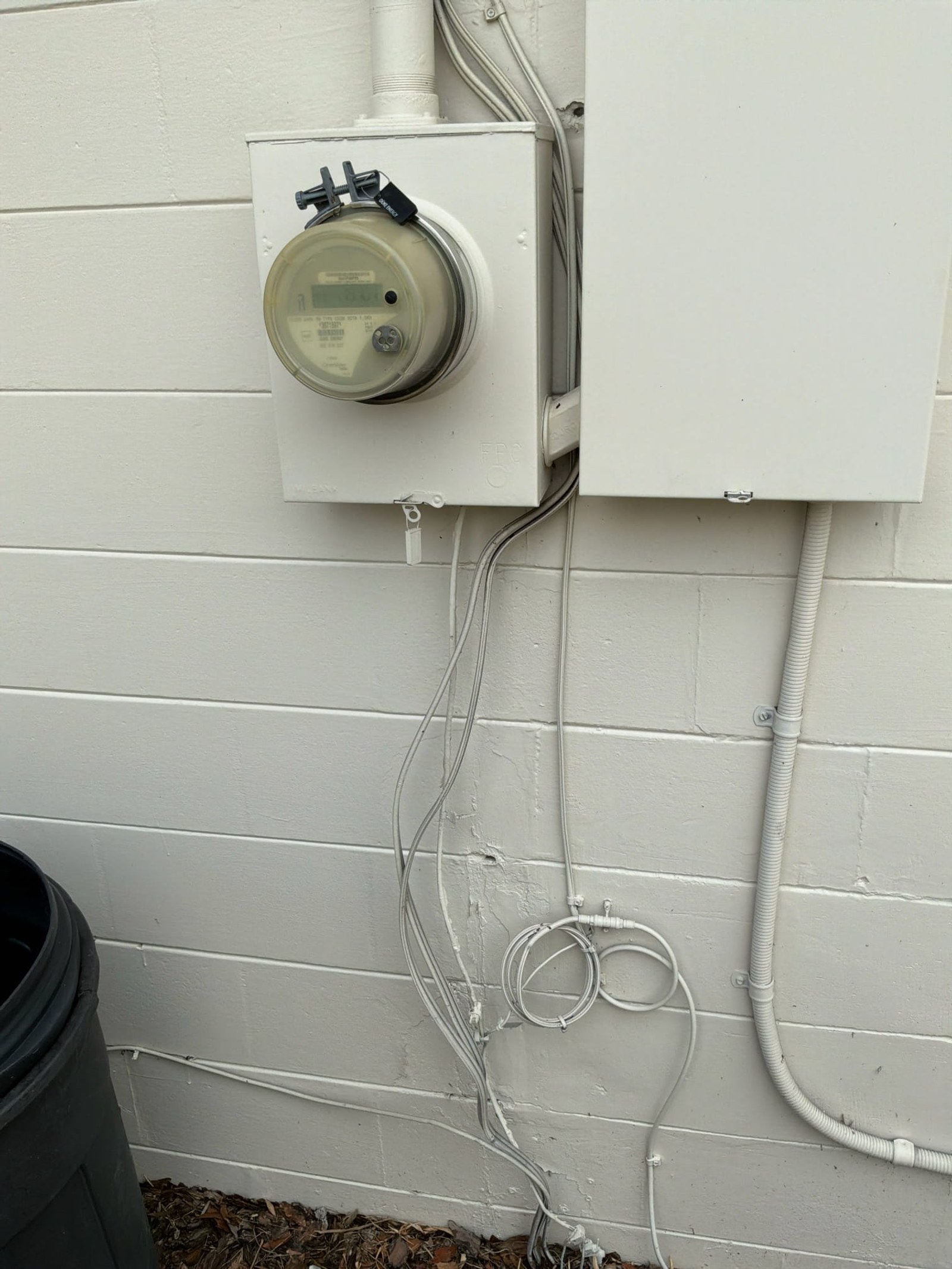
The licensed electrician on-site worked through a full visual inspection of the home’s electrical system, panel, outlets, and grounding infrastructure.
Panel and Service Findings
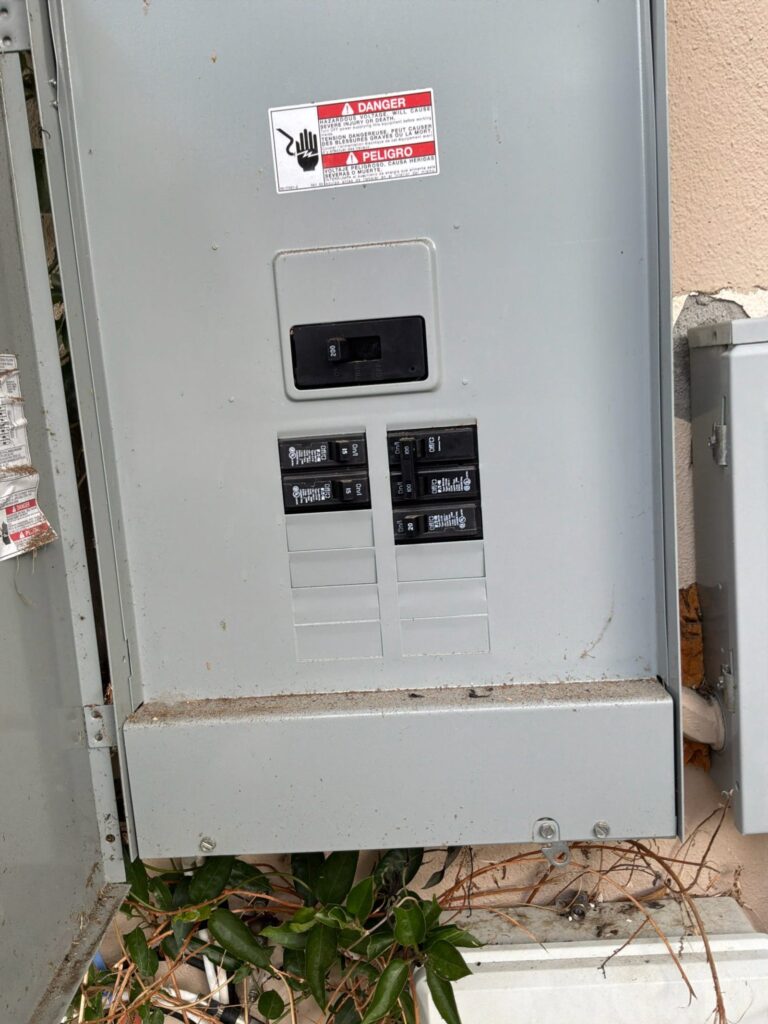
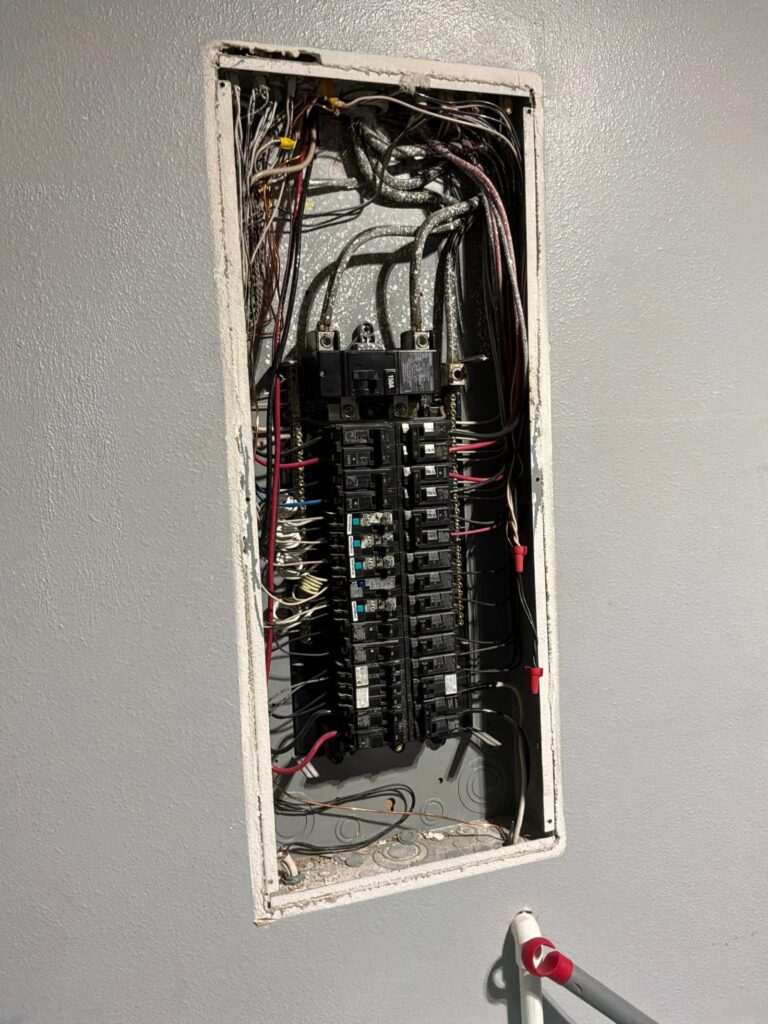
The home is served by a Square D QO 150-amp panel — a solid, well-regarded platform. Inside, however, the team found double-tapped breakers and a panel directory that hadn’t been kept current. Both conditions make it harder to trace circuits confidently and can place unintended load sharing on individual breakers. Additionally, no AFCI protection was present on branch circuits, which is consistent with homes wired before AFCI requirements expanded under more recent code cycles.
Grounding System
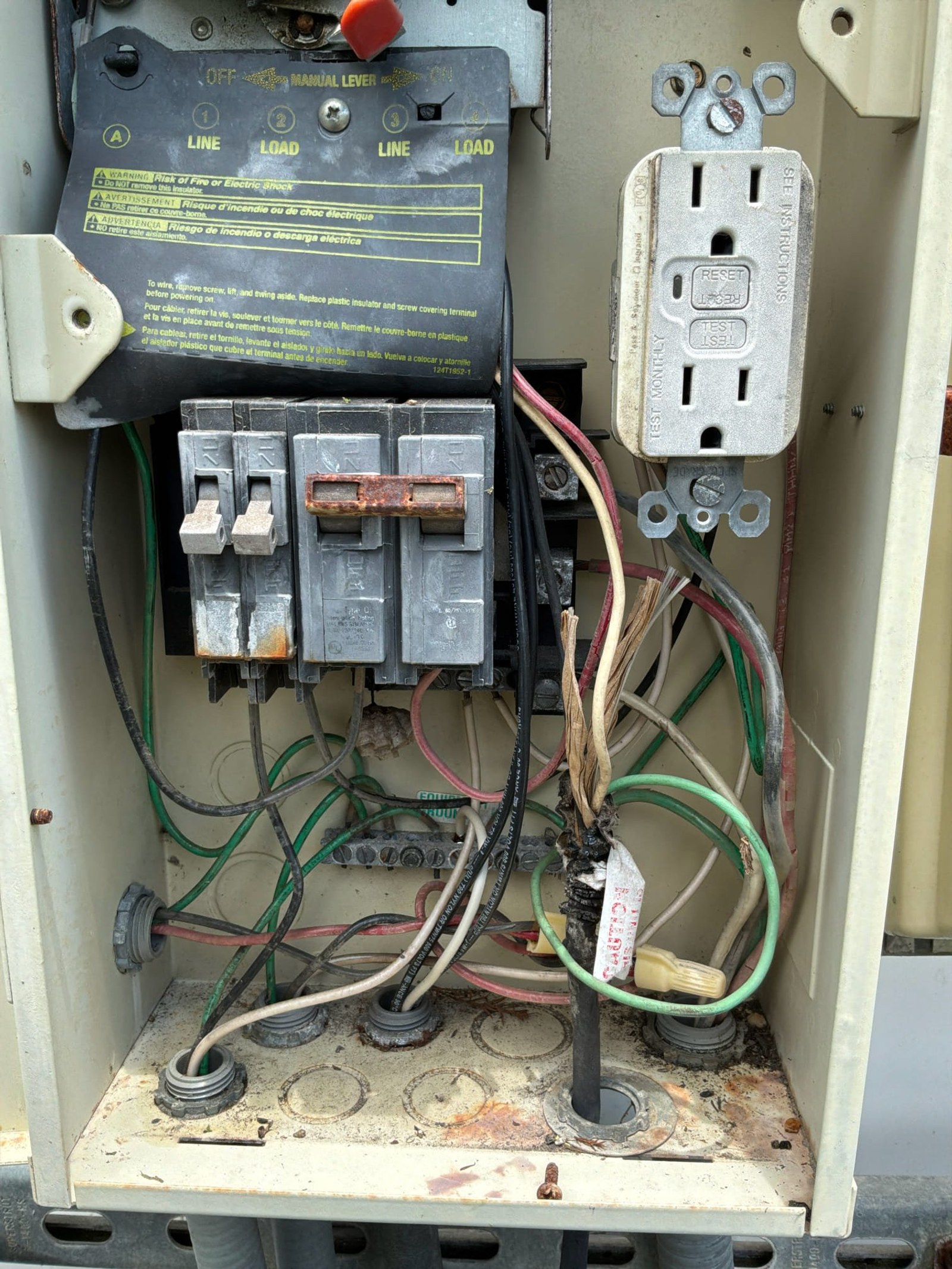
No ground rod was located at the meter enclosure, and the overall grounding system was assessed as not meeting current code. A grounding system that predates today’s standards can allow stray voltage to linger on metal surfaces and outlet faceplates — exactly the kind of thing that explains the intermittent sensations the household described. This was a common configuration in older construction, and bringing it up to current standards is a straightforward improvement.
Outlets and Devices
The inspection confirmed that outlets and switches throughout the home were backstabbed — a wiring shortcut widely used in homes wired before roughly the mid-2000s. Over time, the spring tension in a backstabbed connection eases, contact resistance climbs, and the result is the kind of intermittent behavior and voltage drop the homeowner was experiencing. Several outlets were also found to be loose or worn, and tamper-resistant receptacles were not present, which predates the requirement added in later NEC editions.
GFCI Coverage
Bathroom outlets lacked GFCI protection — a common finding in homes of this vintage. Current code under NEC 210.8 requires GFCI protection in bathrooms, kitchens, garages, and outdoor areas. Adding GFCI outlets in the bathrooms is a direct, durable improvement that brings those circuits in line with today’s standards.
Surge Protection
No whole-home surge protective device was present. With Central Florida’s well-known lightning activity, a panel-mounted Type 2 SPD is one of the most practical additions a homeowner can make — protecting the AC system, refrigerator, televisions, computers, and every other connected device under one roof.
What We Fixed
During this visit, the team performed minor troubleshooting — inspecting the outlet pulling from the wall, checking device conditions, and completing the full visual inspection to document findings. The team also provided the homeowner with a prioritized set of options covering:
- Grounding system modernization — installing a proper ground rod at the meter enclosure and bringing the grounding electrode system up to current NEC standards
- GFCI outlet replacement in all required bathroom locations using screw-terminated, tamper-resistant GFCI receptacles
- Full device re-wire — replacing backstabbed outlets and switches with properly screw-terminated connections throughout the home
- Whole-home surge protection — a panel-mounted Type 2 SPD, plus a dedicated unit on the AC disconnect
- Panel directory update and addressing double-tapped breakers in the Square D QO 150A panel
- AFCI protection for applicable branch circuits
The homeowner also received information about shed power feasibility and the proper disconnection of the salt system equipment.
Why This Matters for Homeowners
Homes built in earlier decades were wired to the standards of their time — and those standards were perfectly acceptable then. What’s changed is our understanding of how connections age, how grounding protects sensitive electronics, and how GFCI and AFCI technology adds layers of reliability that simply didn’t exist when many of these homes were built.
For a family in Maitland going about their daily routine — running the AC through a humid Florida summer, charging devices, cooking dinner, keeping the fridge stocked — a modernized electrical system means all of that just works. The household doesn’t have to think about it. When the grounding system is solid, when devices are properly terminated, and when a surge protector is sitting between the panel and every circuit in the home, the whole family gets peace of mind that the system is working the way it should.
Finally, GFCI protection in bathrooms isn’t just a code checkbox. It’s the kind of quiet, reliable safeguard that means the morning routine goes smoothly — every day, for years — without anyone ever noticing it’s there. That’s exactly what good electrical work looks like: invisible, dependable, and built to last.
For more information on home electrical safety, the Electrical Safety Foundation International (ESFI) publishes straightforward homeowner guidance. Thomas Edison Electric holds Florida electrical contractor license EC13015487, and all work is performed to current NEC 2023 standards.
Code Compliance Cited in This Job
Every fix above maps to a specific section of NEC 2023. Each card links to NFPA’s public NEC index.
GFCI Protection
NEC 210.8 requires GFCI protection for receptacles in bathrooms, kitchens, garages, outdoor areas, and other specified locations in dwelling units. The bathroom outlets in this Maitland home lacked GFCI protection — consistent with construction that predates the expanded requirements in more recent code cycles. Replacing those outlets with GFCI-protected, screw-terminated receptacles brings the circuits fully in line with current code. NFPA reference ›
AFCI Protection
NEC 210.12 requires arc-fault circuit interrupter protection on branch circuits supplying dwelling unit areas including bedrooms, living rooms, kitchens, and hallways. The inspection found no AFCI protection present in this home, which is typical of homes wired before AFCI requirements expanded in successive code editions. Adding AFCI breakers to the Square D QO 150A panel would bring these circuits up to current standard. NFPA reference ›
Grounding Electrode System
NEC 250.50 requires that all available grounding electrodes — including ground rods, metal water pipes, and concrete-encased electrodes — be bonded together to form a grounding electrode system. No ground rod was located at the meter enclosure in this home, and the existing grounding system was found to predate current requirements. Installing a proper grounding electrode system addresses the root cause of the stray voltage sensations the household had been experiencing. NFPA reference ›
Grounding Electrodes
NEC 250.52 specifies the types of electrodes that qualify as part of a grounding electrode system, including driven ground rods of the required length and diameter. The absence of a ground rod at this home’s meter enclosure means the system does not meet this requirement as currently written. Installing a listed ground rod and connecting it to the service grounding conductor is the direct corrective action. NFPA reference ›
Surge Protective Device at Service
NEC 230.67 requires a listed surge protective device (SPD) at the service of all new dwelling unit services, and strongly informs best-practice recommendations for existing homes. No whole-home SPD was present at this Maitland home’s 150A Square D QO panel. Installing a panel-mounted Type 2 SPD — per NEC 285.25 installation requirements — protects all connected loads including the AC system from transient overvoltages. NFPA reference ›
Tamper-Resistant Receptacles
NEC 406.12 requires tamper-resistant receptacles in all areas of dwelling units. The inspection found that the home’s outlets were not tamper-resistant, which is consistent with construction predating this requirement. When outlets are replaced as part of the recommended re-device work, installing tamper-resistant receptacles brings the home into alignment with this current standard. NFPA reference ›
Common Questions
Questions homeowners ask after seeing this kind of work.
What causes intermittent shocking sensations from outlets in an older home?
Stray voltage at outlet faceplates or device covers is most often traced to a grounding system that predates current standards, loose or poorly terminated connections, or backstabbed wiring where spring tension has relaxed over time. These are common findings in homes of a certain vintage — they reflect how homes were built, not anything unusual about the property. A licensed electrician can perform a systematic inspection to identify the specific contributing factors and lay out a clear path to resolving them. Schedule online to get on the calendar.
What are backstabbed outlets and why should they be re-terminated?
Backstabbed outlets use a spring-clip connection on the back of the device rather than a screw terminal on the side. This method was a common installation shortcut before roughly the mid-2000s, and it was acceptable under the code of the time. Over the years, spring tension eases and contact resistance increases — leading to voltage drop, intermittent flickering, and warm faceplates. Re-terminating devices with screw connections restores a firm, durable contact that keeps the household’s lights, appliances, and outlets running reliably. If your home was built before 2005 and has never had devices replaced, it’s worth having a licensed electrician take a look before the next storm season.
Do bathroom outlets in older Florida homes need to be GFCI protected?
Yes — NEC 210.8 requires GFCI protection for bathroom receptacles, and this applies whether a home is newly built or being updated. Many Florida homes built before the 1990s or early 2000s simply predate the expanded GFCI requirements in later code editions. Replacing standard outlets with GFCI-protected receptacles is a straightforward upgrade that brings those circuits in line with current standards and adds a reliable layer of protection for the whole household. Book a safety check if you’re unsure whether your bathrooms are covered.
How often should I have my home’s electrical system inspected?
A yearly inspection is a good baseline for most homeowners. Homes built before 1990 — or homes that have gone through a recent storm season — often benefit from more frequent check-ins, since older wiring and connections can show wear that isn’t visible from the surface. An annual inspection keeps a clear picture of the system’s condition and makes it easy to address small findings before they affect the household’s comfort or reliability. Schedule online to set up your next inspection.
Is a whole-home surge protector worth installing in Central Florida?
For Central Florida homes, a panel-mounted Type 2 surge protective device is one of the most practical additions available. The region sees some of the highest lightning activity in the country, and a single transient overvoltage event can affect the AC system, refrigerator, televisions, computers, and smart-home devices all at once. A whole-home SPD sits between the panel and every circuit in the house, so your family’s electronics and appliances keep running smoothly through every storm and season. Unsure whether your home has one? Our team can book a 30-minute visual inspection so you know either way.