
A backup generator for Orlando homes turns a four-day outage into background noise. Our grid handles daily heat well. Hurricanes, tropical bands, and afternoon lightning are what actually knock out power here, sometimes for a long weekend or more.
Losing power in August is not just annoying. Indoor heat climbs fast once the AC stops, and damp air follows. For older adults, small kids, and anyone on medical equipment, that mix turns serious in hours.
What Central Florida Outages Really Look Like
Storm season runs June through November. A named storm can leave neighborhoods dark for days while crews clear lines. Even a routine July thunderstorm can take out a feeder for several hours.
Crews also work in a set order. Hospitals, water plants, and main lines come back first. Home streets come later, so a house at the end of a long line in Oviedo or Apopka may wait days longer than one a mile away. The National Weather Service hurricane safety pages explain how to plan for that gap.
Choosing a Backup Generator for Orlando Homes
Standby units differ from the portable kind in one big way. A standby model sits on a fixed pad, senses the outage, and starts on its own in seconds. Nobody drags anything out of the garage in driving rain.
That matters most when a storm hits overnight or while you are away. Portable units still make sense on tight budgets, but they need fuel, care, and safe placement. Our guide to comparing Generac and Cummins units walks through the brand choices.
Cooling Load Drives the Size
Sizing a backup generator for Orlando weather starts with the air conditioner, not the heating system. A three- to five-ton AC unit is the largest single load in most Central Florida houses. Everything else in the house is small by comparison.
Your electrician runs a load calculation first. Two paths then open up. You either buy enough output to run the whole house, or you add a load management module that sheds minor circuits so the AC keeps running.
A soft-start device on the AC can shrink the size you need. It eases the surge of current when the compressor kicks on. In some homes that drops you a full model size, which saves money up front and on fuel.
Fuel: Propane or Natural Gas
Gas mains reach parts of Orlando and Winter Park, but plenty of streets have none. Propane fills that gap for most homes here. Tank size then becomes a real choice, not an afterthought.
- Natural gas: no tank, no refills, and supply usually continues during a storm
- Propane: works anywhere, but a 250- or 500-gallon tank is common for multi-day runtime
- Gasoline portables: cheapest to buy, hardest to refuel after a hurricane
- Tank placement must respect setbacks and, in many communities, HOA screening rules
Ask how many hours of runtime your tank actually provides at half load. That number, not the tank size, is what matters on day three.
Where the Unit Can Legally Sit
Placement is regulated, and for good reason. Code and makers both set clearances from windows, doors, and vents so exhaust cannot drift inside. Generac lists those distances in its home backup power guide.
Florida adds two more rules. The pad should sit above the local flood level, and the unit must be bolted down to take hurricane-force wind. Your HOA may also have views on screening and location, so ask before the concrete gets poured.
The Transfer Switch Is the Safety Part
An automatic transfer switch cuts your home off from the utility before the unit sends out any power. Without one, power can backfeed onto the lines and put line crews at risk. That danger is real, not theoretical.
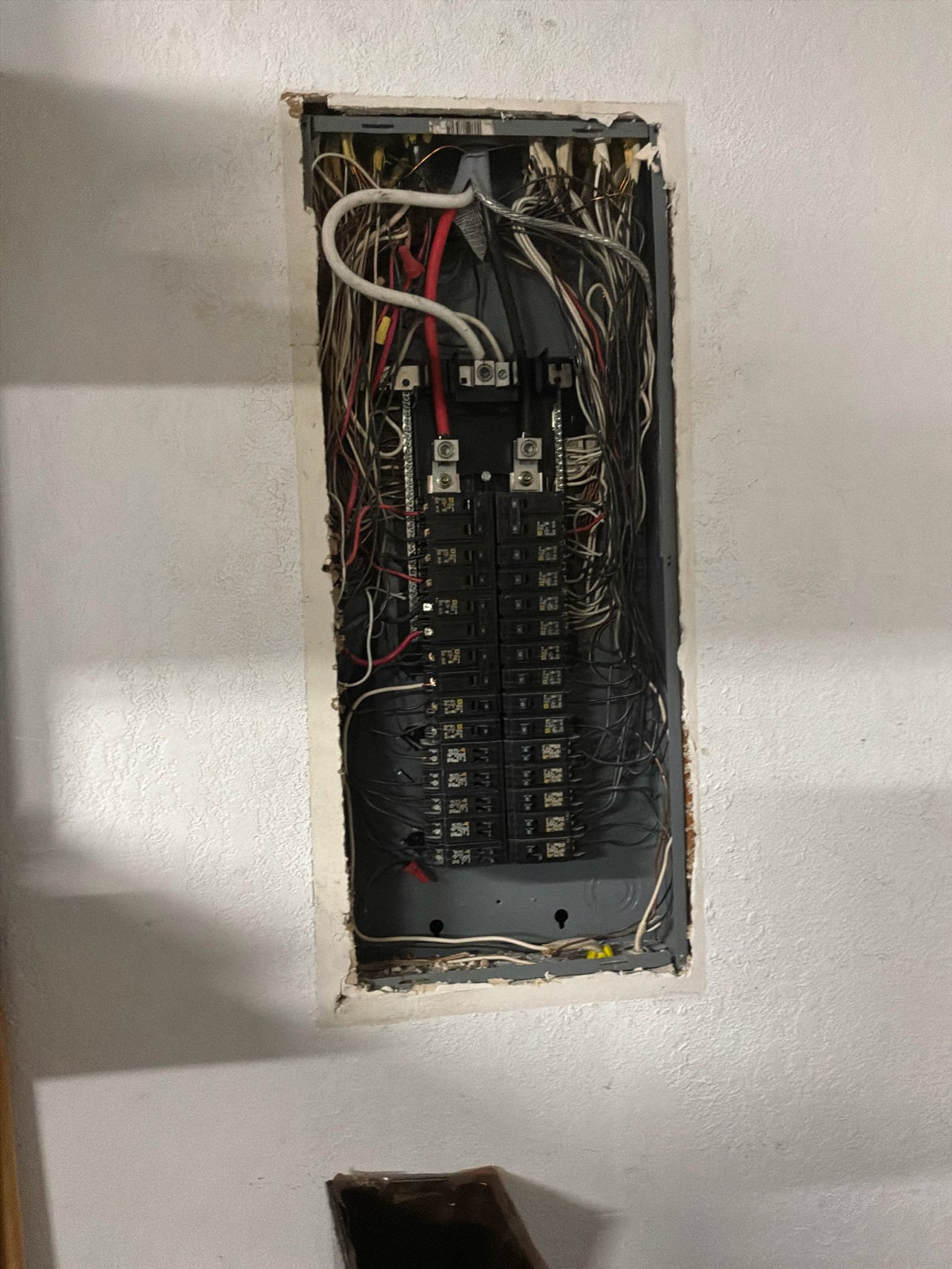
The switch also ties into your service panel, so panel condition matters. Older or crowded panels often need work first. We wrote up one Belle Isle job where a panel upgrade added whole-home surge protection at the same time.
Ask which circuits the switch will carry. A whole-house setup covers everything, while a managed setup covers a chosen list. Write that list down before install day, because changing it later costs more than deciding now.
Heat, Humidity, and Maintenance
Gear ages faster in this climate. Damp air, pollen, and salt work on housings and terminals all year. An aluminum housing and a rust-resistant coating are worth asking about.
Standby units run a weekly self-test, which is your early warning. Keep the pad clear, watch for ant nests in the control box, and change oil and filters on time. Our notes on generator monitoring and maintenance cover the yearly rhythm.
Plan It Before the Cone Appears
Scheduling the install in spring beats calling once a storm has a name. Permits, gas work, and inspection all take time. Demand spikes the moment forecasters draw a cone over the state.
Planning early also gives you time to learn the system. You get to watch a test run, see which circuits stay live, and ask questions with the lights on. That beats reading a manual by flashlight.
Talk Through Your Options
The right backup generator for Orlando homes is sized around your cooling load, fueled realistically, and installed to code. That takes a site visit, not a phone quote.
We can look at your panel, your service size, and your lot, then explain the choices in plain language. Learn more about generator installation or call Thomas Edison Electric at (407) 490-0004. Our Florida license is EC13015487, and we serve Orlando, Lake Mary, Winter Garden, St. Cloud, and nearby communities.