What started as a simple ceiling fan request turned into a meaningful whole-home electrical modernization for a homeowner in Sanford, FL 32773. Our field team arrived, assessed what was already there, and identified several areas worth bringing up to current standards — adding surge protection, five interconnected smart smoke/CO detectors, fresh breakers, a new receptacle, and a switch replacement, all in a single visit.
The Problem
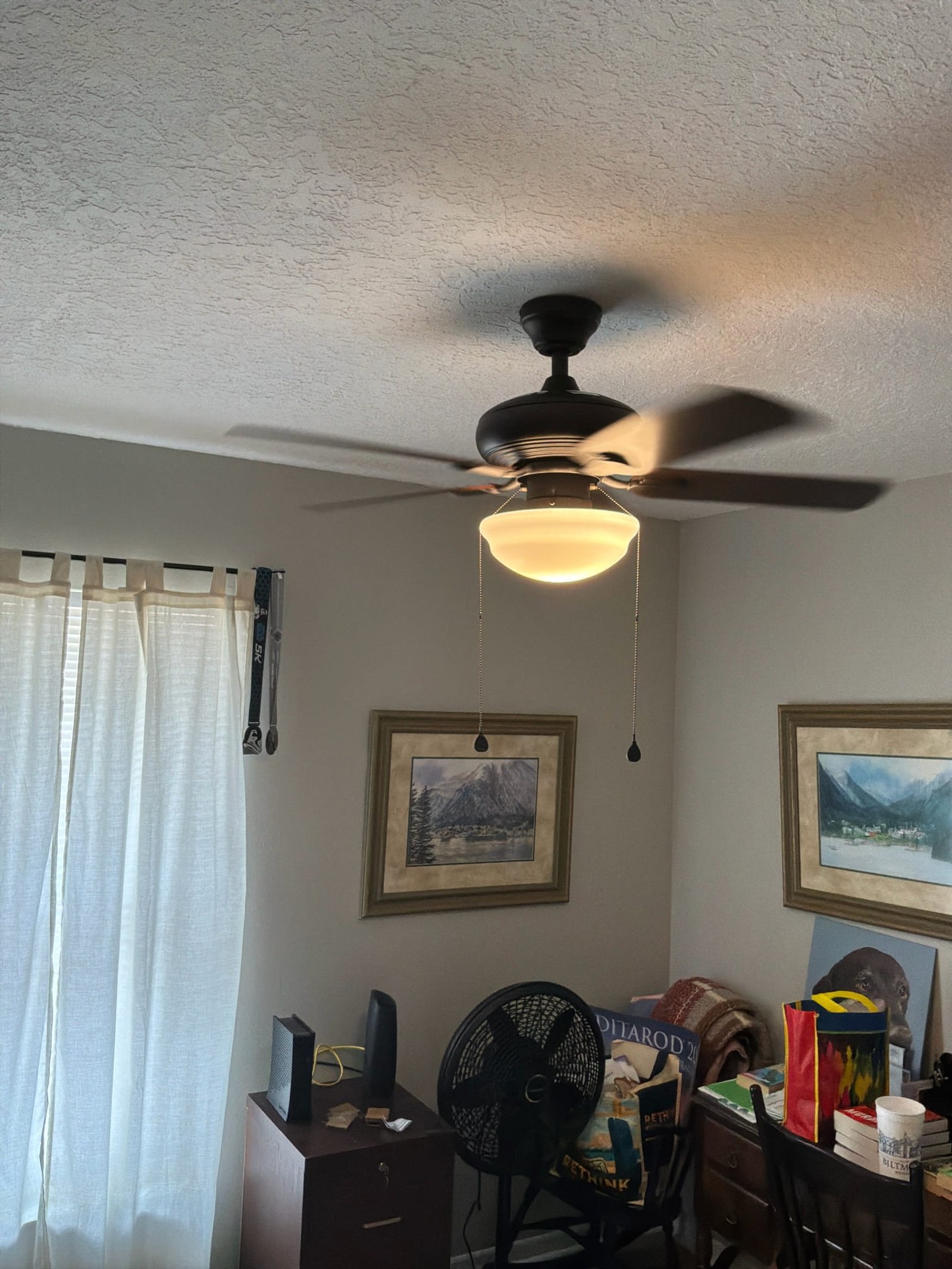
The homeowner initially reached out for a ceiling fan installation in the bedroom. Once our licensed electrician on site completed a thorough walkthrough, however, it became clear the home could benefit from a broader set of improvements — the kind that quietly support everyday comfort and reliability for years to come.
“Client would like a ceiling fan installed in the bedroom.”
Investigation
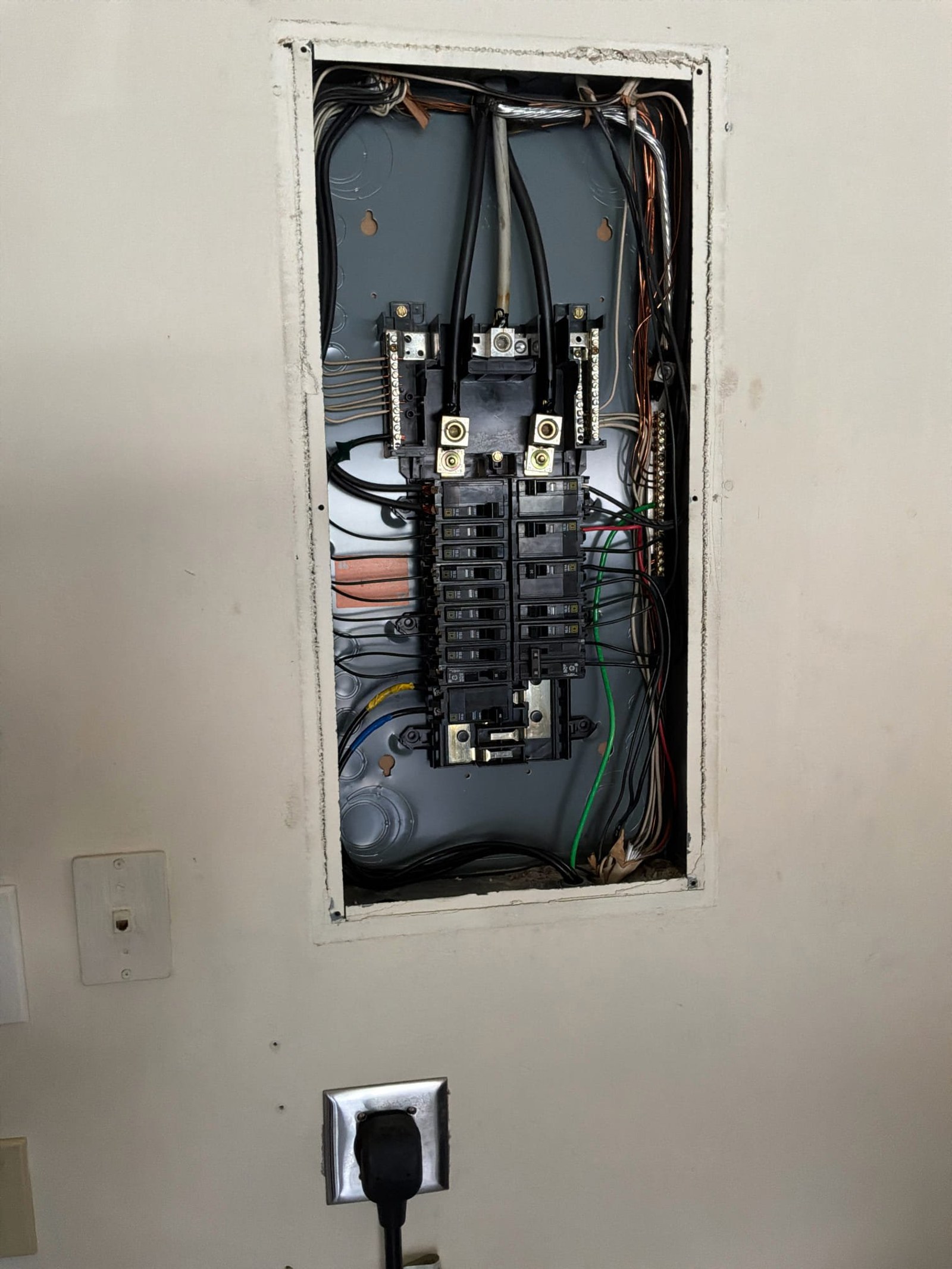
Our technician on-site reviewed the existing panel and branch circuits carefully. The panel accepted plug-on neutral breakers, which made it a strong candidate for a whole-home surge protector. Additionally, the team noted that several breakers were due for replacement — including positions sized for a 15-amp single-pole and a 40-amp two-pole load. A separate sub-panel position needed a GE THQP230 30-amp two-pole breaker swap as well.
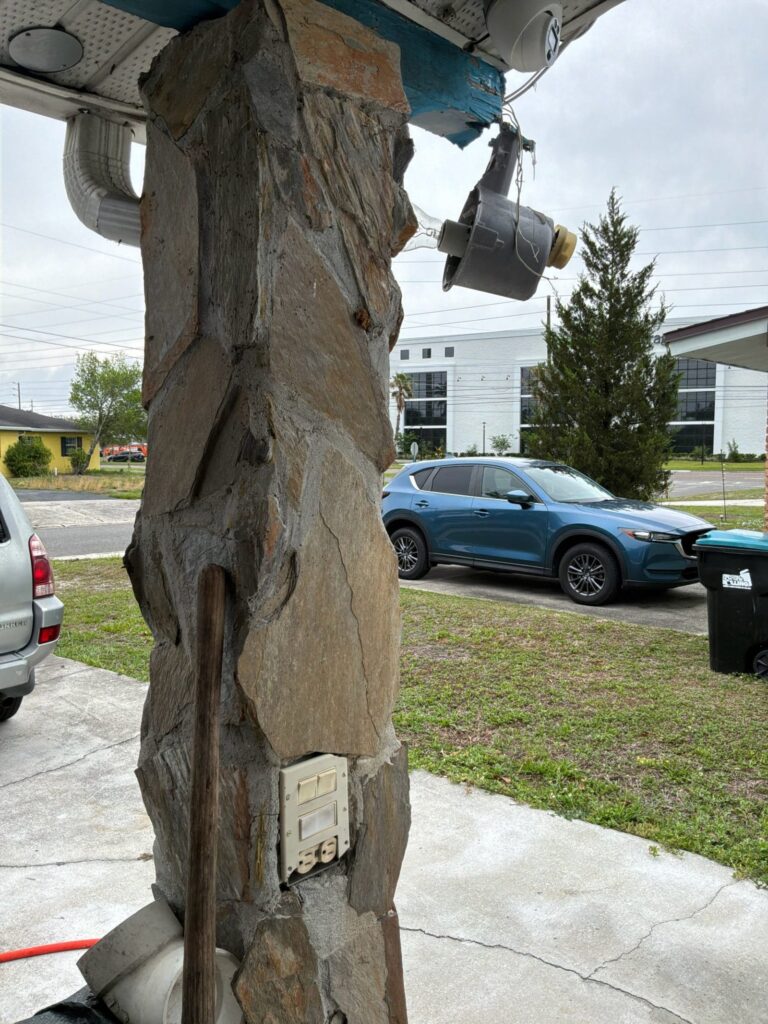
Furthermore, the smoke and CO detection coverage in the home predated current interconnect standards. Five detector locations were identified where older or single-station units had been in service. Meanwhile, one area of the home lacked a properly mounted receptacle box — the existing outlet position needed a remodel cut-in box and a code-compliant tamper-resistant single receptacle. A single-pole switch in the home also needed replacement.
Finally, a cord cap replacement was needed on an existing appliance cord — a small but practical fix that keeps everyday equipment running reliably.
What We Fixed
Whole-Home Surge Protection
Our crew installed a PSP Vortex 120 kA whole-home surge protector directly onto the existing single-phase residential panel. Per NEC 230.67, dwelling unit services are now required to include surge protective devices. The PSP Vortex Type 2 SPD connects at the panel and absorbs voltage spikes before they reach branch circuits. Your fridge, AC, televisions, computers, and smart-home devices now ride out every lightning storm without skipping a beat.
Breaker Replacements
The team installed one Square D HOM115 15-amp single-pole breaker and one Square D HOM240 40-amp two-pole breaker into the Square D HomeLine panel. In the sub-panel, a GE THQP230 30-amp two-pole breaker was swapped in as well. All connections were torqued to manufacturer specification per NEC 110.14(D), keeping every lug secure and terminations reliable for the long term.
Five Smart Smoke/CO Detectors
Our technician installed five 120V smart smoke/CO combination detectors, each with connected features and a 10-year sealed lithium battery backup. All five units are interconnected — when one activates, every room hears it simultaneously. This layout follows NFPA 72 guidance for interconnected detection in residential occupancies. Every room now talks to every other room — so the whole household stays informed, automatically.
Receptacle, Switch, and Cord Cap
Our crew installed a Pass & Seymour old-work remodel box and a tamper-resistant 15-amp single receptacle at an existing location, finishing it with a semi-gloss white metal plate. Per NEC 406.12, tamper-resistant receptacles are required in dwelling units. Additionally, a 15-amp single-pole decorator switch was replaced at an existing location with a Pass & Seymour decorator-style unit, finished with a matching metal plate. Finally, a new 15-amp, 125V NEMA 5-15P cord cap was installed on an existing appliance cord — a practical fix that keeps daily-use equipment functioning properly.
Why This Matters for Homeowners
Homes in the Sanford area — particularly those built in the 1980s and 1990s — were wired to the standards of their era. Those standards were perfectly appropriate at the time. Today’s NEC cycles, however, introduce improvements that weren’t available then: whole-home surge protection, tamper-resistant receptacles, and interconnected smart detectors among them. Bringing a home in line with current recommendations isn’t about what went wrong — it’s about making sure everything keeps working the way the family expects.
For this household, that means a surge protector quietly standing between the panel and every appliance they own. It means five detectors that share information instantly, so whether the family is asleep, at work, or out for the evening, the home is always looking out for itself. It means fresh breakers that handle modern loads without hesitation, and outlets that meet today’s code — the kind of updates you set and forget.
Above all, one service call delivered a home that’s simply more reliable, season after season. No juggling multiple appointments, no loose ends. Our licensed electrician on site — part of Thomas Edison Electric’s Orlando district team (Florida EC13015487, verifiable at myfloridalicense.com) — documented every connection and left the panel labeled and organized. That’s the kind of peace of mind worth having.
“Great work! Showed up on time and was through with the project.”
Code Compliance Cited in This Job
Every fix above maps to a specific section of NEC 2023. Each card links to NFPA’s public NEC index.
Surge Protective Device (SPD) at Dwelling Unit Services
NEC 230.67 requires a listed surge protective device at the service of all newly installed dwelling unit services. On this Sanford job, we installed a PSP Vortex 120 kA Type 2 SPD directly onto the existing single-phase panel, satisfying this requirement and protecting all downstream branch circuits from transient voltage events. NFPA reference ›
Type 2 SPD Installation Requirements
NEC 285.25 governs how Type 2 SPDs are installed downstream of the service disconnect. The PSP Vortex unit on this job was connected per manufacturer instructions and code requirements, with conductors kept as short as practicable to minimize let-through voltage on the panel’s branch circuits. NFPA reference ›
Torque Verification on Lugs and Terminals
NEC 110.14(D) requires that torque values specified by the equipment manufacturer be applied at all terminals. On this job, all newly installed Square D HomeLine and GE THQP breaker connections were torqued to listed specifications, ensuring stable, reliable conductivity at each lug. NFPA reference ›
Tamper-Resistant Receptacles in Dwellings
NEC 406.12 requires tamper-resistant receptacles throughout dwelling units. The new single receptacle installed at the remodeled box location on this job is a construction-spec-grade tamper-resistant unit, bringing that outlet position into full compliance with current standards. NFPA reference ›
Replacement Receptacles Must Meet Current Requirements
When receptacles are replaced in existing dwellings, NEC 406.4(D) requires the replacement to meet current code — including tamper resistance where applicable. The receptacle installed on this job was selected and mounted to satisfy this requirement at an existing outlet location. NFPA reference ›
Common Questions
Questions homeowners ask after seeing this kind of work.
What does a whole-home surge protector actually protect against?
A panel-mounted Type 2 surge protector absorbs voltage spikes that enter the home through the utility feed — most commonly caused by nearby lightning strikes, utility switching, or large motor loads cycling on and off. It guards every appliance and device on every circuit simultaneously, so your AC, refrigerator, televisions, and computers are covered without needing individual plug-in strips. If your panel doesn’t have one yet, it’s a straightforward upgrade. Schedule online to have our team check your panel’s compatibility.
How often should I have my home’s electrical system inspected?
For most homes, a yearly inspection is a reasonable baseline — once a year gives a licensed electrician the chance to catch aging components, loose connections, or outdated devices before they affect daily life. Older homes built before 1990 and homes that have weathered recent storms may benefit from inspections more frequently, since both age and surge events can change conditions quickly. Book a safety check with our Orlando-district team to get a clear picture of where your home stands.
Why do interconnected smoke and CO detectors matter more than single-station units?
Single-station detectors only sound locally — if one triggers in the garage while the family is asleep in the back bedroom, nobody hears it. Interconnected units communicate with each other, so when any one detector activates, all of them sound at once. NFPA 72 recommends interconnection in residential occupancies for exactly this reason. If your detectors are older or non-interconnected, our team can assess and upgrade them in a single visit.
Can my existing panel support a whole-home surge protector?
Most modern residential panels can accept a panel-mounted Type 2 SPD — but the installation approach depends on whether the panel uses plug-on neutral breakers, available space in the panel, and the service rating. Our technicians evaluate compatibility during the visit so there are no surprises. Schedule online and we’ll confirm your panel’s readiness before any work begins.
What is a tamper-resistant receptacle and why does current code require it?
Tamper-resistant receptacles have internal spring-loaded shutters that only open when both slots are depressed simultaneously — the way a plug does — preventing small objects from being inserted into a single slot. NEC 406.12 requires them throughout dwelling units because they add a reliable layer of protection for households with children, and they’re built into standard receptacle designs at no meaningful cost difference. Whenever we replace a receptacle in an existing home, we install a tamper-resistant unit by default. Book an outlet replacement if you have locations that still need the update.