
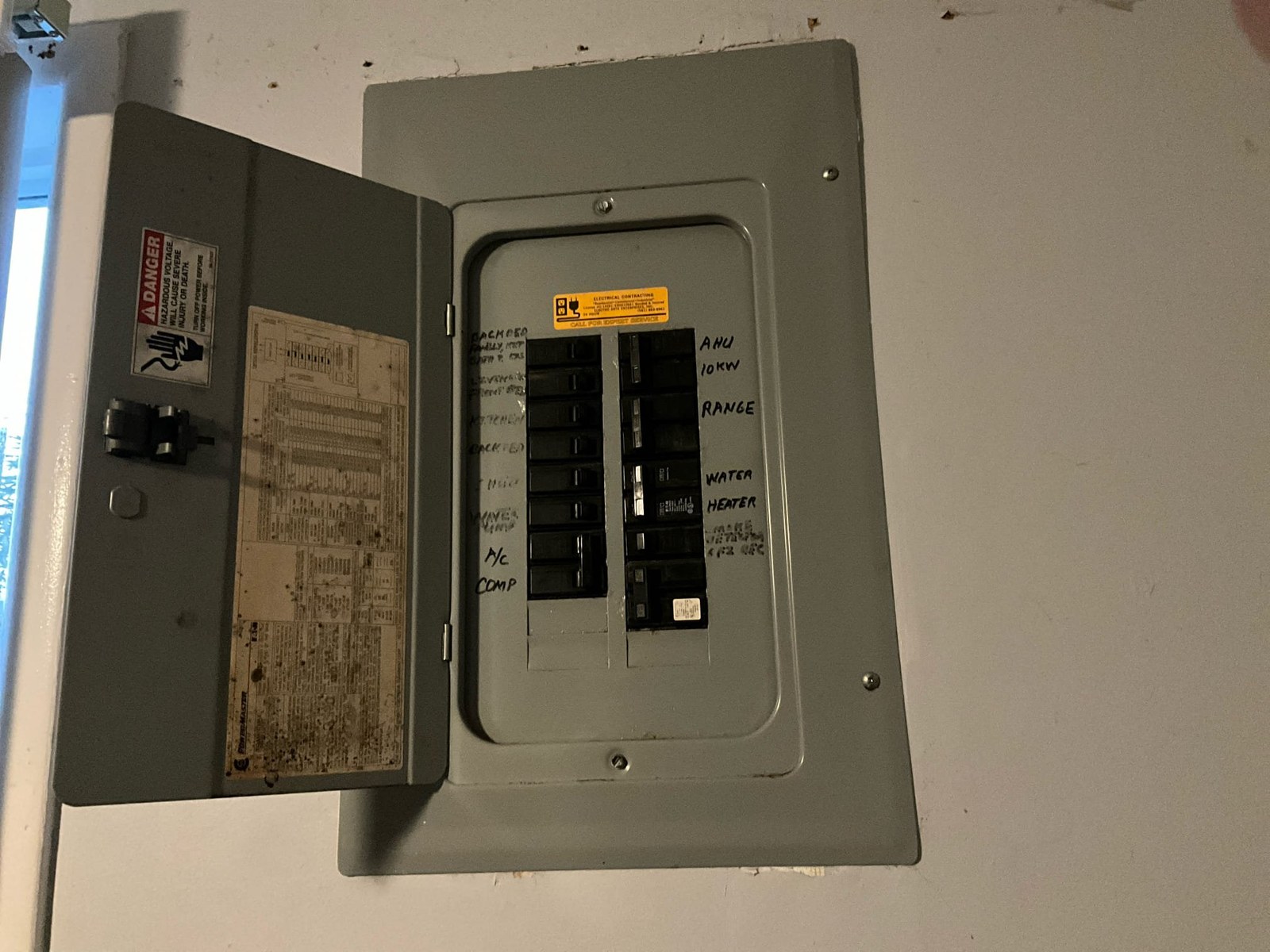
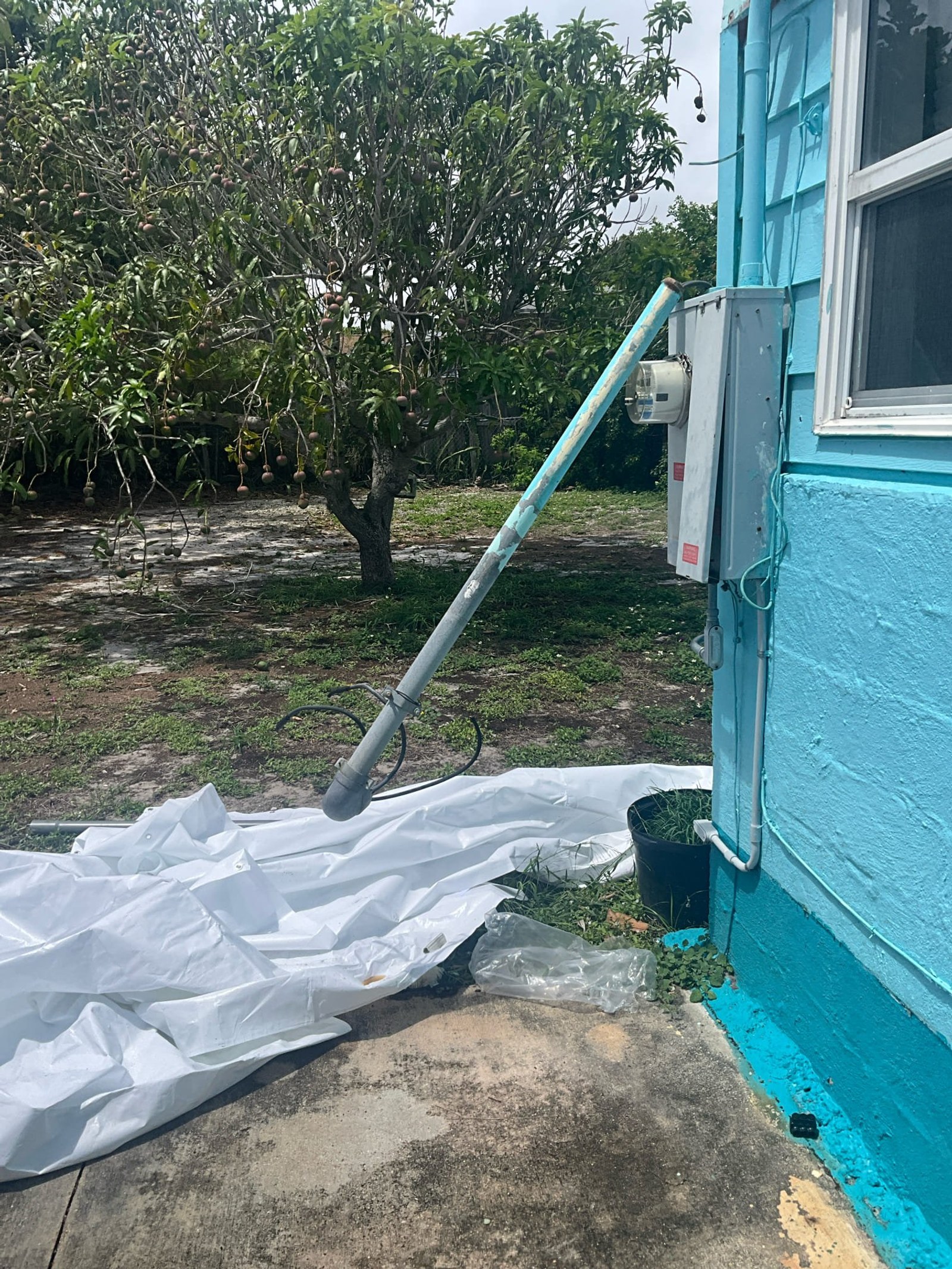
A homeowner in Lantana, FL contacted Thomas Edison Electric about a damaged weatherhead with power lines hanging lower than normal. What began as an emergency service call revealed opportunities to modernize several electrical systems throughout the home. Our team installed whole-home surge protection, updated circuit breakers, and brought smoke detection up to current NEC 2023 standards.
The Problem
“The power pipe is broke and the power line is hanging above the ground” – homeowner’s initial concern
The homeowner noticed their weatherhead had shifted, causing the service conductors to sag closer to ground level than normal. Additionally, they had attempted a bathroom outlet replacement but couldn’t complete the connection properly.
Investigation
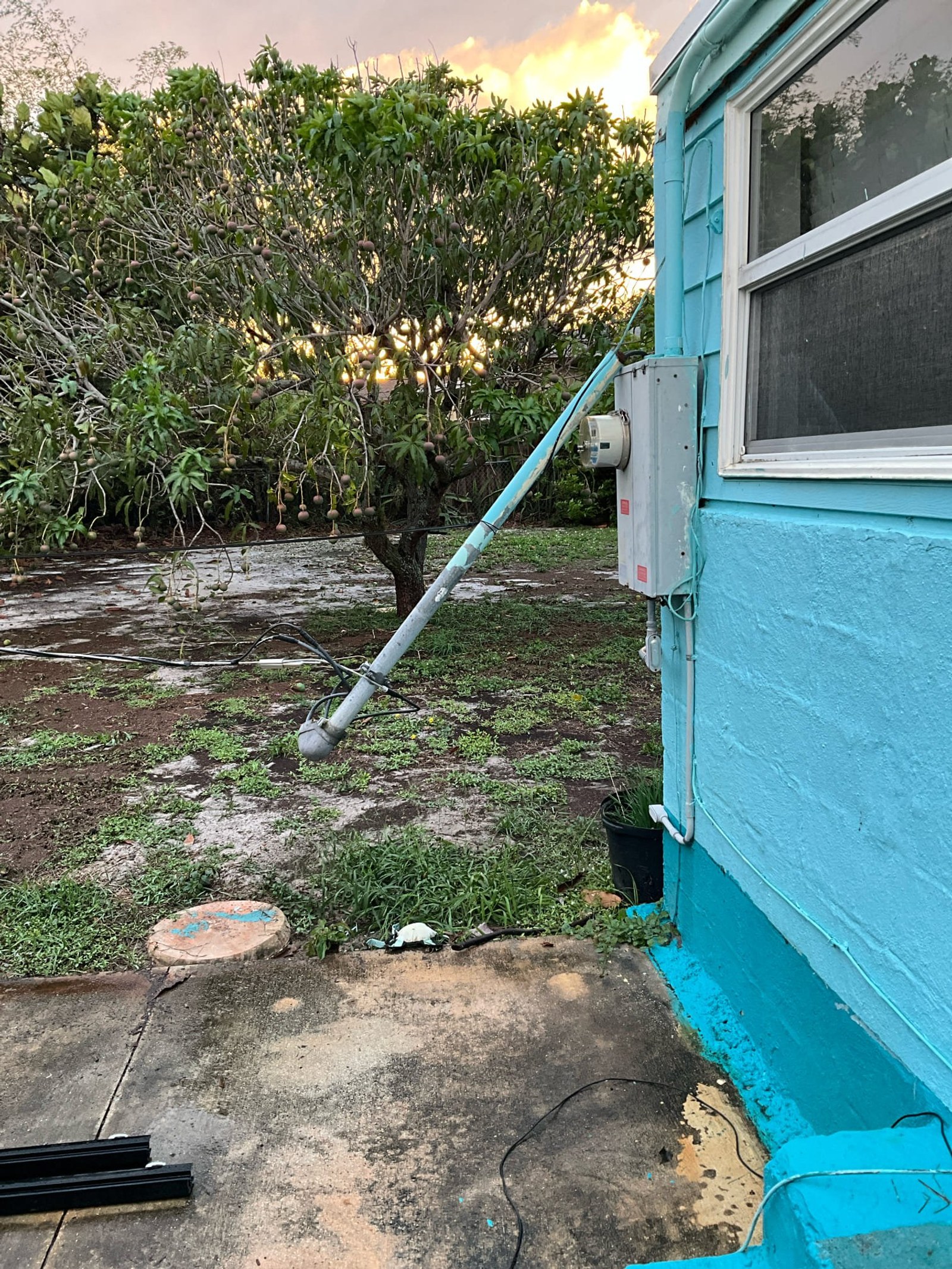
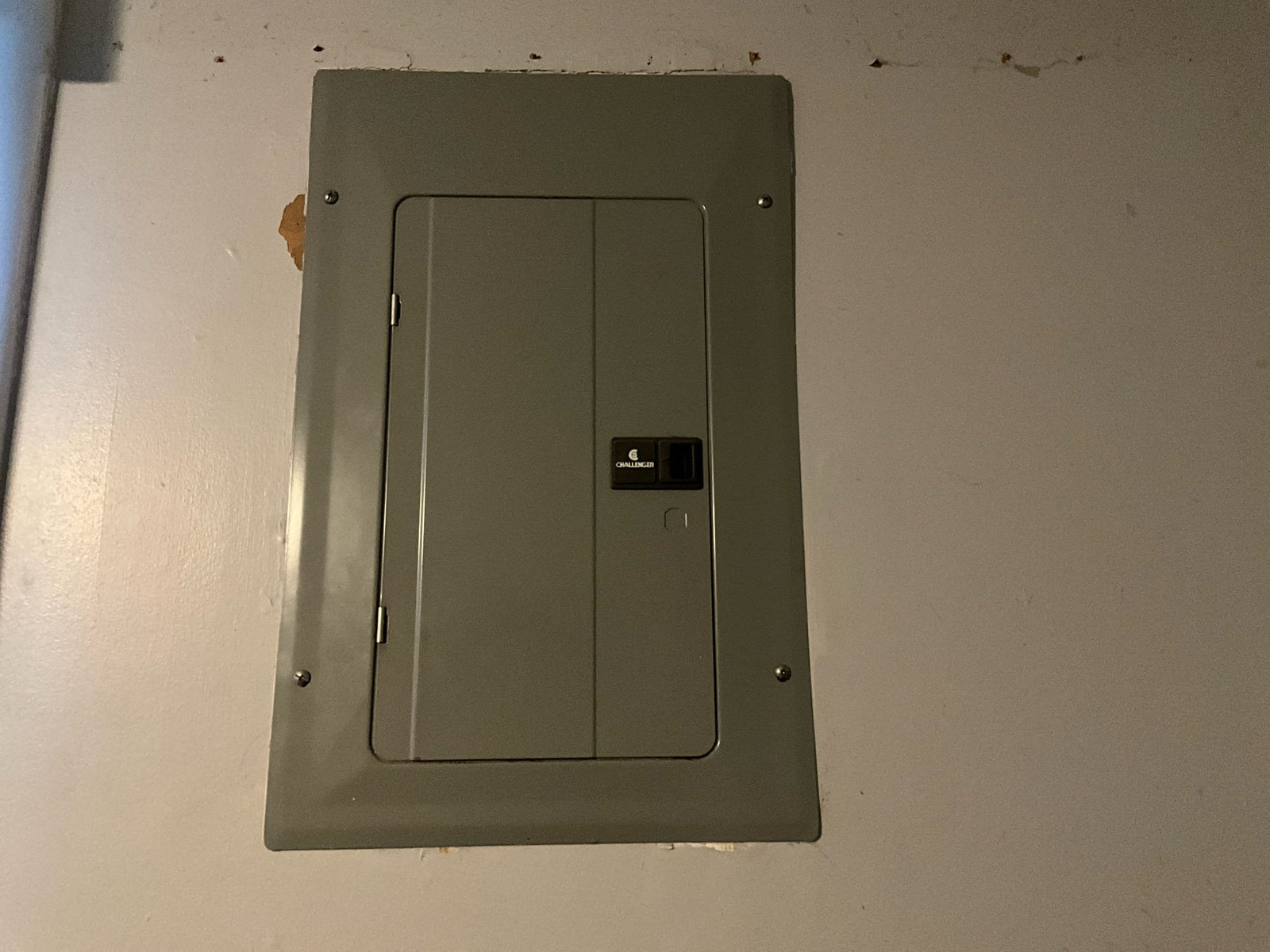
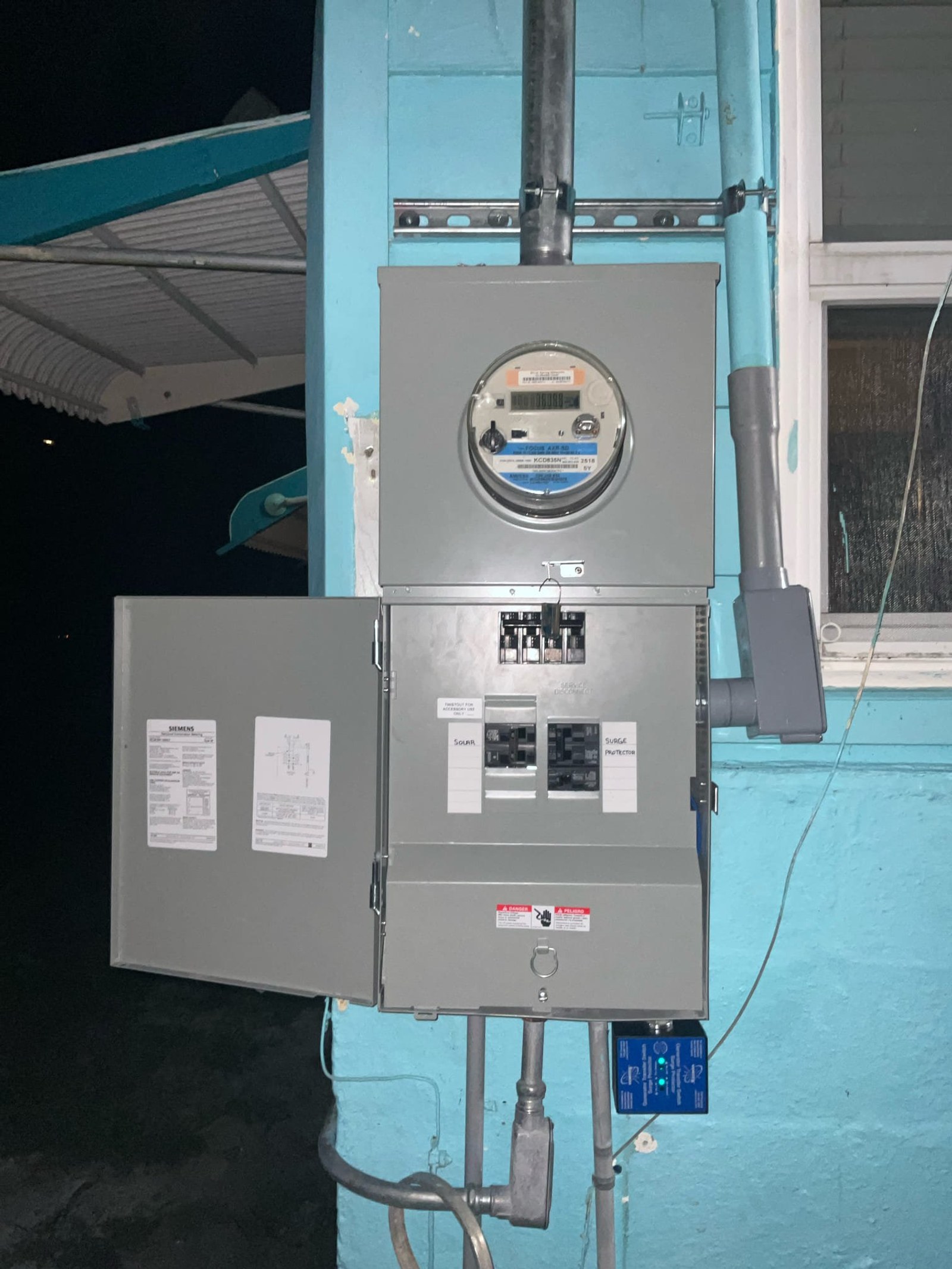
Christina P. conducted a comprehensive safety inspection beyond the initial weatherhead concern. The home’s electrical system showed characteristics typical of its construction era. Several outlets and switches used backstab connections, common before current termination standards. The kitchen lacked GFCI protection in areas now required by code. Furthermore, the home had no whole-house surge protection.
The electrical panel showed opportunities for modernization. Missing bushings at wire entries and the absence of AFCI protection reflected earlier code cycles. The grounding system, while functional, predated current bonding requirements. Meanwhile, smoke detection coverage fell short of today’s interconnected standards.
Pool equipment operated without GFCI protection, consistent with installations from before NEC 680 updates. The master bathroom also lacked GFCI outlets now required in wet locations.
What We Fixed
Our team installed a PSP Vortex 120 kA whole-house surge protector directly onto the main panel. This device provides comprehensive protection for all circuits against voltage spikes from storms or utility switching.
We replaced several circuit breakers with properly rated Square D HomeLine units, including HOM115 15-amp single-pole and HOM240 40-amp double-pole breakers. Additionally, we installed a GE THQP230 30-amp double-pole breaker for specific equipment protection.
For life safety, we installed five interconnected 120V smart smoke/CO detectors with 10-year sealed lithium batteries. These units communicate wirelessly, ensuring that when one detects smoke or carbon monoxide, all detectors sound simultaneously throughout the home.
The bathroom outlet project was completed with proper tamper-resistant receptacles and appropriate box installation. We also addressed the appliance cord issue by installing a proper 15-amp NEMA 5-15P cord cap.
Why This Matters for Homeowners
Homes built before recent code updates often lack the layered protection systems that current standards provide. However, adding these safety features brings meaningful benefits regardless of when your home was constructed.
Whole-house surge protection shields sensitive electronics and appliances from voltage spikes that occur regularly on the electrical grid. Storm activity in South Florida makes this protection especially valuable for preserving expensive equipment like HVAC systems, computers, and smart home devices.
Interconnected smoke and carbon monoxide detection significantly improves emergency response time. When detectors communicate with each other, occupants receive earlier warning regardless of where they are in the home. The 10-year sealed batteries eliminate the need for regular battery changes while ensuring reliable operation.
Code Compliance Cited in This Job
Every fix above maps to a specific section of NEC 2023. Each card links to NFPA’s public NEC index.
Surge Protective Device Installation
The PSP Vortex whole-house surge protector was installed according to NEC requirements for Type 2 SPDs. This provides the first line of defense against utility-side voltage transients before they reach branch circuits. NFPA reference ›
Arc-Fault Circuit Interrupter Protection
Current code requires AFCI protection for most residential branch circuits. The breaker upgrades bring critical circuits into compliance with modern arc-fault detection standards. NFPA reference ›
Conductors Entering Boxes or Fittings
Proper bushings and connector installation protects conductor insulation from damage at panel entry points. This addresses the missing bushings found during inspection. NFPA reference ›
Fire Alarm Circuit Installation
Interconnected smoke detectors must be installed to provide whole-home notification when any single unit activates. The wireless interconnect feature satisfies this requirement without additional wiring. NFPA reference ›
Common Questions
Questions homeowners ask after seeing this kind of work.
How long do whole-house surge protectors typically last?
Quality surge protectors like the PSP Vortex can provide protection for 10-15 years under normal conditions. Most units include indicator lights that show when the protection components need replacement. If you’re experiencing frequent electronics failures during storms, schedule a surge protection consultation to evaluate your current setup.
Do I need AFCI breakers if my home is older?
While older homes aren’t required to retrofit AFCI protection, these breakers significantly reduce the risk of electrical fires from damaged or aging wiring. They’re especially valuable in homes with original wiring from the 1970s-1990s. Our team can assess which circuits would benefit most from AFCI upgrades.
What’s the advantage of interconnected smoke detectors over individual units?
When interconnected detectors communicate, a fire detected in one area triggers alarms throughout the entire home simultaneously. This provides crucial extra seconds for evacuation, especially at night when family members might be sleeping far from the fire’s location. If your home still has individual detectors, book an inspection to discuss interconnection options.
How often should I have my electrical panel inspected?
We recommend professional electrical inspections every 10 years for homes under 25 years old, and every 5 years for older homes. Additionally, any time you notice flickering lights, warm outlets, or burning odors, immediate inspection is warranted. Schedule your safety inspection to catch potential issues before they become problems.
Can surge protection be added to any electrical panel?
Most modern panels can accommodate whole-house surge protectors, though the specific installation method varies by panel brand and available space. Older panels may need evaluation to ensure compatibility and adequate protection. Our technicians can evaluate your panel and recommend the best surge protection solution for your home.